Hair straighteners ownership guide: plate cleaning, cable wear and heat damage
Straighteners combine high heat, a flexible mains lead and handling near water. Safe ownership means following the manual and stopping at electrical or plate damage.
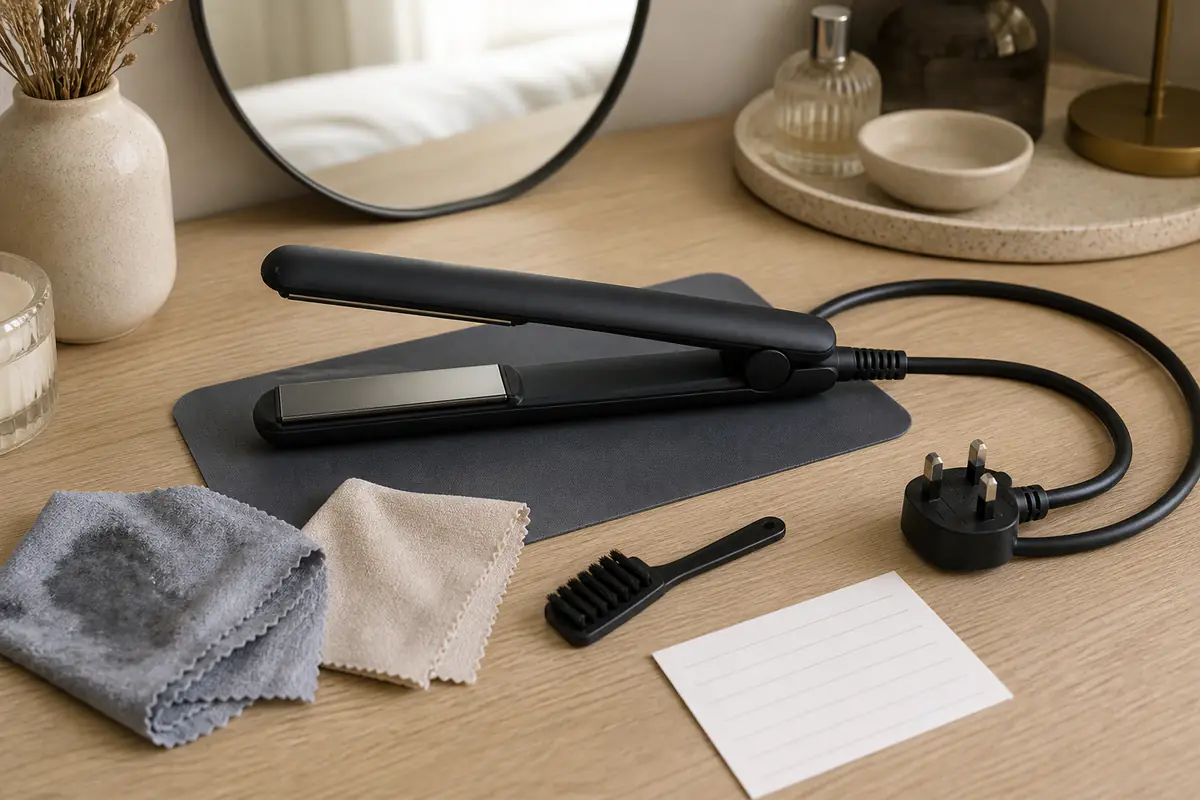
In this guide
Unplug, cool and inspect before cleaning or storage
Use only on dry hair with dry hands, keep away from baths and sinks, place on a heat-resistant surface, never wrap the lead around the body and stop after sparks, burning smell, cracks or cable damage. Choose plate size and controls first with our hair straightener buying guide.
For price and replacement value, use the hair straightener value guide. This article is about ownership and does not give hair-health or styling treatment.
| Observation | Immediate response | Evidence to keep | Next decision |
|---|---|---|---|
| Residue on plates | Unplug and cool fully | Products used and photograph | Clean only as manual permits |
| Cable split or intermittent | Stop use | Damage location and model | Qualified repair or replacement |
| Snagging or plate chip | Stop styling | Close and open plate photos | Manufacturer or retailer route |
| Unusual smell, spark or heat | Unplug if safe | Time, sound, smell and socket | Electrical safety escalation |
Keep this ownership record
- Exact model, serial, purchase evidence and manual.
- Permitted temperature range and hair-use instructions.
- Products used before styling and plate-cleaning method.
- Cable, plug, hinge, plate and casing inspection dates.
- Heat mat or supported resting location.
- Any smell, spark, noise, snag, crack or intermittent power.
- Warranty contact, recall check and stop-use decision.
- Safe disposal route if repair is not appropriate.
Read the exact manual before first heat
Record the model’s controls, permitted surfaces, cleaning method, automatic shut-off behaviour and storage directions. Similar-looking straighteners can use different coatings, hinge locks and voltage arrangements. Do not transfer a cleaning solvent or temperature rule from another model.
Our manual-before-buying guide helps locate instructions while the return window is still open. Keep a local copy because support pages and product revisions change.
Set up a dry, uncluttered styling zone
Electrical Safety First advises keeping straighteners away from baths, showers, basins and other water. Use with dry hands and dry hair, and route the lead so nobody can pull or trip over it. Do not balance a hot tool on fabric, carpet or a bed.
Prepare a stable heat-resistant surface and clear aerosols, cosmetics, paper and towels from direct contact. The safest routine is designed before switch-on, not improvised while holding hot plates.
Use the lowest effective permitted heat
Temperature labels do not prove how heat is distributed or how a particular head of hair will respond. Start within the manufacturer’s directions and avoid repeated passes merely to chase a finish. Higher is not automatically faster or safer.
Hair condition, chemical treatment and styling goals are personal. Seek appropriate professional advice for damage concerns; this guide does not prescribe a temperature or diagnose hair. Record the setting that achieved the job without unnecessary repetition.
Keep products from building on the plates
Sprays, oils and styling products can transfer onto hot surfaces. Use only products and sequences compatible with their own directions and the straightener manual. Do not apply a flammable aerosol onto or next to an energised hot tool.
If residue appears, stop and let the device cool completely. Repeated heating of an unknown deposit can change friction, smell and plate contact. Note the products used so the cause can be narrowed.
Clean only when unplugged and fully cool
Disconnect from the socket and wait for complete cooling. Electrical Safety First notes that straighteners may remain hot for a considerable time. Use only the cloth, moisture level and cleaning agent permitted by the manufacturer.
Do not immerse the appliance, let liquid enter the hinge or vents, or scrape coated plates with metal. A harsh cleaner can damage a coating even when it removes visible residue. If the manual gives no method, ask the manufacturer rather than inventing one.
Inspect plate edges and contact
Look for chips, lifting coating, sharp edges, gaps or contamination while the tool is cold. Open and close it gently and observe whether the plates align as designed. Do not press or bend the arms to force contact.
A snag that appears repeatedly can damage hair and indicate residue or physical damage. Photograph the plate under diffuse light and stop use until the appropriate support route confirms the next step.
Protect the hinge and lock
Remove trapped hair only by the permitted cold-cleaning method. Do not oil the hinge unless the manual explicitly requires it. Keep fingers clear of pinch points and do not test the lock while the plates are hot.
Store with the lock in the manufacturer’s recommended position. Forcing a warm body into a tight case can strain the hinge and retain heat.
Never wrap the cable around the straightener
Electrical Safety First warns that wrapping the lead can damage both cable and appliance. Repeated tight bends near the swivel, strain relief and plug can break conductors or insulation. Coil loosely according to the manual and secure without sharp folds.
Keep the lead away from the plates during use and cooling. Do not hang the appliance by the cable, close it in a drawer or pull the plug out by the lead.
Run a cold cable and plug inspection
Before use, look for cuts, flattened areas, exposed conductors, loose strain relief, bent pins, scorching or a plug that becomes abnormally hot. Flexing a suspect point to make it work is not a diagnostic test.
Stop immediately after intermittent power, crackling, sparks or a burning smell. Unplug only if safe and do not move to another socket merely to see whether the fault repeats. Our recall and stop-use guide gives a structured evidence route.
Do not rely on automatic shut-off
Automatic shut-off can reduce risk but timing and conditions vary. It does not make a hot appliance safe to leave on fabric or near water. Switch off and unplug after use every time.
If the feature appears not to operate as described, stop depending on the appliance and contact the responsible support route. Do not run repeated unattended tests.
Cool on a heat-resistant surface
Place the hot tool where plates cannot touch skin, cable or combustible material. Keep it out of reach of children and pets and allow the full body to cool before moving or covering it.
Electrical Safety First says straighteners can reach very high temperatures and may take up to around forty minutes to cool. Treat that as a safety warning rather than a timer guaranteed for every model. Check by time and safe handling instructions, not by touching the plates.
Store without trapped heat or cable strain
Use the supplied heat mat or case only as the manufacturer directs. Some pouches permit hot storage and others do not. Ensure the cable is loose, the plug cannot scratch plates and no heavy item presses the arms.
A bathroom cupboard can still expose the appliance to humidity and water risk. Choose a dry location away from basins and protect it from falls.
Treat travel as a separate setup
Check voltage, plug and adaptor requirements for the exact model and destination. A physical adaptor does not convert voltage. Pack only after complete cooling and protect the plates and cable from crushing.
Do not use a travel appliance in a bathroom merely because the socket arrangement differs. Follow local electrical-safety rules and the accommodation’s instructions.
Keep children and shared users within one routine
Store out of reach and do not leave a cooling appliance unattended where it can be touched. Shared users should know the stop-use signs, permitted settings and storage method rather than resetting the tool from memory.
If the product is lent, include its mat and instructions. A device returned with cable or plate damage should remain unplugged until assessed.
Document faults before warranty contact
Keep proof of purchase, exact model, serial, photographs and a factual timeline. State whether the problem involved plates, hinge, controls, cable, plug, heat or smell. Do not dismantle a mains appliance unless an authorised qualified route specifically permits it.
Use the warranty evidence guide and include replacement in the total ownership cost. A guarantee does not justify continued use of a potentially unsafe tool while a claim is considered.
Check recalls and dispose responsibly
Register where appropriate and check the UK product-safety alerts service using the exact model. If a recall or safety notice applies, follow its stop-use and remedy instructions rather than relying on a marketplace message.
At end of life, do not place electrical equipment in general waste. Remove stored accounts if the model is connected, keep the cable intact for identification and use an appropriate electrical-waste route.
Clean and continue or stop using it?
The issue is permitted removable residue
The unplugged, fully cool tool has intact plates, casing, cable and plug, and the manual provides a safe cleaning method.
Damage or electrical behaviour is uncertain
There is a chip, crack, exposed wire, intermittent power, spark, burning smell, unusual heat or unsupported cleaning damage.
Balanced verdict
Safe straightener ownership depends on a disciplined cold inspection and cooling routine. Dry use, controlled heat, permitted plate cleaning, loose cable storage and firm stop-use triggers matter more than cosmetic shine.
Use the linked buying, value, manual, recall and warranty-evidence guides.
Official checks:
Electrical Safety First straightener guidance ↗
GOV.UK product recalls and alerts ↗
GOV.UK electrical-waste guidance ↗
Frequently asked questions
How should hair-straightener plates be cleaned?
Unplug, allow complete cooling and follow the exact manufacturer method. Do not immerse, scrape or use an unsupported solvent.
Can the cable be wrapped around the straightener?
No — Electrical Safety First warns that wrapping can damage the cable and appliance; store it loosely as directed.
Is automatic shut-off enough protection?
No — Switch off, unplug and cool on a heat-resistant surface after every use; shut-off timing varies and the plates remain hot.
When should straighteners stop being used?
Stop after cable or casing damage, sparks, burning smell, intermittent power, cracked or chipped plates, or other abnormal behaviour.
Can straighteners be used on wet hair?
Electrical Safety First advises using straighteners only on dry hair with dry hands and keeping them away from water.
Methodology and limitations
We assessed ownership through dry setup, temperature control, product residue, cold cleaning, plate and hinge inspection, cable storage, electrical stop-use signs, cooling, travel, recalls and disposal. Electrical Safety First and current GOV.UK sources were reviewed on 2 September 2026. We did not use or heat a named straightener.
Limitations
Models, coatings, controls, voltage, hair condition and cleaning directions vary. Follow the exact manual and seek professional hair or electrical advice where appropriate. This guide cannot diagnose internal electrical faults or hair damage.