Hair straightener value: plate contact, heat consistency, cable care and replacement risk
A premium finish is poor value when plates snag, controls are awkward or the cable fails. Judge the complete heated tool through repeatable contact, comfort, care and support.
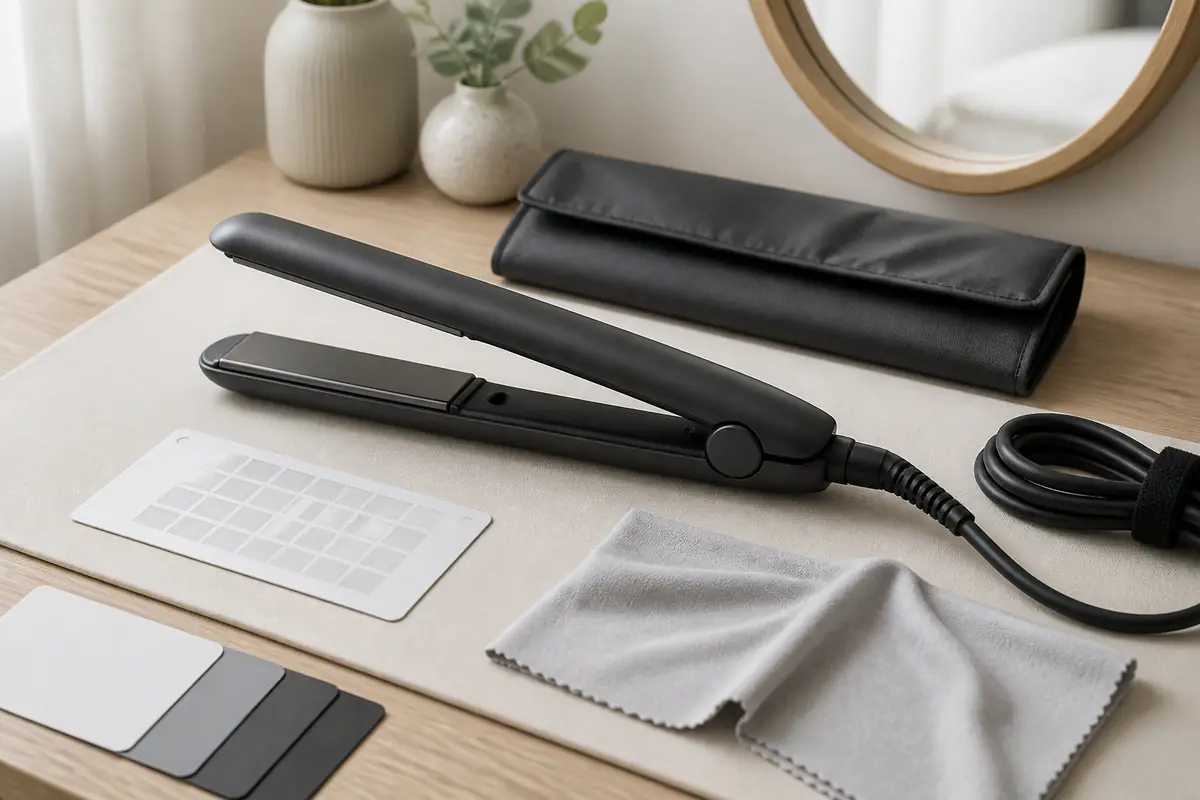
In this guide
Pay for controlled passes and sound construction
Useful plate contact, stable selectable heat, safe handling and a durable cable matter more than maximum temperature or coating language. Start with our hair straightener buying guide.
Use the specification guide, review guide and ownership-cost guide to distinguish the straightener’s measurable features from a speculative lifespan saving.
| Field | Evidence | Risk | Value test |
|---|---|---|---|
| Plates | Alignment, edge finish and controlled glide | Gaps, snagging or chipped surface | Inspect cold |
| Heat | Usable range and repeatable control | Maximum figure as quality | Match routine |
| Body | Hinge, grip, lock and cable entry | Loose joint or strained lead | Check each use |
| Ownership | Cleaning, mat, pouch, warranty and support | Premium coating without parts | Price complete care |
Record the real styling routine
- Hair length, density, texture and condition.
- Section size and number of passes.
- Lowest effective selected setting.
- Plate width, edge and root access needed.
- Grip, hinge force and hand position.
- Cable reach, swivel and storage route.
- Cooling, cleaning and heat-safe placement.
- Warranty, model identity and replacement threshold.
Define the repeatable result
Value can mean fewer passes, better root access, easier curling, lower fatigue or consistent control across household users. Choose the result before comparing coatings and temperature claims. A feature is valuable only when it changes the real routine.
The earlier buying guide handles plate width and temperature selection. This guide follows construction, cleaning, cable and replacement risk. Do not equate a high maximum temperature with performance or suitability.
Inspect plate contact while cold and unplugged
Look along the closed plates for alignment, even contact appropriate to the design, chipped edges, raised coating and trapped debris. Floating plates can move by design, so use manufacturer information rather than declaring every gap defective.
Hair snagging can come from damaged edges, poor alignment, section size or technique. Stop using a tool with a cracked plate or exposed structure. Do not sand, coat or repair heated surfaces at home.
Value heat consistency, not only speed to ready
A fast indicator says little about temperature uniformity or recovery during repeated passes. Compare model-specific evidence with method disclosed. Controls should allow the user to select a suitable setting and avoid accidental changes during grip.
Do not rely on colour-changing marketing or a single sensor claim without understanding what it controls. Use the lowest effective setting for the routine and follow manufacturer guidance. Hair condition and products affect outcomes, so avoid universal damage promises.
Calculate passes, sectioning and time
Record section size, selected setting, number of passes and total powered time. A wider plate can cover more hair but reduce root or curl control; a narrow plate can add sections. Value is the reduction in effort without unsafe technique.
Compare the same starting condition and finish. The hair dryer value guide helps separate preparation from straightener performance. Do not credit the straightener for a changed drying routine.
Check hinge, grip and housing clearances
The hinge should move smoothly without pinching fingers or forcing an awkward squeeze. Inspect housing gaps, plate edges, control placement and the lock. A slim body can improve access but may bring hands closer to hot surfaces.
Rehearse safe placement and release while cold. A lock is for storage only if instructions say so and the tool is fully cooled. Cracks, looseness or unusual movement are replacement or service signals, not cosmetic quirks.
Treat the cable as a primary component
Inspect the full lead, plug, strain relief and swivel before use. Repeated tight wrapping, pulling from the socket or trapping under furniture can damage it. Store loosely according to instructions after the tool cools.
Do not use a straightener with frayed insulation, exposed wires, intermittent power, arcing or unusual heat at the connection. Never tape or self-repair a mains lead. Seek qualified service or replace through an appropriate route.
Clean plates without damaging the surface
Product residue can change glide and heat transfer. Unplug, cool and follow the manufacturer’s cleaning method, usually using only permitted soft materials. Do not immerse the tool or use abrasive pads, blades or solvents unless explicitly authorised.
Record how quickly residue forms in the actual routine. A plate that is difficult to access or coating that marks easily adds ownership cost. Cleaning cannot restore a chipped, lifted or deeply scratched surface.
Price storage, travel and support
Include a heat-resistant mat or pouch only when supplied or verified suitable, and allow full cooling unless instructions explicitly permit otherwise. Check voltage compatibility for travel; a plug adapter does not convert electrical supply.
Save exact model, seller and warranty evidence with our warranty guide. Check current safety alerts. Replace when electrical or structural warning signs appear rather than extending use to improve cost per year.
Compare results with a repeatable routine
Choose a representative section and keep starting condition, product use, section size, setting and pass count consistent. Record powered time, snagging, grip changes and the finish immediately and later in the day. This is not a laboratory damage test; it prevents a changed routine from being mistaken for hardware performance.
Repeat on several normal occasions before drawing conclusions, unless a safety problem requires immediate stop-use. Weather, drying method and hair condition can alter results. A tool that performs well only at an unnecessarily high setting or with repeated passes may not offer better value than a simpler model used predictably.
Check controls under real hand positions
Operate switches and temperature controls while the tool is cold and unplugged. Note whether the grip can change settings accidentally, whether indicators are visible without moving near hot surfaces and whether the selected state remains clear. Touch controls and small displays are not automatically improvements.
Include start-up, section changes and safe placement in the assessment. A control layout that adds hesitation to every pass creates cumulative effort. Conversely, a simple tool can be suitable when the setting range matches the user and there is no need for stored profiles or elaborate feedback.
Set a stop-use and disposal decision
Write down warning signs before ownership: damaged plug or cable, intermittent power, cracked housing, unusual smell or sound, uncontrolled heating, loose plates or exposed internal parts. Stop, unplug safely and follow manufacturer or qualified repair guidance. Do not keep testing an electrical fault to prove it is repeatable.
Separate warranty, repair and disposal decisions. A minor cosmetic mark may not affect use, while an intermittent connection can be serious. Check recalls using the exact model, then use an appropriate electrical-waste route when replacement is necessary. A low purchase price never justifies extended use after a safety threshold is crossed.
Assess balance across the entire session
A tool can feel light for one pass yet create strain through repeated wrist rotation, hinge pressure or a rear-heavy cable. Record the number of sections and where grip changes occur. Compare tools using the same routine rather than a brief in-store hold.
Handle only in ways permitted by the manufacturer and keep fingers away from hot surfaces. If comfortable control requires gripping near the plates or fighting the cable, the design does not fit the user. Extra speed is not value when it reduces deliberate placement.
Keep product claims separate from hair outcomes
Terms such as ionic, ceramic, titanium or intelligent heat can describe technology without proving a better result for every person. Verify what the named model actually contains and what the manufacturer claims. Then judge the outcome through passes, control, snagging and time at an appropriate setting.
Do not make medical or universal damage claims from a marketing phrase or household trial. Hair condition, prior treatment, moisture and technique matter. Where health or severe damage is a concern, seek suitable professional advice rather than escalating temperature or purchasing on an unsupported promise.
Inspect a new tool before the return window closes
Confirm model, plug, plates, housing, hinge, controls and supplied accessories before use. Read the manual, retain packaging only as required by current terms and record any visible damage. Do not power a tool that appears electrically or structurally unsafe.
Within permitted normal use, verify start-up, setting selection, cable movement and safe placement. If plates snag abnormally, controls fail or the tool differs from the ordered model, document the issue and use the seller or manufacturer route promptly. Early inspection protects both safety and evidence.
Pay for premium plates or choose a simpler tool?
Contact and control reduce real effort
The plates, heat range, balance and support improve the repeatable routine.
Core control already fits
Coating names and maximum heat do not improve passes, comfort or ownership.
Balanced verdict
Hair straightener value is controlled contact backed by safe construction and care. Plate language and maximum temperature matter less than alignment, usable settings, cable condition and a clear replacement threshold.
Use the linked straightener, specifications, reviews, ownership-cost, hair dryer and warranty guides.
Official checks:
Electrical Safety First product-safety guidance ↗
UK product safety alerts and recalls ↗
GOV.UK electrical waste responsibilities ↗
Frequently asked questions
Do higher temperatures mean better straightening?
No — Suitability depends on hair, sectioning, plate contact, technique and the lowest effective setting.
Should straightener plates touch perfectly when cold?
Designs vary, especially floating plates. Use model evidence and look for abnormal gaps, damage or snagging.
Can I repair a damaged cable with tape?
No — Stop using the tool and seek qualified service or appropriate replacement.
How should plates be cleaned?
Unplug, cool and follow the exact manufacturer method with permitted non-abrasive materials.
When should a straightener be replaced?
Electrical damage, cracked housing, chipped plates, unreliable controls or abnormal heat are strong stop-use signals.
Methodology and limitations
We assessed hair straightener value through result, plate contact, heat control, passes, hinge, cable, cleaning, storage and support. The straightener-value review’s official electrical-safety, product-safety and waste references were recorded on 2 September 2026. We did not measure plate temperature or style hair with a named tool.
Limitations
Models, coatings, controls, prices, support and safety notices change. Hair response and technique are individual. This is not an electrical inspection or hair-health assessment. Recheck the exact model, manual, warranty and current safety information.