Dinnerware ownership value: replacement continuity, stacking, dishwasher wear and breakage
A dinnerware set earns its place through years of useful meals, not the number of pieces on the box. Replacement availability, cupboard fit and glaze condition can matter more than an initial matching table.
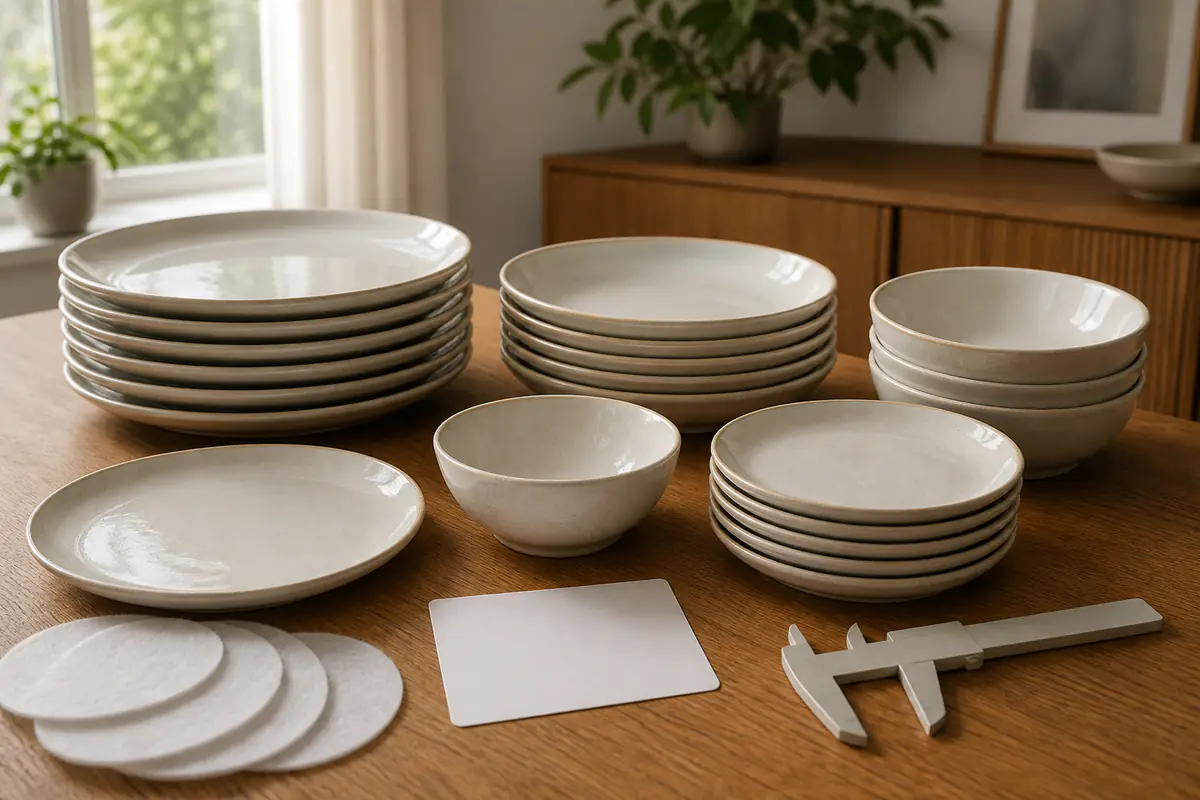
In this guide
Buy a maintainable table system, not a fixed bundle
Count useful pieces, test storage and dishwasher fit, inspect food-contact surfaces and confirm individual replacements. Start with our dinnerware-set buying guide.
Use the dishwasher ownership guide, dish-drying guide and ownership-cost method.
| Field | Evidence | Hidden burden | Decision |
|---|---|---|---|
| Piece mix | Items used every week | Decorative extras inflate count | Price useful pieces |
| Fit | Cupboard, rack and appliance dimensions | Large rims waste space | Test system |
| Surface | Sound glaze, rim and foot | Crazing, chips and marking | Inspect under light |
| Continuity | Singles and stable range | One break forces full replacement | Verify replenishment |
Map the complete dinnerware system
- People, meals and useful piece roles.
- Plate and bowl diameter, depth and foot ring.
- Cupboard shelf depth and stack height.
- Dishwasher rack, spray-arm and drying-rack fit.
- Microwave, oven and freezer claims for the exact range.
- Glaze, decoration, rim and cutlery-mark tolerance.
- Breakage rate and spare-piece strategy.
- Individual replacement source and range continuity.
Count roles rather than place settings
List dinner plates, side plates, shallow bowls, deep bowls and serving pieces actually used across ordinary meals. A large place-setting count can hide pieces that never leave the cupboard while the household repeatedly lacks the useful bowl.
Price the set using only needed roles, then add genuine spares. The earlier dinnerware guide explains initial mix; this article focuses on ownership after the first purchase. Do not buy duplicated extras to make an apparent per-piece bargain.
Measure cupboard fit before choosing diameter
Record shelf depth, width, height, door clearance and the safe stack position. Wide rims and irregular handmade shapes can consume more space than their food area suggests. A leaning stack creates daily handling and breakage risk.
Measure the actual item rather than trusting dinner-plate labels. Allow fingers to lift a piece without dragging the rim above it. If a set requires new storage, include that cost and confirm the proposed shelf can safely carry the load.
Test dishwasher geometry as a system
Compare plate diameter, rim profile, bowl depth and foot ring with rack spacing, spray-arm clearance and detergent path. A dishwasher-safe claim does not guarantee that pieces fit efficiently or dry well in a particular machine.
Load representative shapes without forcing tines or blocking spray. Our dishwasher guide helps separate appliance capacity from dinnerware geometry. If each bowl displaces several other items, the set can increase cycles and handling.
Price hand washing and drying space
Items excluded from the dishwasher need sink clearance, a non-damaging brush or cloth and stable drying space. Deep foot rings can retain water; textured bases can mark surfaces if moved while wet.
Do not assume hand washing is a trivial cost for a full household set. The drying-rack guide helps map capacity. A special-care finish is poor value when the household cannot follow the routine consistently.
Inspect glaze, decoration and food-contact surfaces
Look under neutral light for chips, sharp edges, cracks, crazing, rough unglazed areas and decoration wear. Food-contact ceramics are subject to material-safety requirements, but household inspection cannot determine chemical migration.
Do not use vintage, unknown or visibly deteriorated ware for food merely because the pattern looks intact. Follow maker instructions and current safety advice. Retire pieces with unsafe sharp damage or obtain appropriate expert guidance where suitability is uncertain.
Separate cutlery marks from structural damage
Grey marks can be metal transfer on a sound glaze, while a crack, chip or spreading crazing affects the ceramic itself. Use only cleaning methods permitted for the range and do not abrade the surface to chase a perfect appearance.
Photograph changes at fixed intervals. Cosmetic marking may be acceptable; a sharp rim or unstable crack is not. Replacement thresholds should protect safe use without discarding every piece for ordinary visual ageing.
Assess rims, feet and stack contact
Rims receive knocks in loading and unloading; foot rings can scratch the glaze below; heavy stacks amplify contact. Inspect where pieces touch and whether separators are practical for rarely used or delicate items.
A thick body is not automatically more durable, and a fine rim is not automatically fragile. Construction, firing, handling and storage all matter. Read model-specific reports for consistent failure patterns without turning one breakage into a universal claim.
Build a breakage reserve deliberately
Estimate the number of pieces needed while one is washing and the realistic household breakage rate. Buy a small number of useful spares only when the range is proven and storage exists.
Keeping a whole unopened set can tie up money and still fail if the household mostly breaks one shape. A replacement fund and exact range record may be more flexible than a cupboard of unused duplicates.
Verify individual replacement continuity
Check whether dinner plates, side plates and bowls are sold separately, under stable names and dimensions. Ask whether a collection is seasonal and save exact colour, finish and item codes.
Availability today is not a guarantee, and later batches can vary slightly. A neutral compatible replacement can be better value than replacing every piece to preserve a perfect match. Define how much variation the household accepts.
Compare colour and batch variation honestly
Reactive glazes and hand-finished effects can vary intentionally; plain white ranges can also change subtly by batch. Review the seller’s variation statement before ordering and inspect unused pieces within the return window.
Do not treat all variation as defect or all mismatch as character. Compare the delivered set with its description. The returns-condition guide helps preserve unused pieces while a decision is made.
Check claimed heat and appliance use exactly
Microwave, oven, freezer and dishwasher suitability are separate claims. Verify each for the exact range and observe temperature, preheating and thermal-shock limits in the instructions.
Do not move cold ceramic directly into heat or place a decorative plate in an oven without explicit permission. A symbol copied from another collection is not evidence. Misuse can cause breakage and injury.
Normalise cost per useful meal
Divide complete ownership cost by expected useful meals, not by the number of pieces printed on the box. Include only used roles, spares, special washing, storage aids and likely replacement.
A higher-priced open-stock range can beat a cheap bundle if one broken bowl is replaceable. A budget set can win when every piece fits the routine and replacements need not match. Keep lifespan assumptions explicit rather than promised.
Commission the set before committing to duplicates
Inspect delivery damage and piece count, then test cupboard, table, dishwasher and drying fit with the permitted minimum handling. Do not wash every item before deciding whether unused returns remain possible.
Use a small working subset if seller terms allow. Record stack stability, bowl utility and drying. If the system fails on fit or role mix, return it rather than buying organisers to compensate.
Price the usable place setting, not the box count
Divide the set into roles actually used at breakfast, lunch, dinner and serving. A sixteen-piece box may provide four complete places, but value falls if the household rarely uses mugs, needs pasta bowls instead of side plates or must store duplicate shapes elsewhere. Compare the cost of the useful core plus likely spares rather than headline pieces alone.
Include the cost of cupboard organisers, replacement pieces and breakage during the expected ownership period. An open-stock range can cost more initially yet avoid replacing a complete set after one damaged dinner plate. Conversely, buying speculative spares wastes money and space when the range proves awkward. Start small enough to test everyday fit before committing to a large matched collection.
Audit the system after ordinary meals
After several normal cycles, note which pieces remain unused, chip against the dishwasher rack, pool water, mark under cutlery or create unstable stacks. Inspect rims, feet and decorated food-contact areas under good light. Keep one dated photograph of representative wear so gradual change is easier to judge.
Separate aesthetic ageing from structural or surface concerns. A faint utensil mark is not the same as a sharp chip, crack or deteriorating glaze. Follow the exact care instructions and seek manufacturer or appropriate safety guidance when condition is uncertain; do not make a food-contact safety decision from an anonymous cleaning hack.
Set replacement and retirement rules
Retire a piece for sharp chips, unstable cracks or another condition that makes safe use uncertain. Reassign cosmetically marked but sound pieces only where suitable. Do not repair food-contact surfaces with an unverified adhesive or glaze.
Check current recall guidance if a notice affects the range. Record disposals and remaining stock so a damaged item cannot return to the cupboard unnoticed.
Buy a boxed set or open stock?
Every role earns cupboard space
The mix, fit, care and spare strategy work without unused filler.
Replacement continuity matters
Individual shapes can be added and replaced around actual meals.
Balanced verdict
Dinnerware value is a safe, maintainable system of useful pieces. Cupboard and dishwasher fit, surface condition and replacement continuity matter more than a large initial piece count.
Use the linked dinnerware, dishwasher, drying, ownership-cost, returns and recall guides.
Official checks:
Food Standards Agency chemical and food-contact materials guidance ↗
UK product safety alerts and recalls ↗
GOV.UK consumer product safety advice ↗
Frequently asked questions
Are more pieces always better value?
No — Count only roles the household uses and can store and wash.
Does dishwasher safe mean every item will fit?
No — Suitability and rack geometry are separate questions.
Can a chipped plate be repaired for food use?
Do not use an unverified repair on a food-contact surface; retire or seek appropriate guidance.
Should I buy spare pieces immediately?
Only after confirming the range works and the useful shapes justify storage.
When should dinnerware be replaced?
Use surface safety, structural condition and household role rather than a universal age.
Methodology and limitations
We assessed dinnerware ownership value through role mix, storage, dishwasher and drying fit, surface condition, stacking, breakage, open-stock continuity and retirement. Current FSA and GOV.UK resources were checked on 2 September 2026. We did not laboratory-test a named ceramic range.
Limitations
Ranges, glazes, dimensions, prices, availability and care claims change. Household handling and appliances vary. This is not a food-contact laboratory assessment. Recheck exact instructions, seller terms and current safety information.