Choosing dinnerware sets: useful pieces, material, stacking and replacement
A large dinnerware set is good value only when its plates, bowls and mugs fit the household, cupboard, dishwasher and meals. Count useful pieces, not the number printed on the box.
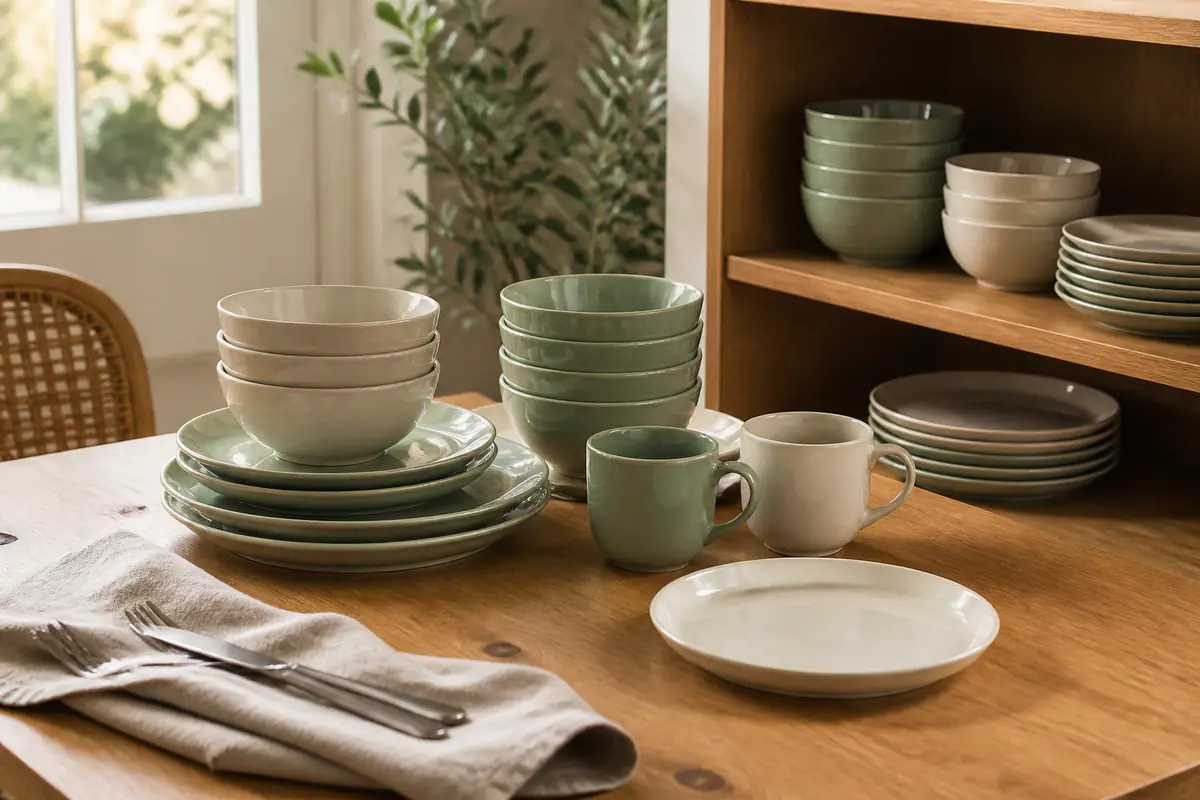
In this guide
Design the place setting from real meals
List the plates, bowls and mugs used in a normal week, measure cupboard and dishwasher clearance, then confirm food-contact suitability, care and open-stock replacement. Avoid decorative pieces that inflate the set count but duplicate shapes the household rarely uses.
Measure tolerances with the product dimensions guide, map machine capacity using the dishwasher place-settings guide and plan care with the dishwasher ownership guide.
| Household need | Useful pieces | Evidence | Avoid |
|---|---|---|---|
| Everyday meals | Dinner and side plates plus versatile bowls | Diameter, rim, depth and stacking height | Formal pieces used once a year |
| Soup, pasta and cereal | A bowl shape that handles liquid and wide meals | Capacity and internal usable area | Counting tiny bowls as full place settings |
| Dishwasher use | Stable shapes with stated dishwasher suitability | Rack, spray-arm and programme fit | Assuming “dishwasher safe” means no cosmetic change |
| Long ownership | Open-stock singles or stable range | Replacement route and colour variation policy | A sealed set with no individual pieces |
Measure before ordering
- Cupboard width, depth and shelf height.
- Dinner and side plate diameter.
- Bowl diameter, depth and capacity.
- Mug capacity and handle clearance.
- Stack height for the required quantity.
- Dishwasher rack and spray-arm clearance.
- Microwave turntable and cabinet fit.
- Open-stock replacement availability.
Count useful pieces rather than total pieces
A 16-piece set commonly means four dinner plates, four side plates, four bowls and four mugs, but bundles vary. Start from the household’s real week: number of diners, dishwasher frequency, packed lunches, cereal, soup, pasta and drinks. If mugs are already abundant, a 12-piece set without mugs may deliver more useful crockery than a larger headline count.
Build a rotation for normal use and guests without filling every shelf. Four people who run the dishwasher daily may need fewer complete settings than two people who wash twice a week. Count breakage margin separately. A serving platter or tiny bowl should not be valued as a full place-setting component unless it has a defined repeated use.
Measure plates around food and storage
Record the diameter, rim width and usable flat area of a plate that already works. A wide decorative rim reduces food area and can collide with cupboard doors, microwave walls or dishwasher racks. Deep coupe plates hold sauces but take different stacking space. Square or irregular plates can use more shelf and rack width than their nominal diameter suggests.
Measure stack height rather than one-plate thickness. Hand-finished or reactive-glaze pieces may vary, so allow tolerance and avoid a shelf that barely closes. Test the heaviest practical stack the user can lift safely. The dimensions guide explains why a listed dimension and a whole-stack requirement need separate margins.
Choose bowls by internal shape and capacity
Cereal, soup, pasta, curry and dessert use different bowl geometries. A narrow deep bowl keeps liquid contained but can be awkward for pasta; a shallow wide bowl presents food well but occupies more rack space and spills more easily in a lap. Record brimful capacity only as an upper boundary, not a sensible serving volume.
Check base stability, rim comfort and spoon access. Bowls that nest tightly save height but can trap moisture or chip when separated. A defined foot ring can protect the glazed surface but mark a shelf if rough. Buy one sample where possible and use only a food-safe trial after return eligibility and condition checks are complete.
Understand ceramic and other material labels
Porcelain, china, stoneware, earthenware, glass and melamine describe families, not complete performance guarantees. Body composition, firing, thickness, glaze and construction affect weight, porosity, chipping and thermal behaviour. HMRC classification guidance distinguishes porcelain or china tableware from other ceramic articles, but a customs category is not a consumer durability score.
For any material, require clear food-contact suitability and follow temperature and use restrictions. Decorative, antique or craft pieces not sold for food use should not be assumed suitable. The FSA explains that materials intended to contact food and drink need to be safe; ceramics are subject to specific controls. Do not use a product whose glaze is crazed, flaking or subject to a matching safety notice.
Read dishwasher and microwave claims narrowly
“Dishwasher safe” does not mean every programme, detergent and stacking method leaves decoration unchanged forever. Follow the maker’s rack position, temperature and detergent guidance. Metallic rims, applied decoration and hand-finished glazes may have restrictions. Load pieces so they do not strike each other and the spray arm can rotate.
Microwave suitability needs an explicit product claim and no prohibited metallic decoration. A piece can become hot from food even when the body is compatible. Avoid sudden temperature change unless permitted; freezer-to-oven or oven-to-cold-surface movement can cause thermal shock. The dishwasher ownership guide keeps appliance loading separate from tableware marketing.
Inspect glaze, foot and finish on arrival
Before washing, check every piece in daylight for cracks, chips, sharp rims, glaze gaps, severe rocking and rough foot rings. Natural variation can be intended, but the delivered set should match the listing and remain safe and stable. Photograph the whole piece and close defect with scale before contacting the retailer.
Do not serve food from a damaged or uncertain item merely to test it. Preserve packaging and set allocation because a retailer may need the complete bundle or only the defective piece. The fault photography guide helps record a chip, crack or mismatch without losing overall context.
Test stacking and dishwasher fit before expanding
A product can fit the cupboard individually but fail as a stack because rims do not nest or handles project. Place a paper template of the listed footprint on the shelf and include safe finger clearance. In the dishwasher, compare plate diameter and bowl depth with rack spacing and the spray arm. Oversized pieces can reduce a nominal place-setting capacity.
Our dishwasher place-settings guide explains why the rated standard load may not represent wide bowls and mugs. Buy a small starter set or single open-stock pieces before a full extension where the retailer allows. Do not wash a return candidate until dimensions and visible condition are accepted.
Plan replacement and colour continuity
Open-stock dinnerware lets the owner replace one broken plate or add bowls without rebuying a full set. Check whether individual pieces are sold, whether the range is permanent or seasonal and how colours or reactive glazes vary between batches. A replacement route is evidence only while stock and support remain; save the range name and product code.
A plain complementary piece can be easier to replace than a distinctive print. If the set is a gift, include the receipt and care information without obliging the recipient to maintain a fragile discontinued pattern. The keen-cook gift guide helps prioritise useful ownership over the visual impact of a large box.
Respond to damage, faults and safety notices
Stop using a piece after a crack, sharp chip, unstable base, flaking decoration or a relevant official recall. Keep fragments safely away from food and children and photograph before disposal. The UK product recall guide explains model and batch matching and why the official notice controls the action.
For an ordinary defect, preserve the receipt, listing and care followed and contact the retailer. The faulty-goods guide separates statutory remedies from an optional manufacturer guarantee. Do not continue dishwasher or microwave testing after a visible structural fault merely to create more evidence.
Choose a boxed set or open-stock collection?
Every included piece is useful
The dimensions, storage, machine fit and care work and the bundle is cheaper than the same needed pieces.
Replacement and custom quantities matter
You want more bowls than mugs, need to test one piece or expect breakage and later additions.
Balanced verdict
The best dinnerware set is a measured system of pieces the household actually uses, stores, washes and can replace. Compare internal dimensions, stack height, material restrictions, finish and open-stock support rather than box count.
Use the linked dimensions, dishwasher, fault evidence, keen-cook gift, recall and faulty-goods guides.
Official checks:
Food Standards Agency food-contact materials information ↗
UK government ceramic tableware classification guidance ↗
UK Product Safety Alerts, Reports and Recalls ↗
UK product labelling law overview ↗
Frequently asked questions
How many dinnerware pieces do I need?
Count diners, wash frequency and real meal shapes. Buy enough useful plates and bowls for the cycle rather than a large headline set.
Is porcelain better than stoneware?
Not universally — Body, firing, thickness, glaze, weight, care and exact construction matter more than the family name alone.
Does dishwasher safe mean the decoration will never change?
No — Follow the exact programme, detergent and loading instructions; some cosmetic change may still occur over long use.
How do I know plates will fit my dishwasher?
Compare diameter, rim and depth with rack spacing and spray-arm clearance. Standard place-setting ratings may use different shapes.
Should I buy open-stock dinnerware?
It is useful when you want custom quantities, a trial piece or replacements, but availability and colour continuity can still change.
Methodology and limitations
We reviewed current FSA food-contact material information, UK ceramic classification and product safety sources on 2 September 2026. We assessed useful piece count, dimensions, material labels, dishwasher and microwave claims, stacking, finish, replacement and fault evidence. We did not test strength, migration, dishwasher durability or thermal shock of individual products.
Limitations
Material and care claims vary by exact product. Hand-finished pieces can differ within stated tolerances, and stock, open-stock support, prices and safety notices change. Follow the maker’s current food-contact, dishwasher, microwave and thermal instructions; this guide cannot certify an unlabelled or damaged item as safe.