How to photograph a product fault: overview, detail, scale and timeline
Useful fault photographs identify the product, show where the problem sits, record its detail and preserve the sequence without hiding context. Create a small, organised evidence set and pair it with a factual timeline, order record and the remedy requested.
In this guide
Build a sequence that another person can understand
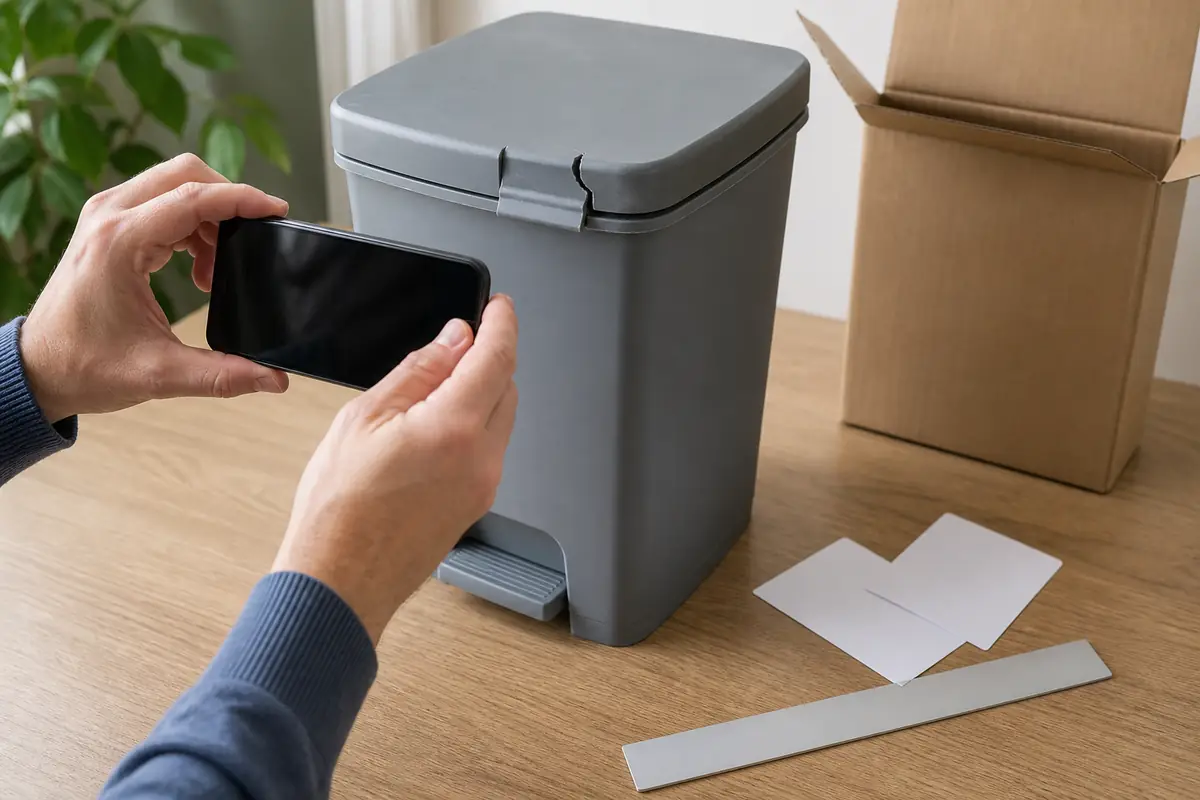
Take one whole-product view, one location view, several sharp close-ups and a scale image where size matters. Keep the original files, record dates separately and stop if reproducing the fault could be unsafe or cause further damage. Evidence should explain the problem, not stage it.
A single extreme close-up can show a crack without proving which product it belongs to. A distant photograph can identify the item but hide the defect. The strongest record moves logically from context to detail and preserves enough information for the retailer, repairer, payment provider or adviser to assess what happened.
Use a five-part evidence sequence
| Image | Purpose | Include | Avoid |
|---|---|---|---|
| 1. Overview | Identifies the complete product and condition. | Whole item in even light and neutral surroundings. | Personal documents, faces and irrelevant possessions. |
| 2. Location | Shows where the fault sits. | Enough surrounding structure to orient the viewer. | Zoom so tight that location becomes ambiguous. |
| 3. Detail | Shows texture, break, mark or misalignment. | Several angles with accurate focus and colour. | Filters, artificial sharpening and misleading contrast. |
| 4. Scale | Indicates length, gap or area. | A clean ruler or neutral reference beside, not over, the fault. | Measurements that bend, obscure or alter the item. |
| 5. Sequence | Records change or intermittent behaviour. | Dated stages, video or screenshots with a written timeline. | Unsafe repetition or editing that removes chronology. |
Start with safety and preservation
Disconnect or isolate a product only where the maker’s instructions permit and it is safe to do so. Do not energise a damaged electrical product, run leaking equipment, taste suspect food, climb unstable furniture or dismantle safety-critical parts for a photograph. A retailer cannot reasonably need evidence created by risking injury.
Preserve the product in its current state where practical. Do not clean away residue, force a joint, trim loose material or repeatedly operate a failing mechanism before documenting it. If immediate action is necessary to prevent harm or property damage, prioritise safety and write down what was done and why.
Prepare neutral light and a stable camera
- Use diffuse daylight or broad room light. Harsh flash can hide dents and create false highlights.
- Clean the lens. A fingerprint can make every detail appear hazy.
- Support the phone or camera. Rest elbows or use a stable stand rather than accepting blur.
- Tap the fault to focus. Check the saved image at full size before moving on.
- Take landscape and portrait context. The recipient may view evidence on different systems.
- Keep colour honest. Disable beauty filters and avoid edits that change the appearance.
Show identity without exposing private data
Record the model or serial identifier separately if it is relevant, but do not publish it openly. A private claim may need a clear image of the product label; crop or redact personal addresses, order numbers and network credentials from any version shared beyond the responsible organisation. Keep the unredacted original in a secure location if it may be needed.
Photograph packaging only when it supports transit damage, identity or handling evidence. Include the damaged corner, protection inside and its relationship to the product. Do not make packaging the entire case when the complaint concerns the goods themselves.
Use scale carefully
Place a rigid ruler on the same plane as the fault where safe, with the starting mark visible. Photograph directly rather than at a steep angle that distorts size. For curved surfaces, state that the measurement is approximate and add multiple views. A coin is familiar but not a precise measuring device and may obscure a small defect.
Keep one photograph without the ruler so the evidence also shows the untouched area. If pressure opens a crack or changes a gap, do not force it merely to increase visibility. Describe the difference between resting and lightly loaded condition only if the action is safe and normal.
Record intermittent and functional faults
A short unedited video can show a noise, failed control or sequence that still images cannot. Begin with the whole product, show the relevant setting without exposing accounts or personal messages, then record the behaviour once. Speak a simple factual description or provide a written caption afterwards.
Screen recordings may expose notifications, email addresses, payment details or location. Use a demonstration account or privacy mode where available, and never disclose passwords or one-time codes. For software-dependent products, record the device model, app or firmware version and the steps taken without claiming a cause you cannot establish.
Create a factual timeline alongside the images
Write the purchase or delivery date, first observation, normal use immediately before the issue, any safety action, contact dates and responses. Distinguish what you saw from what you infer. “The seam opened by approximately 20 mm during ordinary wear” is stronger than “the factory used bad glue” when construction has not been examined.
Keep the timeline with the order confirmation or other evidence. If a receipt is unavailable, use our alternative proof-of-purchase guide. Name files consistently, such as 01-overview, 02-location and 03-detail, while retaining originals and their metadata.
Send a focused complaint, not a data dump
Select the smallest set that proves identity, context and detail. Explain the fault in plain language, when it appeared, what safe checks were completed and the remedy requested. Large attachments may be rejected, so use the retailer’s upload route or agreed file-sharing method and keep confirmation that the evidence was sent.
Do not post personal or serial information publicly to force a response. Follow our effective retailer complaint process, check current UK return and refund rights and use the payment-claim comparison only when appropriate.
Preserve originals and document any edits
Keep the original files in at least one reliable location and work on copies. Cropping, redaction and compression can be reasonable for privacy or sending, but record what changed and retain the source. Do not alter pixels around the fault, remove context or combine separate moments into an image that appears continuous.
Email and messaging services may compress files or remove metadata. That does not automatically make evidence useless, but retaining the original helps. Export a contact sheet or PDF only as a convenient index, not as the sole copy of the photographs.
Separate delivery damage from product performance
When damage is noticed at handover, photograph the sealed or newly opened package, the protection around the affected area, the whole product and the damage in sequence. Do not discard packaging before the retailer advises whether it is needed for collection, but do not keep unsafe or contaminated material inside the home merely for evidence. Record any note made on the delivery document and keep your own copy.
If the product also fails during operation, create a separate sequence after following the manufacturer’s safe setup instructions. Do not imply that crushed packaging caused an electronic or mechanical fault unless a qualified assessment supports that link. The evidence can accurately show that both conditions existed without asserting causation.
For a large item, include the room context only as far as needed to show delivery position and damage. Blur or exclude family photographs, security devices and personal papers from the version sent. If collection is arranged, take a final overview immediately before handover and retain the collection receipt.
Which evidence route should you use?
The fault is visible and stable
An overview, location, detail and scale set explains the condition without operating or altering the product.
The problem is intermittent, internal or disputed
Safe operation needs a sequence, or a qualified inspection is required to assess cause, repair or safety.
Balanced verdict
Clear context beats dramatic magnification. A short, ordered evidence set with original files and a factual timeline makes the problem easier to assess. Protect privacy, avoid unsupported causes and never reproduce a fault when doing so could be unsafe.
Before sending, confirm who is responsible for the sale, use the return-policy comparison method, and browse more General Advice or the shop directory.
Check current official guidance:
Citizens Advice faulty-goods guidance ↗ICO personal-data guidance ↗GOV.UK consumer rights ↗
Frequently asked questions
Do photographs need a timestamp?
A consistent timeline and original files are useful. Camera metadata can support dates but should not be treated as the only proof.
Should I include the serial number?
Provide it privately when relevant, but redact it from public posts and protect copies containing personal information.
Can I edit a fault photograph?
Crop, redact or compress a copy when necessary, disclose material changes and retain the untouched original.
Is video better than photographs?
Only for behaviour or sequence. Clear stills are easier to inspect for visible damage; use both when each adds evidence.
What if testing the product is unsafe?
Do not test it. Isolate it safely where appropriate, document visible condition and seek retailer or qualified expert guidance.
Methodology and limitations
We structured fault evidence around safety, identity, context, detail, scale, sequence, privacy, file preservation and complaint use. Official UK consumer and data-protection guidance was checked on 29 August 2026. No legal claim or product failure was adjudicated.
Limitations
Evidence requirements depend on the product, dispute and forum. Photographs may show condition without proving cause. Seek qualified technical or legal advice where safety, value or liability makes it necessary.
The image is an editorial illustration, not a photograph from a product test. Links are editorial and non-affiliate.