Concealers ownership guide: creasing, hygiene and replacement
Concealer stays useful when shade, placement, thin layers, hygiene and product life are controlled. More coverage is not better when it creates creasing, irritation or an open tube that cannot be finished safely.
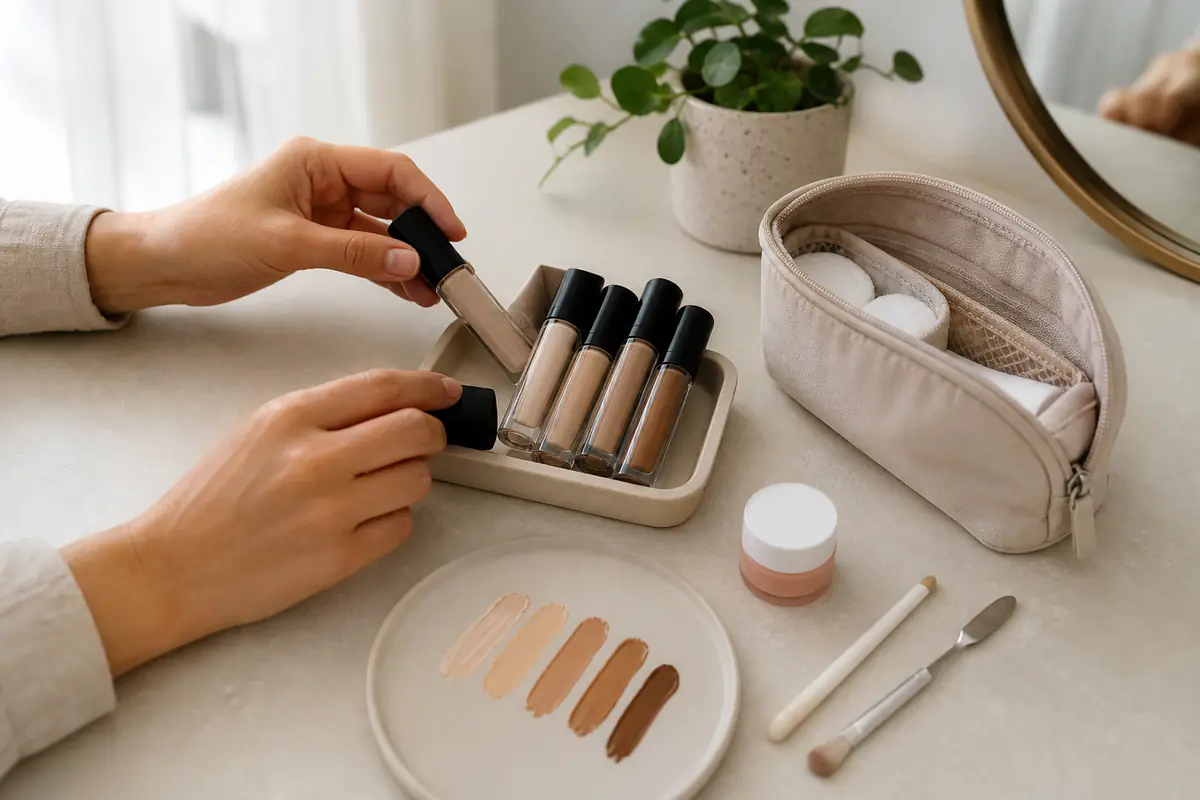
In this guide
Use the smallest clean amount that solves the exact placement
Creasing and poor wear can come from excess layers, incompatible skincare or movement—not only from weak pigment. Record opening date, keep the applicator clean, test one variable and replace the product when texture, smell, comfort or packaging changes.
Choose the product through the concealer value guide, refine placement with the concealer selection guide, and coordinate base layers using the foundation ownership guide.
| Problem | Evidence to record | Controlled response | Avoid |
|---|---|---|---|
| Creasing | Placement, amount, skincare and time | Thin layer and one-variable test | Adding more powder blindly |
| Shade shift | Daylight, season and formula state | Reassess depth and undertone | Correcting with many layers |
| Applicator hygiene | Contact, opening date and pack condition | Clean tools and stop sharing | Double-dipping shared product |
| Texture change | Storage, smell and separation | Stop and replace | Adding liquid |
Concealer ownership record
- Save exact formula and shade.
- Write opening date and batch.
- Map under-eye and blemish use.
- Use clean separate tools.
- Keep cap and neck clean.
- Keep concealer in the conditions specified on its package, with applicators and closures maintained as instructed.
- Log creasing and comfort.
- Stop when product changes.
Separate under-eye and blemish jobs
Under-eye darkness, redness, raised blemishes and flat pigmentation need different shade, texture, coverage and placement. One thick formula may not be the best compromise.
Write the primary job before application. Using full coverage everywhere can create texture and product waste without improving the actual target.
Record exact shade and formula
Keep brand, line, shade, finish, batch and opening date. A familiar shade name can differ across formula, reformulation and region.
Photograph the label and a daylight result. If a replacement changes, compare codes and ingredients before blaming technique alone.
Use small strategic placement
Place a small amount where colour correction or coverage is needed and blend outward with a clean tool. Let one controlled layer settle before adding more.
Product spread beyond the target can emphasise lines, dryness and movement. More pigment is not the same as more natural coverage.
Diagnose creasing by layer
Record skincare, sunscreen, foundation, concealer amount, powder, placement and time to crease. Eye movement makes some settling normal.
Simplify to a known routine and change one variable. Buying a drier concealer without identifying excess emollient or product can reproduce the problem.
Use powder as a measured trade-off
A small compatible powder amount can reduce transfer, while heavy setting can emphasise dryness and fine lines. Compare at matched application.
Do not bake or repeatedly add powder solely to make an unsuitable formula survive. Comfort and appearance over the real day decide value.
Keep doe-foot applicators hygienic
Apply to clean skin or a clean palette according to product design and avoid touching an irritated lesion before returning the wand. Do not share product.
Close promptly and keep the neck clean without introducing fibres or cleaner into the tube. Never add water, oil or solvent to change texture.
Clean reusable brushes and sponges
Wash with a compatible method, rinse fully and dry in a clean ventilated place. A damp sponge stored in a closed bag is not ready for reuse.
Single-use tools should not be double-dipped or reused across people. Keep application tools separate from products used during an eye or skin infection.
Date opening and watch the pack
Follow period-after-opening and any shorter product instruction. Replace earlier if smell, colour, texture, separation, comfort, cap or applicator integrity changes.
Remaining volume does not justify use after the product becomes unsuitable. Use beauty cost per use with successful applications before replacement.
Expect seasonal shade and texture changes
Skin depth, redness, oil and dryness can change with sun, heating, humidity and skincare. Recheck in stable daylight across seasons.
A small seasonal wardrobe can be rational, but opening several near-duplicates at once increases waste and makes reactions harder to attribute.
Coordinate with foundation rather than stacking
Decide whether foundation already provides enough coverage and add concealer only where needed. Thick overlapping layers can pill, crease or transfer.
Record compatible combinations and ratios on a clean palette rather than mixing products inside original packaging.
Protect the eye area
Keep product out of the eye and follow exact placement instructions. Stop use if burning, swelling, persistent watering, rash or visual change occurs.
Do not continue testing through symptoms to complete a wear record. Seek appropriate professional advice for significant or persistent problems.
Treat acne claims cautiously
Cosmetic coverage does not diagnose or treat a skin condition. Review ingredients and claims without assuming non-comedogenic or dermatologist-tested wording guarantees individual tolerance.
Use the beauty-claims guide to ask what was tested, on whom and against what baseline.
Store away from heat and moisture
Keep the cap closed in a stable environment under label instructions. A hot car, sunny sill or damp bathroom can affect formula and packaging.
Travel with the cap protected and do not refill a small tube by topping new product onto old residue. Label any permitted clean decant.
Replace by evidence rather than loyalty
When a line changes shade system, applicator, ingredients or pack, treat it as a new product and recheck comfort and placement. Do not stockpile beyond realistic storage and opening.
Other routine checks in the the Beauty archive can help distinguish a concealer-handling problem from a broader cosmetic purchase. Dispose of product and packaging through locally accepted routes without washing bulk residue into drains.
Use colour correctors as a separate decision
Peach, orange, green or other correctors change the colour problem before skin-tone concealer. Use a minimal appropriate amount and record the extra layer in wear and cost.
A corrector is not automatically needed for every dark circle or redness. Excess contrasting pigment can demand more concealer and create texture.
Treat spot application with extra hygiene
Apply from a clean palette or separate tool rather than touching the tube applicator directly to a broken or inflamed blemish. Wash hands and tools before and after.
Cosmetic coverage should not delay care for painful, spreading or persistent skin symptoms. Stop if the product increases discomfort.
Check flash and camera behaviour separately
Powder, mineral pigments and camera processing can change the appearance under flash. Test the actual event lighting without treating one phone image as daylight truth.
A product that looks suitable in person but different on camera presents a use-case trade-off, not automatically a formula defect.
Control travel and handbag heat
Protect the cap, keep the product within storage instructions and avoid leaving it in a hot car or direct sun. A leaking tube can contaminate tools and other cosmetics.
Use a clean labelled travel container only when transfer is appropriate. Do not top new product onto old residue or return unused decant to the main pack.
Keep one concise wear record
For several normal days, note placement, amount, surrounding skincare, crease time, transfer, comfort and removal. Keep lighting and tools reasonably consistent.
This record distinguishes one unusual day from a repeatable mismatch and supports a better replacement. Stop immediately rather than completing the record through irritation.
Plan removal before stronger wear
A long-wear or waterproof concealer needs a compatible gentle removal route. Budget cleanser, time and rubbing risk before choosing durability.
Hold and dissolve as directed rather than scrubbing the eye area or blemish. Persistent residue is a product-routine mismatch, not a reason for harsher force.
Check cap, wiper and wand condition
Inspect whether the cap closes fully, the wiper controls product and the wand remains smooth and intact. Cracks, loose parts or a damaged applicator can contaminate use.
Do not trim or glue a wand. Preserve batch and purchase evidence and contact the retailer or manufacturer when packaging fails prematurely.
Separate correction from brightening
A brightening shade can draw attention and alter face balance without neutralising underlying colour. Test the exact placement in daylight and normal photographs.
Do not use a much lighter shade as the default answer to darkness. Undertone, texture and thin targeted correction can be more effective.
Close the product record at replacement
Note why the tube ended: used up, expired, changed texture, damaged pack, shade mismatch or irritation. This prevents the same ownership problem being repurchased.
Keep only the ingredient and batch information needed for comparison or professional advice. Dispose of residue and packaging through locally accepted routes.
What should you do when concealer stops performing?
The product remains stable and comfortable
Placement, amount, skincare or powder can be isolated without contaminating or diluting the formula.
The product or skin has changed
Expiry, smell, texture, packaging integrity or irritation removes the remaining ownership value.
Balanced verdict
Concealer ownership is targeted placement plus hygiene and honest replacement. Use thin controlled layers, keep tools clean and track opening and skin context.
A smaller verified product used successfully is better value than a large tube forced beyond comfort or stability.
Official checks:
GOV.UK cosmetic product guidance ↗
NHS contact dermatitis information ↗
NHS red eye guidance ↗
GOV.UK product safety advice ↗
Frequently asked questions
What should I adjust first when my concealer settles into lines?
Movement, placement, excess product, skincare, foundation and powder can all contribute; test one variable.
Can water be added to dry concealer?
Do not dilute it unless the manufacturer explicitly instructs that method.
Should concealer be shared?
No — Sharing product or applicators increases hygiene risk, especially around eyes and blemishes.
How should opening date be tracked?
Record the date and follow the exact period-after-opening guidance plus any earlier product or comfort change.
Is one shade enough all year?
Not always — Skin depth and redness can change, but keep the open product wardrobe controlled.
Methodology and limitations
We assessed concealer ownership through placement, creasing, powder, applicators, tools, product life, seasonal change, foundation interaction, eye safety, claims, storage and replacement. Our concealer ownership advice is not based on a skin trial or laboratory assessment of a named formula.
Limitations
Formulas, shades, packaging and individual skin or eye responses vary. Check the particular concealer’s label and ingredients; seek suitable professional advice for symptoms that persist rather than continuing to alter the application routine.