Choosing bedspreads and coverlets: size, drape, layers and care
A bedspread or coverlet can add a washable top layer, visual structure or modest warmth, but product labels are inconsistent. Measure the actual bed, decide where the layer will end and compare fibre, weave, weight and care rather than relying on “double” or “king”.
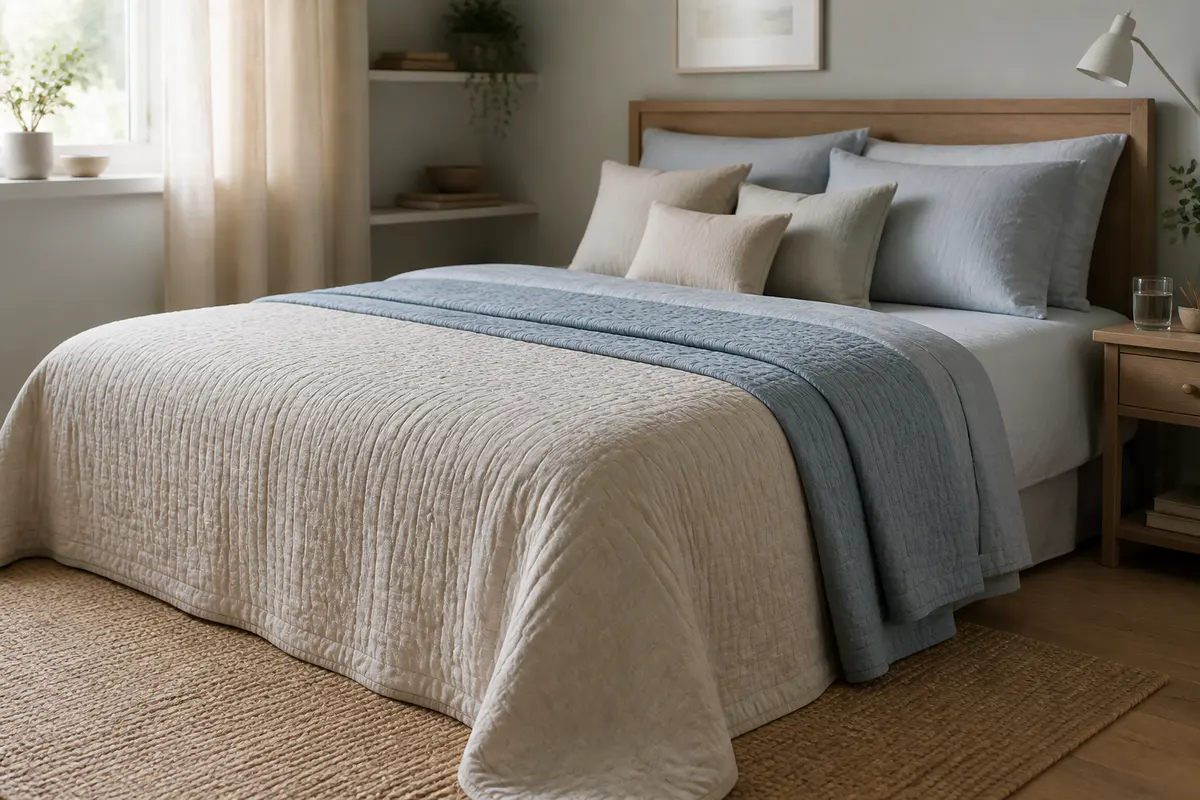
In this guide
Buy by finished dimensions and intended drop
Measure mattress, bedding depth, frame and visible sides before choosing a coverlet. A useful layer must drape as planned, launder within the home or budget, and work with the duvet rather than creating uncontrolled bulk.
Start with bedding terms explained, compare warmth through the duvet tog guide, and measure furniture accurately with our room measurement method.
| Decision | Evidence | Measure or test | Common mistake |
|---|---|---|---|
| Top-of-bed layer | Finished width and length | Mattress top plus desired side and foot drop | Buying only by bed-size name |
| Full bedspread | Frame, floor clearance and pillow arrangement | Map all visible edges separately | Assuming a symmetric drop on every frame |
| Warmth layer | Fibre, construction, weight and other bedding | Trial combined layers at room conditions | Treating appearance as a tog rating |
| Washable protection | Care label, machine and drying capacity | Check dry weight and wet handling | It fits the bed but not the washer |
Bed layer measurement record
- Measure mattress width, length and depth.
- Record frame, topper and duvet overhang.
- Choose which sides and foot should be covered.
- Calculate the desired drop at each edge.
- Compare finished product dimensions, not bed-size label.
- Read fibre, construction, weight and complete care.
- Check washing, drying and storage capacity.
- Trial colour and texture with existing bedding in daylight.
Decide whether the layer is functional, decorative or both
A coverlet may protect the duvet, add a light layer, introduce texture or make a bed look finished during the day. A full bedspread may extend farther and conceal more of the frame. Write the primary role before choosing colour.
If extra winter warmth is the goal, a decorative description is not thermal evidence. Compare construction and how the layer works with the existing duvet, room temperature and sleeper rather than expecting a thin quilted look to behave like tested bedding.
Ignore bed-size names until finished dimensions are known
“Double”, “king”, “throw” and “bedspread” are not sufficient measurements across sellers. Record the actual finished width and length and check whether any fringe or decorative border is included.
A product can fit the mattress top but provide almost no side drop, or trail onto the floor on a low frame. Use the dimension tolerance guide and keep a small allowance for laundering and arrangement.
Calculate each visible edge separately
Measure mattress width, length and depth, then add the desired left, right and foot drops. At the head, decide whether the coverlet will stop below pillows, tuck under them or fold back over the duvet.
Beds against a wall, ottoman bases and asymmetric rooms may need different visible drops. Sketch the plan rather than assuming centring is automatically best. A deliberate short wall side can place more fabric where it is seen.
Deep mattresses and toppers change the geometry
Mattress depth, protector, topper and a lofty duvet all use part of the fabric that a flat diagram ignores. Make the bed normally and measure over the real layers with a flexible tape.
If the coverlet will fold at the foot, include that doubled section in the visual and handling plan. A heavy folded layer can slide or become cumbersome overnight even when the dimensions look correct.
Fibre names do not describe the whole fabric
Cotton, linen, polyester, viscose and blends can appear in woven, knitted, quilted or filled constructions with very different weight and care. Read shell, filling, backing, trim and fibre percentages.
Use the fabric composition guide to avoid treating natural or synthetic as a single quality scale. Weave density, stitching, finish and intended washing matter alongside the fibre.
Construction controls drape and visual weight
A matelassé-style weave, stitched quilt, waffle texture and plain woven cover fall differently over a corner. Product photographs may be pinned or arranged on a smaller bed, so compare close construction images and finished weight when available.
For a crisp tailored bed, choose a construction that holds an edge without excessive stiffness. For a relaxed layer, accept movement but check whether fringe, loops or loose texture will catch on pets, jewellery or rough frames.
Colour must be tested against the room and existing bedding
Screen colour varies. Compare the seller description, fibre, close photographs and return policy, then view the delivered item in daylight and evening lighting before washing. Keep it protected during the decision.
A neutral is not automatically compatible: undertone can make existing white, cream, wood or wall colour look different. The wood-tone mixing guide offers a repeat-and-contrast method rather than a matching-set rule.
Warmth should remain adjustable
Layering works when each component can be added, folded down or removed without trapping the sleeper. A heavy bedspread over a warm duvet may create more heat and handling than expected.
The electric blanket guide covers a separate controlled heat decision. Do not place bedding over or around a heated product contrary to either maker’s instructions.
Care capacity can decide ownership value
Read the complete care label before purchase and compare the dry product with the washing-machine and drying capacity. A large wet cotton layer can be much harder to lift and dry than its shelf weight suggests.
Professional laundering adds cost and transport. Line drying requires space and weather; tumble drying requires explicit permission and sufficient drum capacity. A washable claim is incomplete without a realistic household route.
Shrinkage and texture change deserve an allowance
Follow the label exactly and avoid promising a specific shrinkage amount unless the manufacturer states it. Quilted stitching, cotton-rich cloth and raised textures can change dimensions or surface after laundering.
Measure before and after the first approved wash and reshape as directed. Do not buy an excessively oversized piece as a guessed correction, because the original drape and post-wash change remain uncertain.
Inspect seams, quilting and corners on arrival
Lay the item flat and check rectangular alignment, skipped stitches, loose threads, puckered quilting, damaged fringe and inconsistent borders. Then place it on the bed to see whether corners hang evenly.
Photograph a possible fault before washing or repair. Use the fault evidence guide and contact the seller without turning a manufacturing issue into an irreversible home alteration.
Night-time storage needs a place
If the coverlet will be removed every night, decide where it goes without collecting dust or becoming a trip hazard. A bench, breathable basket or deliberate fold may be needed; this counts in the room footprint.
Do not compress a damp or recently used layer into sealed storage. Air and follow care directions. Seasonal storage should be clean, dry and protected from snagging rather than merely hidden.
Style value comes from repeatable arrangement
Test one full spread, a foot fold and a diagonal or partial layer. Choose the arrangement that can be repeated in ordinary mornings, not only for a photograph. A complicated setup often becomes an unused textile.
Coordinate texture and two or three repeated colours rather than buying a complete matching set. The cushion guide can help balance scale, but extra cushions should have storage and a real purpose.
Buy one layer only after the current bed is measured
Use sheets or an existing blanket to mock the proposed drop and colour block. This reveals whether the room needs full floor-adjacent coverage, a compact coverlet or no extra layer at all.
Keep the final shortlist to products with transparent dimensions and care. A cheaper piece that cannot be washed, stored or arranged is not value; a durable layer used every day can justify more.
Choose a coverlet or a full bedspread?
A compact top layer and controlled drop suit the bed
It can fold, wash and store easily while adding texture, protection or adjustable light warmth.
Longer visual coverage is genuinely useful
Finished dimensions create the intended side and foot drops, and the larger wet-care and storage burden is practical.
Balanced verdict
Finished dimensions and care decide whether a bed layer earns its space. Measure the made bed, map every drop, read the complete construction and confirm washing, drying and storage. Let colour support a workable layer rather than conceal poor geometry.
Browse the Style & Gifts archive and compare lighter layers in our throws and blankets guide.
Official checks:
GOV.UK textile fibre labelling guidance ↗
GINETEX official care symbols ↗
Frequently asked questions
What is the difference between a coverlet and a bedspread?
Labels vary. A coverlet is often a shorter top layer and a bedspread often gives more coverage, but finished dimensions and construction are the reliable evidence.
Should a bedspread reach the floor?
Only if that is the chosen look and the dimensions, cleaning, pets and trip risk make it practical. Measure each visible edge.
Can a coverlet replace a duvet?
Sometimes in suitable conditions, but appearance does not establish warmth. Compare construction, room temperature and the sleeper’s needs.
How much overhang is needed?
There is no universal number — Measure mattress and existing layers, then add the intended drop on left, right and foot separately.
Should a bedspread be washed before use?
Read the bedspread’s own laundering instructions, but first check its overhang, colour and delivered condition without washing or removing return-critical labels; laundering belongs after the decision to keep it.
Methodology and limitations
We assessed bedspreads and coverlets through role, finished dimensions, mattress and frame geometry, fibre, construction, colour, warmth, care, shrinkage risk, storage and repeatable arrangement, supported by UK textile-labelling and GINETEX care-symbol guidance. The assessment does not include laundering a named bedspread, measuring its shrinkage or checking its warmth overnight; those properties cannot be established from an attractive bedroom photograph.
Limitations
Retailer terminology, dimensions, colours and care vary. Product photography cannot prove drape, warmth or post-wash change. Recheck the exact item and measure the fully made bed before purchase and publication.