Running tights fit guide: rise, waistband, opacity, pockets and movement
Running tights need to stay in position through stride, carry the intended essentials and manage weather without rubbing or becoming transparent. The label size is only the start of the fit decision.
In this guide
Rehearse the run while the garment is still returnable
Measure against the exact chart, then test rise, waistband, stride, seams, opacity and loaded pockets together. A fabric specification or influencer fit cannot prove how a particular cut will behave on another body.
Use the clothing sizing guide, compare evidence through the quality checklist and read the care-label guide before accepting performance claims.
| Feature | Useful when | Test indoors | Trade-off |
|---|---|---|---|
| High rise | More torso coverage is preferred | Bend, sit and breathe | Can roll or feel warm |
| Drawcord waist | Fit changes under load | Tie, move and release | Pressure and loose ends |
| Side pockets | Phone or soft-flask carry | Load both sides and jog gently | Bounce and uneven pull |
| Brushed fabric | Cooler low-intensity runs | Layer and move | More warmth and slower drying |
Fit and function record
- Body and exact chart measurements.
- Rise and waistband construction.
- Gusset and seam map.
- Intended underwear and layers.
- Pocket dimensions and closure.
- Leg length and ankle finish.
- Light, weather and visibility needs.
- Care and return conditions.
Define the run before choosing fabric
Record distance, pace, season, route, likely wind or rain and whether the tights are for training, racing, trail use or travel. A winter recovery run and a warm indoor treadmill session create different needs for warmth, airflow and storage.
Do not choose solely from a temperature label because comfort depends on exertion, wind, layering and individual tolerance. Treat the seller’s range as a comparison clue, then check fabric, panels, vents and the return route.
Measure for this brand and cut
Take the measurements requested by the exact product chart and note whether the table describes body measurements or finished garment dimensions. Record waist, hip and inside leg where requested, holding the tape level without compressing the body.
Generic UK size conversion is not enough. The clothing-quality guide explains what to do when waist and hip indicate different sizes; do not simply choose smaller to obtain more compression.
Choose rise by movement and layering
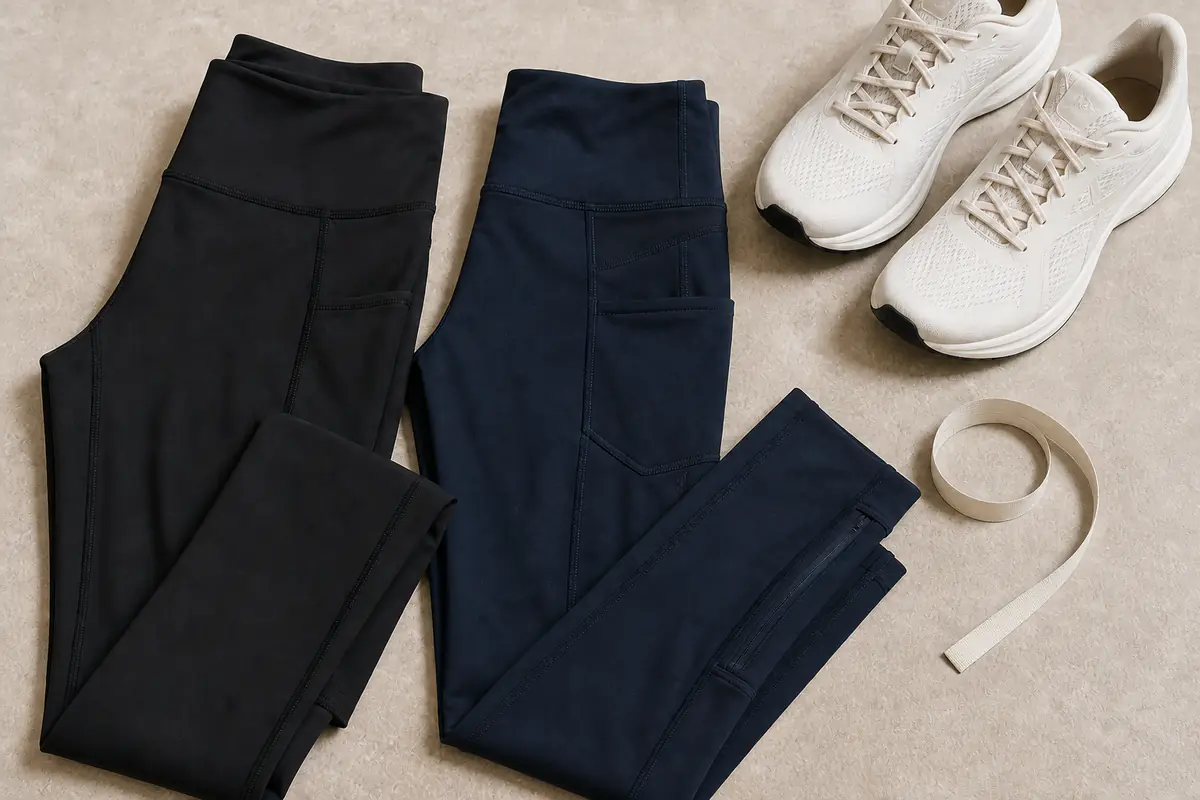
Low, mid and high rise change coverage, heat and where the waistband meets the torso. Check the stated front and back rise if available, then compare with tops, underwear and any running belt used in practice.
Squat, lunge and raise a knee. The back should remain covered and the front should not fold into a hard pressure line. A high waistband that feels smooth while standing can roll when sitting or climbing.
Inspect waistband construction
A wide fabric waistband, enclosed elastic and drawcord behave differently under repeated stride and pocket load. Width alone does not prevent slipping; cut, elastic recovery, torso shape and carried weight matter.
Tie a drawcord in a releasable way and check whether ends bounce or press under a jacket. Internal pockets and seams can create local stiffness. If the band must be painfully tight to stay up, the size or pattern is not working.
Check gusset and seam placement
A shaped gusset can redistribute seams around high-movement areas, but its benefit depends on pattern, stretch and fit. Map seams at the inner thigh, crotch, back knee and waistband rather than accepting “flatlock” as proof of comfort.
Walk, lunge and imitate the full stride for several minutes indoors. Heat, sweat and duration can change friction, so this rehearsal cannot guarantee chafe-free running, but it can reject obvious pulling, twisting and hard seam intersections.
Test opacity in relevant positions
Check the garment in bright indirect light while standing, bending and squatting, with the intended underwear. Dark colour or thick hand-feel does not guarantee opacity when a panel stretches across hips or knees.
Use a mirror or trusted helper without recording intimate images. Opacity can vary by size, colour and wear, so a review of another variant is weak evidence. Keep the garment clean and follow the seller’s hygiene conditions.
Load pockets with the real objects
Measure the phone, keys, card or soft flask and compare with published pocket dimensions. A photograph of a device partly inserted does not prove retention during running, especially when model sizes differ.
Load pockets indoors, then walk and jog gently in place where safe. Check bounce, edge pressure, fabric sag and whether weight pulls the waistband sideways. Use the exact-model checklist when retailer variants have different pocket layouts.
Choose length by stride and ankle finish
Full length, seven-eighths and capri cuts depend on inseam and body proportion, not only product naming. Check whether the hem sits behind the knee, rubs the calf or leaves an unwanted gap above socks.
Zipped ankles can aid dressing but add hardware and a seam near footwear. Stirrup or gripper details need the exact shoe and sock combination. Excess fabric behind the knee may crease repeatedly even when waist and hip fit.
Assess compression claims conservatively
A close fit is not automatically medical-grade compression or proven performance benefit. Look for the exact scope and test behind any quantified claim, and distinguish ordinary supportive stretch from a regulated or clinically directed product.
Do not size down to manufacture stronger pressure. Stop for numbness, tingling, colour change or pain, and seek appropriate professional advice for circulatory, post-operative or medical use. This guide covers ordinary running apparel only.
Match fabric and panels to weather
Brushed interiors add warmth; mesh panels and perforations may increase airflow; wind-resistant fronts can reduce chill. Each can create seams, weight or drying trade-offs, and product language may describe a fabric panel rather than the whole garment.
Build a layering plan with the autumn layering guide and the waterproof-jacket explainer. Tights do not replace a weather shell when exposure and safety require one.
Treat reflective details as limited aids
Reflective trims can improve contrast only when light reaches them from a useful direction and the trim remains visible. Small marks are not a complete road-safety system and do not replace route choice, lighting or high-visibility measures.
Inspect placement while moving and while wearing a jacket. Pockets, mud and outer layers can cover details. Do not infer certified visibility performance from silver-looking decoration unless the exact claim and standard are supplied.
Plan underwear and skin comfort
Choose the underwear or liner that will actually be worn and check edges under the tights. Going without underwear is a personal decision affected by garment design, hygiene and care; retailer photographs cannot settle it.
Avoid new combinations on a long event. Test gradually after keeping the garment, follow personal skin needs and stop if irritation develops. Persistent symptoms need appropriate advice rather than repeated fabric experiments.
Read care for elastic recovery
Check washing temperature, detergent, conditioner and drying restrictions. High heat and unsuitable products can affect stretch fabrics, while elaborate care can make a frequently used item impractical. Fasten closures and empty pockets before washing as directed.
Do not promise a fixed number of washes. Track waistband recovery, opacity, seam condition and fit over time. Cost per wear becomes meaningful only with actual use, not an invented longevity estimate.
Preserve the return decision
Review hygiene exclusions, tags and return postage before ordering. Try on cleanly indoors and do not remove labels, wash, apply anti-chafe product or complete a sweaty run until the keep decision is made.
If the item is faulty, record the order, exact model and defect without stretching or destructive testing. The returns guide outlines evidence and deadlines; contact the seller for handling instructions.
Run the complete indoor rehearsal
Confirm the delivered model, size, colour and pocket layout first. Inspect stitching, gusset, waistband and hems in good light. Put on the intended underwear, top, socks, shoes and running belt while everything remains clean and the return deadline is recorded.
Walk stairs, perform controlled lunges, lift knees, bend, rotate and jog gently in place on a safe surface. Test waistband position before and after loading each pocket. This cannot reproduce sweat or a long run, but it exposes slipping, bounce, pulling and incompatible layers.
Check opacity from several angles in bright indirect light without making or sharing intimate recordings. Inspect whether seams twist, the rise moves, fabric gathers behind knees or ankle hardware meets the shoe. Stop for pain, numbness or restricted movement rather than treating discomfort as expected compression.
Write one clear outcome: keep, exchange or return. If exchanging, identify whether waist, hip, rise, length or pocket behaviour is the problem, then change one relevant variable. A disciplined comparison protects time and prevents repeated orders from becoming unstructured guesswork.
Minimal tights or storage-led tights?
Low bulk and simple movement lead
The waistband remains stable without carried weight and essential items have another secure home.
Phone and essentials must travel
Loaded pockets stay secure without bounce, pressure, opacity change or waistband sag.
Balanced verdict
Running-tights fit must survive the stride, the load and the layers. Measure the exact cut, inspect rise and seams, load pockets and rehearse movement before committing to a care routine.
The linked sizing, weather-layer and returns guides help turn one indoor trial into a repeatable decision.
Official checks:
GOV.UK textile labelling guidance ↗
GOV.UK product safety advice ↗
GOV.UK returns and refunds ↗
CMA Green Claims Code ↗
Frequently asked questions
Should running tights feel compressive?
They should stay secure without pain, numbness or restricted movement. Ordinary close fit is not automatically medical compression.
How can I check if running tights are squat-proof?
Check the exact colour and size in bright indirect light while bending and squatting, keeping the garment clean and respecting hygiene returns.
Why do running tights fall down?
Possible causes include size, rise, waistband construction, torso shape, fabric recovery and pocket load. Record what changes during movement.
Are side pockets safe for a phone?
Only if the exact pocket holds the device securely without bounce, pressure or waistband sag during a clean indoor rehearsal.
Can I return tights after running in them?
Policies and legal rights differ for change-of-mind and faults. Check hygiene conditions first and avoid a workout until the keep decision is made.
Methodology and limitations
We assessed running tights through intended activity, measurements, rise, waistband, gusset, seams, opacity, pockets, length, compression language, weather use, visibility, care, returns and delivered value. The running-tights methodology records 1 September 2026 for its official UK textile, safety, returns and environmental-marketing sources. We did not run-test or laboratory-test a named garment.
Limitations
Fit, friction, temperature and comfort vary by body and route, while retailer charts and fabric claims differ. This is ordinary apparel buying guidance, not medical compression, road-safety or injury-prevention advice.