Retinol products explained: strength, packaging, routine and irritation
The largest percentage is not automatically the best first purchase. Identify the exact retinoid, judge the complete formula and protective pack, then introduce one change slowly enough to tell whether your skin tolerates it.
Buy the formula you can use consistently, not the strongest claim
For a first cosmetic retinol, favour a clearly named ingredient, complete ingredient list, opaque or air-restrictive packaging, explicit directions and a routine you can simplify. Percentages are useful only when they refer to the same ingredient in comparable formulas. Retinol, retinal and retinyl esters are not interchangeable labels, and a derivative percentage cannot be converted reliably into an “equivalent” retinol strength from the product page alone.
This guide covers over-the-counter cosmetic shopping, not prescription retinoids or treatment of a skin condition. It cannot predict an individual reaction. If you are pregnant, trying to conceive, breastfeeding, using prescribed skin treatment, managing eczema or another condition, or have had a significant reaction, obtain advice from an appropriate healthcare professional before use.
First identify what the percentage actually describes
“Retinoid” is a family description. A listing may refer to retinol, retinal or a retinyl ester, while another highlights a branded complex whose stated percentage includes carriers as well as the active. Two products showing the same headline number can therefore contain different ingredients and delivery systems. Do not rank them until the label and retailer page name the ingredient precisely.
Use the INCI ingredient list rather than the front claim. Our cosmetics ingredient-list guide explains why position gives only a rough clue and cannot reveal a complete formula percentage. The broader active-concentration guide shows why pH, solvent, stability and delivery affect performance and tolerance.
Record these six facts before shortlisting
- The exact retinoid name in the ingredient list.
- Whether the percentage refers to that ingredient or to a blend or complex.
- Directions, frequency and stated precautions.
- Container type, opening and exposure to air or light.
- Other potentially irritating actives in the same formula.
- Period-after-opening or minimum-durability information and pack size.
Use a strength ladder, not a percentage race
| Buying situation | Safer starting priority | What to avoid assuming | Decision signal |
|---|---|---|---|
| First retinoid | Clear directions, modest use frequency and simple supporting routine | That a higher number gives faster worthwhile results | You can introduce it without changing several other products |
| Previously tolerated retinol | Same ingredient with a cautious, traceable step | That a different derivative is directly equivalent | Previous routine was stable and comfortable for a sustained period |
| Reactive or compromised skin | Professional advice and barrier recovery first | That “encapsulated” guarantees no irritation | No active flare, unexplained reaction or conflicting treatment |
| Experienced user plateau | Check consistency, storage and sunscreen before escalating | That tingling proves activity | A documented reason to change rather than promotion pressure |
Packaging is part of the formula
Retinoids can be sensitive to light, air and heat, although the exact stability depends on the formulation. An opaque pump or narrow-opening tube generally limits repeated exposure better than a wide clear jar. That does not prove the contents are effective, but it removes avoidable handling. A dark bottle still needs its cap replaced and storage according to the manufacturer’s instructions.
Check whether the pump dispenses a practical amount and whether the pack size can be finished within the stated after-opening period at the recommended frequency. A large “value” bottle may not be value if a cautious user cannot finish it in time. Our cosmetics expiry and PAO guide explains the open-jar symbol, minimum-durability date and signs that a product should be discarded.
Judge the whole formula and routine
A retinol serum may also contain fragrance, alcohol, exfoliating acids or soothing and moisturising ingredients. None of those names predicts an individual outcome by itself. Check known sensitivities and avoid buying a formula because one “hero” ingredient appears alongside a long list of marketing claims. Our beauty-claims guide helps separate measurable information from words such as clean, clinical or age-defying.
Plan the surrounding routine before checkout: gentle cleansing, a moisturiser you already tolerate and daytime sun protection. Introducing a new retinoid, acid, scrub and vitamin C product together makes attribution difficult. If irritation appears, you will not know which change caused it. A deliberately uneventful routine is useful evidence.
Build a slow introduction plan before opening the pack
- Read the current directions and warnings. The manufacturer’s frequency and amount take priority over a generic internet schedule.
- Keep the rest of the routine stable. Pause optional new actives rather than testing a bundle.
- Use a cautious patch-testing approach where appropriate. It can reveal some problems but cannot guarantee facial tolerance; see our patch-testing guide.
- Apply only as directed. More product or more frequent use does not prove better results.
- Record dates and response. Note dryness, stinging, redness, swelling and routine changes rather than relying on memory.
- Stop and seek suitable advice for a concerning reaction. Do not try to “push through” significant symptoms.
Distinguish adjustment language from a warning sign
Product marketing sometimes normalises dryness or flaking as inevitable. Mild dryness can occur, but that does not make every reaction acceptable or diagnostic. Persistent burning, marked swelling, blistering, eye involvement or symptoms affecting breathing need appropriate urgent advice. A guide cannot decide whether irritation, allergy, another product or a medical condition is responsible.
If mild discomfort starts, stop adding variables. Review the directions, amount, frequency and combinations. Do not use exfoliation to remove flaking or conceal symptoms with more actives. A pharmacist, GP or suitably qualified dermatology professional can give individual advice; social-media comments cannot assess your skin.
Daily sunscreen is a routine requirement, not an optional upsell
Follow the product warnings, which may instruct daytime sun protection. Choose a sunscreen you can apply adequately and reapply when needed. Our facial-sunscreen guide covers UVA/UVB labelling, texture, eye-area compatibility and pack practicality. Do not treat retinol as a reason to seek deliberate sun exposure or use sunscreen as permission to ignore shade and clothing.
If the sunscreen step is unreliable, solve that routine problem before purchasing an advanced retinoid. Consistency, comfort and realistic morning time matter more than building the largest active collection.
Shop in a sequence that preserves your return options
Compare full ingredient lists, amount, directions, PAO, container and authorised seller details before breaking a seal. Hygiene exceptions can restrict change-of-mind returns after opening, while faulty, damaged or misdescribed goods follow a different route. Read our UK cosmetics returns guide and verify an unfamiliar seller with the online-shop checklist.
A low price is not a saving if the seller identity is unclear, the batch cannot be traced or the packaging arrives compromised. UK cosmetics placed on the GB market should carry required information including a Responsible Person address, batch identification, precautions and ingredients. Check the pack rather than relying on a marketplace thumbnail.
You are new, sensitive or simplifying
A clearly described formula and slow routine creates better evidence than a dramatic percentage jump. Keep the pack small enough to finish responsibly.
Tolerance and consistency are genuinely established
Change one variable, keep sunscreen dependable and do not convert between derivatives using an unsupported online formula.
Balanced verdict
The best retinol product is the one with a transparent identity, protective pack and tolerable place in a simple routine. A headline percentage cannot rank unlike derivatives or reveal stability and delivery. Packaging and instructions deserve the same attention as the ingredient name.
Start conservatively, document one change, protect skin from the sun and stop for a concerning reaction. If your question is medical rather than cosmetic, professional advice is the correct next step.
Check current official information:
GOV.UK consumer cosmetics requirementsGOV.UK making cosmetics available in Great BritainNHS cosmetics safety
Frequently asked questions
Is 1% retinol always stronger than 0.1% retinal?
No simple conversion should be made. They are different ingredients and the formula, stability and delivery system matter. Compare exact INCI names and manufacturer directions.
Does encapsulated retinol prevent irritation?
No. Encapsulation may be used to affect delivery or stability, but it is not a guarantee of tolerance. Introduce the product cautiously and follow its directions.
Should retinol be stored in the fridge?
Only if the manufacturer explicitly says so. Follow the pack’s storage instructions; refrigeration can expose unsuitable products to moisture or temperature cycling.
Can I use retinol around my eyes?
Only where the exact product directions permit it. Keep away from the eye itself and stop for significant irritation. Seek professional advice for eye symptoms.
How quickly should I increase frequency?
There is no universal timetable. Follow the product directions and individual advice, and increase only when the existing routine is consistently comfortable.
Can patch testing guarantee I will not react?
No. A limited test cannot reproduce every area, dose or repeated exposure. It is a risk-reduction step, not proof of safety or suitability.
How we researched this guide
Recommended Today reviewed current UK government cosmetics requirements covering safety assessment, Responsible Person information, precautions, ingredient labelling and supportable claims. We assessed shopping decisions through ingredient identity, formula context, packaging exposure, routine complexity and reversibility.
Limitations
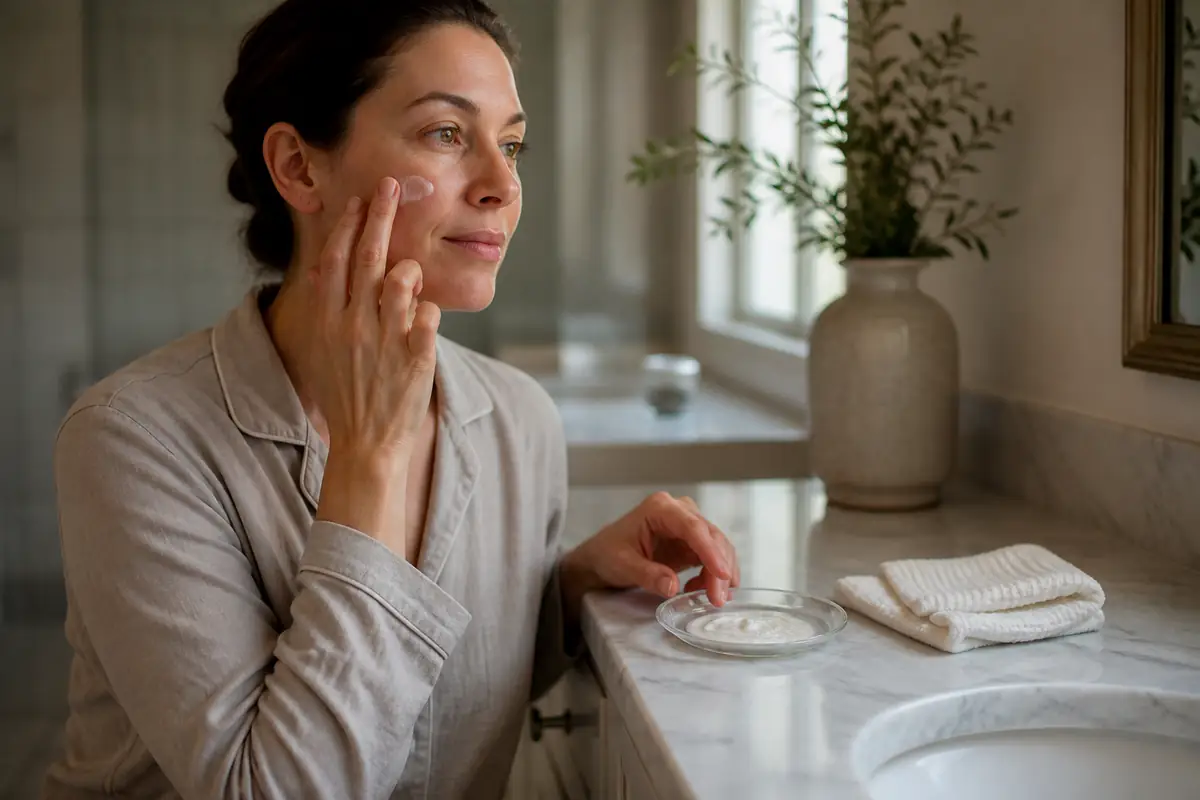
We did not use, laboratory-test or medically assess any retinol product, and we make no treatment claim. Formulas, directions and warnings change; recheck the exact label and official information on purchase and publication day. The original featured image shows a generic cream application scene without packaging, logo, label, price or interface. Links are editorial and non-affiliate.