Mineral vs organic UV filters: what UK sunscreen shoppers need to know
Neither filter family is automatically the safer, gentler or stronger choice. Start with verified broad-spectrum protection, then compare the complete formula for finish, eye comfort, skin compatibility and whether you will apply enough.
In this guide
Choose the tested sunscreen, not a filter-family slogan
For routine UK shopping, prioritise at least SPF 30 and at least four-star UVA protection, or the UVA-in-a-circle mark, then judge the whole product. Mineral filters such as zinc oxide and titanium dioxide may suit shoppers who prefer them, but can leave a visible cast or feel heavier. Organic filters can enable lighter, more transparent textures, yet a particular formula may sting eyes or irritate a particular user. Mixed-filter formulas are common. Protection depends on the finished, tested product and correct application—not on one ingredient viewed in isolation.
This is a shopping and label-reading guide, not personal medical advice. “Organic” here is a chemistry term, not an environmental certification, while “mineral”, “physical” and “chemical” are often used imprecisely in marketing. If sunscreen causes swelling, blistering, breathing difficulty or a persistent reaction, stop using it and seek appropriate medical help.
First compare the protection shown on the label
The NHS advises choosing at least SPF 30 for UVB protection and at least four-star UVA protection. A UVA symbol inside a circle is another recognised indication that UVA protection meets the relevant recommendation. SPF is not a measure of every aspect of sun protection, and a high number does not make shade, clothing or reapplication unnecessary.
Check expiry information and the period-after-opening symbol. A half-used bottle of uncertain age is not a bargain merely because the filter list looks impressive. UK cosmetic products should provide precautions, quantity, responsible-person details, batch identification, date information where required and an ingredients list. Our cosmetics ingredients guide explains where to look and why list position cannot tell you the tested SPF.
Five checks before filter type
- SPF 30 or higher for the intended exposure.
- At least four UVA stars or a UVA-in-a-circle mark.
- A usable texture for the area: face, body, scalp or sport.
- Current expiry and clear period-after-opening information.
- Instructions you can realistically follow for amount and reapplication.
What mineral and organic filters actually mean
Mineral—or inorganic—UV filters usually refers to zinc oxide and titanium dioxide. Organic filters are carbon-based UV-filter molecules authorised for cosmetic use under defined conditions. Both types absorb UV energy; the familiar “mineral mirrors, chemical sponges” story is too simple to describe how modern sunscreen films work. The useful consumer question is whether the final formula gives the labelled UVA and UVB protection and remains wearable in real use.
Do not infer that “organic filter” means organically farmed or that “mineral” means unprocessed. Likewise, “reef-safe”, “clean” and “non-toxic” are not complete sunscreen specifications. Read concrete claims and the INCI list, but judge performance from the labelled protection and instructions. The skincare actives and concentration guide explains why concentration, vehicle and final formulation matter together.
| Buying factor | Mineral-filter formula | Organic-filter formula |
|---|---|---|
| Visible finish | May leave a white, grey or tinted cast, especially at the required amount | Often easier to make transparent, though shine or tint still varies |
| Texture | Can feel dense, dry or draggy; modern dispersions vary | Can support fluid gels and emulsions; the base still determines feel |
| Eye comfort | Not guaranteed sting-free; particles and other ingredients can migrate | Some users report stinging from particular formulas, not every filter |
| Sensitive skin | May be worth trying, but fragrance, alcohol and preservatives still matter | Can also be well tolerated; sensitivity is individual and formula-specific |
| Protection | Can provide broad-spectrum protection when correctly formulated and tested | Can provide broad-spectrum protection when correctly formulated and tested |
| Best evidence | Labelled SPF/UVA result, instructions, complete ingredient list and your controlled wear trial | |
Finish can determine whether protection survives the day
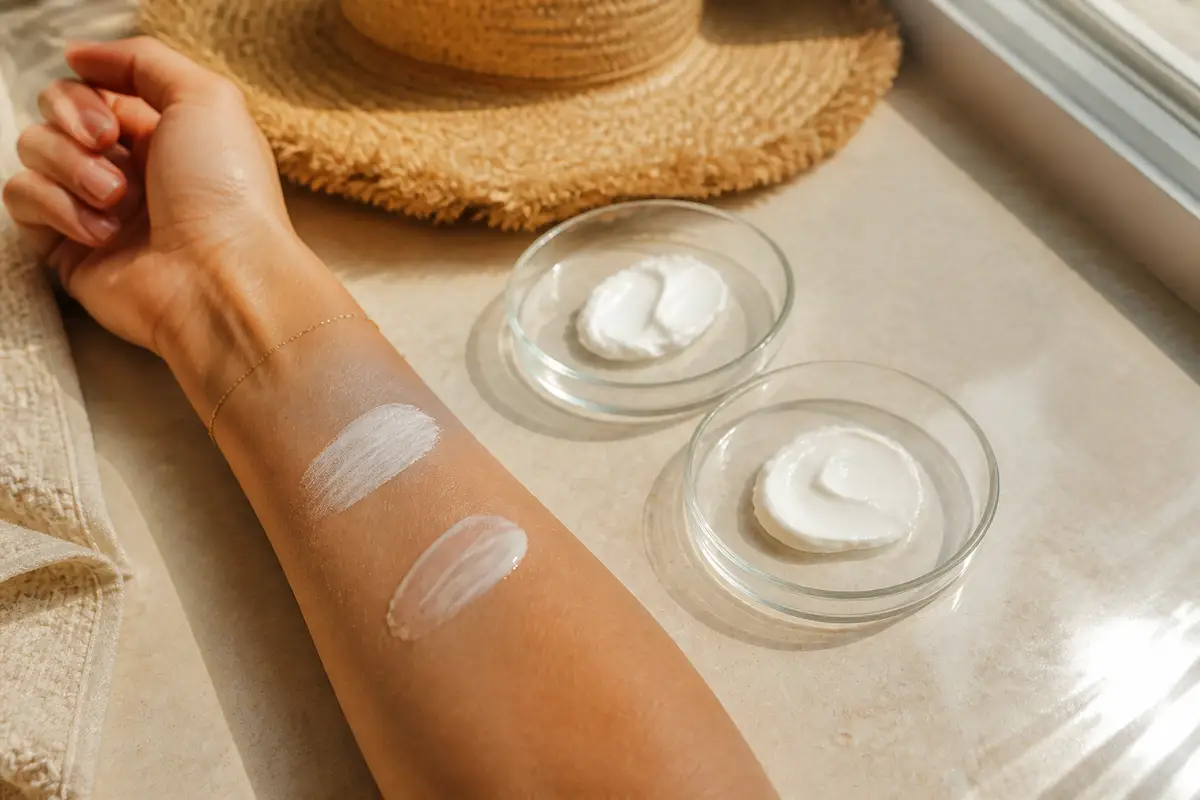
A sunscreen that pills under moisturiser, forms a visible cast at the correct amount or makes the eyes water may be applied too thinly or abandoned. That practical failure matters more than theoretical enthusiasm for one filter. Look for clear finish photographs on varied skin tones, but remember that studio lighting and a tiny demonstration amount can flatter a formula.
Assess the complete routine. Allow skincare layers to settle, avoid mixing sunscreen with foundation in your hand, and apply in a way that produces an even film. If make-up compatibility matters, trial it on an ordinary day rather than before a long outdoor event. Our beauty marketing claims guide helps separate evidence from copy, while the general product shortlist keeps claims from outranking evidence.
Sensitivity claims need careful interpretation
No filter family is universally hypoallergenic. A reaction can involve a UV filter, fragrance, preservative, solvent, botanical extract or another component. “Dermatologically tested” does not disclose the test design or guarantee compatibility for you. For reactive skin, prefer a concise, legible ingredient list, avoid known personal triggers and patch-test as directed without treating a home patch as a medical diagnosis.
Eye sting is also formula-specific. Keep ordinary facial products away from the mobile eyelid and follow the product’s permitted application area. A stick or more tenacious formula around the eyes may help some users, but it still needs adequate, even coverage. For persistent dermatitis, allergy concerns or medicines that affect photosensitivity, seek a pharmacist, GP or dermatologist rather than relying on retailer reviews.
Application matters more than a marginal paper advantage
The NHS notes that adults need roughly six to eight teaspoons to cover the whole body, and that applying too little reduces protection. It advises reapplying liberally and frequently, including after swimming, sweating, towel drying or rubbing, even for water-resistant sunscreen. Follow the specific label; sunscreen should support clothing and shade, not justify longer exposure.
Choose packaging size only after estimating use. A small facial bottle may be sensible for daily commuting but poor value for a family beach day. Keep enough with you for reapplication. The facial sunscreen guide explains amount, layering and make-up compatibility in more depth, and the face-mask guide shows the same evidence-first approach to optional skincare.
Use a two-stage trial without wasting the product
- Confirm the label. Check SPF, UVA evidence, expiry, instructions and seller authenticity.
- Screen the formula. Note fragrance, alcohol and known personal triggers without assuming unfamiliar names are dangerous.
- Try a small permitted area. Follow directions and stop if there is a reaction.
- Test a full normal application. Check cast, pilling, eye migration and clothing transfer at the correct amount.
- Test reapplication. A pleasant first layer can become uncomfortable after a second.
- Record the result. Note weather, routine and amount so comparisons are fair.
Buy from an identifiable trader and be cautious of a price or listing that appears implausible. Our genuine online-shop checklist covers seller identity and payment evidence. If a sealed cosmetic arrives damaged, expired or not as described, the UK returns guide explains the difference between a fault and a change of mind.
Keep the comparison controlled: change one product at a time, use the same underlying routine and judge it across an ordinary day before a high-exposure trip. A formula can behave differently over a rich moisturiser, facial hair or repeated make-up touch-ups. Record the conditions so a good or bad result is not attributed to the wrong variable.
You prefer those filters and accept the finish
A verified mineral formula works on your skin tone, stays comfortable at the correct amount and fits your reapplication routine.
Transparency and lighter texture improve use
A tested formula gives the required protection, avoids your personal triggers and is easier for you to apply generously and repeatedly.
Balanced verdict
Mineral versus organic is a useful formulation clue, not a safety league table. Both routes can produce effective broad-spectrum sunscreen, and both can produce a texture that does not suit you. The strongest choice is the compliant product with clear UVA and UVB evidence that you can use in the necessary amount without discomfort.
Start with protection, then evaluate finish, sensitivity evidence, application and reapplication. If two products meet those needs, personal preference can decide; it should not replace them.
Check current official information:
NHS sunscreen and sun safetyGOV.UK cosmetic product informationUKHSA ultraviolet-radiation guidance
Frequently asked questions
Are mineral sunscreens always better for sensitive skin?
No — Some people prefer them, but the complete formula determines tolerance. Fragrance, preservatives, solvents and texture ingredients can matter as much as the UV filters.
Does organic sunscreen mean environmentally certified?
No — In this context “organic” describes the chemistry of the filter. It does not certify farming, biodegradability or environmental impact.
Is zinc oxide automatically broad spectrum?
Do not infer the finished protection from one ingredient. Use the product’s tested SPF and UVA labelling and follow the directions.
Why does sunscreen leave a cast?
Mineral particles, tint, film thickness and how a formula dries can affect visible finish. Evaluate it at the correct amount on your own skin tone.
Can I mix two sunscreens to improve the finish?
Do not mix products in your hand unless the manufacturer instructs it. Mixing can disturb the tested film and make the applied amount uncertain.
How we researched this guide
Recommended Today reviewed current NHS and UKHSA sun-safety advice, GOV.UK cosmetic-labelling guidance and official ingredient information. We compared consumer-relevant evidence—protection label, formula, wear and instructions—rather than ranking filters by marketing language.
Limitations
We did not laboratory-test sunscreen, diagnose allergies or assess environmental fate. Formulas and authorised ingredients change, and tolerance is personal. Recheck the current label and official advice before purchase.