Mobile phone cases and screen protectors: fit, materials and replacement timing
Match accessories to one exact phone model. Check controls, cameras, ports, charging and edge overlap, then judge grip, ageing and replacement signs.
In this guide
Prioritise exact fit and raised edges
For most people, a moderately grippy case with a secure lip around the screen and cameras, reinforced corners and unobstructed controls is the strongest default. Add a compatible protector when scratches or front impact are a real risk, but reject edge lifting, blocked sensors and accessories that make the phone harder to hold.
No case makes a phone indestructible. Protection depends on impact angle, surface, case condition and how securely the device remains inside. The goal is to reduce common damage without harming signal, heat dissipation, charging, ergonomics or repair access.
Choose the protection system by risk
| Format | Useful for | Strength | Trade-off |
|---|---|---|---|
| Thin shell | Scratch and light bump reduction. | Low bulk and easy pocket use. | Limited corner and front clearance. |
| Hybrid bumper case | Everyday drops and grip. | Flexible edge with firmer back. | Materials may separate or yellow. |
| Rugged case | Work, outdoor or repeated impact exposure. | Deeper edges and corner structure. | Bulk, trapped grit, heat and port access. |
| Folio case | Front coverage in a bag. | Screen flap and possible stand. | Hinge wear, magnets and awkward camera use. |
| Glass protector | Scratch resistance and replaceable front layer. | Familiar smooth surface. | Edge chips, glare and case interference. |
| Film protector | Light scratches and curved surfaces. | Thin and flexible. | Indentation, texture and harder alignment. |
Exact model identity comes first
A shared marketing name can cover different sizes, camera layouts or regional versions. Match the model identifier in settings or on the original record, not appearance alone. Check whether the accessory is for the standard, Plus, Pro, Max or other variant and whether the production year matters.
A case should retain every corner, centre button covers over the controls, clear the microphones and speakers, and avoid pressure on camera lenses. Compare the accessory budget with our sim-free phone buying framework.
Inspect the edges and corners
- Screen lip: should rise beyond the display on a flat surface without blocking gestures.
- Camera lip: should keep lenses off a table without intruding into photographs or accessories.
- Corner retention: should resist peeling away during ordinary pocket removal.
- Button alignment: should operate cleanly without constant pressure or excessive force.
- Port clearance: should accept the intended cable plug without bending it sideways.
- Inner surface: should be clean, smooth and free from hard debris that can abrade the phone.
Material labels do not equal performance
Soft thermoplastic materials can provide grip and impact absorption but may stretch, yellow or collect lint. Rigid polycarbonate-style shells retain shape yet can crack or become slippery. Silicone can feel secure but attract dust. Leather and leather alternatives vary widely in surface, structure and moisture response.
“Military grade”, “shockproof” and drop-height claims need a defined test, exact configuration and limits. A test result is not a promise for every angle or repeated drop. Seek transparent method and independent evidence, then keep expectations proportionate.
Grip can prevent more drops than extra bulk
Test the case with dry and slightly damp hands, while seated and standing. Side texture, width and edge shape affect reach. A very thick case can move controls or the screen centre beyond comfortable reach, increasing one-handed risk. Smooth cases may slide from fabric or sloped surfaces.
Straps, loops and rings need strong attachment and must not interfere with wireless charging or safe pocket use. Adhesive accessories age with heat and repeated load; inspect them rather than assuming permanent retention.
Screen protectors need case clearance
The protector should sit within the case opening without the case lip pressing its edge. Even a small overlap can lift glass or film and admit dust. Confirm coverage of active display, front camera and sensors. Privacy filters reduce off-axis visibility but can also dim the screen and alter colour.
Clean installation matters. Work in a low-dust room, follow the supplied method and never use unidentified liquids. Bubbles caused by trapped dust differ from temporary adhesive patterns. If biometric recognition changes, follow device and protector guidance rather than repeatedly pressing harder.
Wireless charging and magnets require a complete check
Thickness, metal plates, rings and wallet contents can affect inductive charging. A case described as compatible may still work only with particular alignment or power. Stop if charging is unstable, unusually hot or repeatedly disconnects. Remove cards or objects the manufacturer says should not sit in the charging field.
Magnetic accessory ecosystems need compatible geometry and retention, not merely a printed ring. Test with the real charger or mount in a safe setting and keep critical devices or medical equipment within the guidance supplied by their manufacturers.
Cases can trap heat and grit
Fine particles between case and phone can abrade finishes. Remove the case periodically according to device guidance, clean both surfaces with permitted methods and allow them to dry. A waterproof phone rating does not authorise washing ports or forcing liquid under the case.
High-load gaming, navigation and charging generate heat. Do not cover a device to the point that it cannot manage temperature as designed. Follow warnings from the phone rather than cooling it rapidly or placing it in unsuitable environments.
Inspect transparent backs against side light because trapped particles can be hard to see on the phone. Avoid household solvents and abrasive pads unless the accessory maker specifically permits them. If cleaning changes texture, adhesion or shape, replace the accessory rather than forcing it back around the device.
Replace based on condition, not calendar alone
Replace a case when corners no longer retain the device, the frame is distorted, layers separate, cracks create sharp edges or button covers apply pressure. Severe impact may damage structure invisibly; inspect phone and case afterwards. A yellow case may be cosmetically aged without losing all function, but stretching and brittleness are functional signs.
Replace a protector when cracks create sharp edges, chips expose the screen, adhesion lifts repeatedly or touch and sensor performance remain impaired. Do not peel broken glass with bare fingers. Keep the device repairable and consider our phone trade-in condition guide.
Protection should not block repair and identification
Keep the phone model, serial and emergency information available through the device’s supported methods rather than writing private details on the case. Before repair, follow the maker or repairer’s preparation guidance and remove accessories only when instructed. A case warranty and a phone warranty are separate; impact damage is not automatically covered because an accessory was advertised for protection.
Some case makers offer limited damage guarantees, but scope, registration, exclusions and claim evidence vary. Read the current terms before assigning value. A free replacement case is different from payment for a damaged phone. Preserve proof of purchase for both items and do not rely on social-media wording that is absent from the contract.
When replacing a phone, do not assume the old case fits a visually similar successor. Reuse only with exact confirmed compatibility. Recycle or dispose of worn mixed-material accessories through an appropriate local route rather than putting a cracked battery-connected item into ordinary waste.
Which protection level should you choose?
Daily drops and grip are the main risks
It fits the exact phone, retains all corners, clears controls and protector edges, and remains comfortable enough to use consistently.
Work or outdoor exposure is unusually high
Documented testing, sealed-port needs, mounting and device guidance justify the extra bulk and maintenance.
Balanced verdict
Fit, grip and intact corner retention matter more than the largest protection claim. Choose a case and protector together, verify charging and sensors, clean out grit and replace components when structure or adhesion fails. Protection reduces risk; it never removes the need for careful handling and repair planning.
Before buying accessories, use our online quality checks, review method and more Tech & Audio guidance or the shop directory.
Check current official guidance:
UK product recalls and alerts ↗
GOV.UK returns and refunds ↗
Citizens Advice faulty goods ↗
Frequently asked questions
Does a thicker phone case always protect better?
No. Material, fit, corner structure and test method matter, while excess bulk can reduce grip and compatibility.
Can any screen protector fit under any case?
No. The case lip must clear the protector edge; overlap commonly causes lifting.
Does a cracked protector mean the phone is undamaged?
No. Inspect the device safely; protector failure does not prove that all impact energy was absorbed.
Why is wireless charging unreliable with a case?
Thickness, alignment, metal, magnets or accessories may interfere. Follow both phone and charger guidance.
When should I replace a phone case?
Replace it when retention, shape, layers, buttons or edges fail, or after damage that leaves protection uncertain.
Recheck the fit after the first week and after any hard drop. Remove the case according to its instructions, look for trapped grit, cracks, lifted corners and pressure marks, then clean and dry both surfaces before refitting. Replace protection that no longer sits evenly; a damaged accessory can conceal rather than prevent further harm.
Methodology and limitations
We assessed cases and protectors through identity, retention, edges, grip, materials, charging, heat, cleaning and replacement. Official UK product-safety and consumer guidance was checked on 29 August 2026. No named accessory was drop-tested.
Limitations
Impact results vary by phone, accessory, surface and angle. Compatibility changes by model. Recheck exact device guidance, accessory claims and return terms.
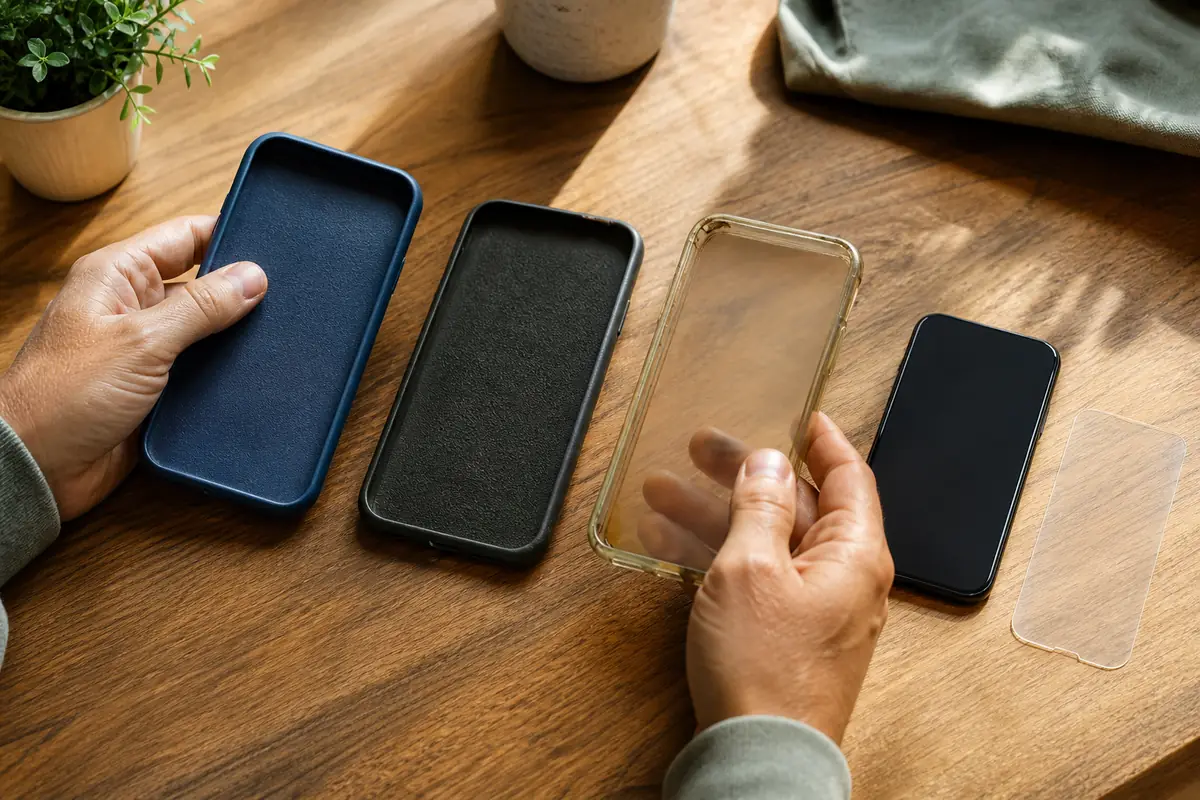
The image is an editorial illustration, not a photograph from a product test. Links are editorial and non-affiliate.