How to choose a makeup bag: layout, washable lining, brush storage and travel
A useful makeup bag protects the products carried, opens wide enough to clean and separates brushes from liquids. Measure the routine before paying for extra compartments.
In this guide
Fit the bag to one defined routine
For everyday use, choose the smallest stable bag that holds the intended products upright or securely, with a light wipe-clean lining and a closure that can be opened fully. Separate used brushes from creams, avoid permanent dark interiors that hide spills, and treat travel-liquid rules as a separate transparent-bag requirement where applicable.
Makeup bags often solve the wrong problem by adding capacity. A larger case encourages old, duplicated and seldom-used products to travel together. Start with a clean inventory, remove expired or unsuitable items, then design storage around access, hygiene and containment.
Match format to use
| Format | Useful for | Strength | Watch for |
|---|---|---|---|
| Soft zip pouch | Small daily kit. | Light and flexible. | Products collide; poor visibility when deep. |
| Structured case | Home organisation or careful travel. | Protects powders and keeps shape. | Bulk, rigid dividers and harder corners to clean. |
| Lay-flat bag | Seeing the complete routine. | Wide access and fewer stacked layers. | Needs a clean surface and secure draw or zip. |
| Hanging organiser | Small bathrooms and vertical access. | Separates categories. | Hook capacity, balance and damp-room storage. |
| Brush roll plus pouch | Separating tools from products. | Protects bristles and contains residue. | Two pieces to clean and keep together. |
Make an honest product inventory
Empty the current bag and group products by daily, occasional and expired-or-unknown status. Read period-after-opening or use-by information where applicable, and discard according to current product and local waste guidance. Do not decant a product merely to fit a smaller bag unless the maker permits it and identification, hygiene and instructions remain clear.
Measure the tallest bottle, widest compact and longest brush. Add space for closures without crushing pumps or bristles. Our cosmetics expiry and PAO guide helps decide what should not return to the bag.
Inspect the parts that collect residue
- Open every corner. Deep stitched angles trap powder and are difficult to wipe.
- Check lining colour. Mid-light colours show leaks without staining instantly.
- Flex divider attachment. Loose hook-and-loop or raw foam edges can retain product.
- Run the zip slowly. It should clear the lining and rounded contents without snagging.
- Inspect brush slots. They must fit handle diameter without scraping bristles through residue.
- Smell the empty bag. Strong odour is a practical reason to check material and return terms.
Wipe-clean is not the same as washable
A coated lining may contain a small spill long enough to act, but seams, zip tapes and needle holes can still leak. “Waterproof” needs scope and a test method. Confirm whether the whole bag, removable liner or only surface can be washed, and read temperature, detergent and drying instructions.
A machine-washable claim is useful only when structure, padding and inserts tolerate the same process. Never put product-contaminated brushes and the bag into an ordinary wash without appropriate cleaning guidance. Dry every layer fully before restocking to avoid trapping damp.
Separate brushes and applicators
Clean brushes should not rub directly against product lids, and used bristles should not spread residue across the lining. Slots need enough width to avoid deforming the brush head. A clear removable flap over bristles can help, but its seams must also be cleanable.
Sponges and damp applicators need ventilation and the care recommended for the product; sealing them into a closed pouch is not a hygiene plan. Carry only tools that can be cleaned properly on the trip, and follow their separate care instructions.
Protect powders without over-padding everything
Pressed powders and palettes fail through drops, flex and contents striking each other. A structured side, elastic retention or a small padded sleeve can help. Packing a glass bottle beside a compact without restraint defeats a thick outer shell. Arrange the heaviest products low and prevent them moving across the bag.
Padding absorbs space and can retain leaks, so make it removable where possible. If the bag is carried inside another bag, compare the complete packed weight. Decorative mirrors, lights and rigid trays may add failure points without improving the everyday routine.
Travel rules require a separate check
At UK airports, cosmetics such as creams, lotions, oils, perfume, mascara and lip gloss count as liquids. Rules can differ by airport and journey, and many departures still require containers no larger than 100 ml inside a separate transparent resealable bag. A decorative makeup case does not replace the security bag.
Check the departure, connection and return airports shortly before travel. Keep original labels and caps secure, and reduce the kit by routine rather than speculative decanting.
Materials need realistic trade-offs
Polyester and coated synthetics can be light and wipeable, but coating quality, seam finish and odour vary. Cotton feels familiar and may wash easily, yet absorbs spills. Clear PVC-style panels show contents but may stiffen or cloud. Leather can be durable externally but is a poor reason to accept an uncleanable interior.
Look for accurate composition and care rather than “vegan”, “eco” or “antibacterial” language without scope and evidence. A removable, replaceable divider can extend use more reliably than a vague material claim. Apply our green-claims framework.
Check whether decorative coatings shed onto the contents and whether an external fabric transfers colour when damp. A strong rigid base helps bottles stand, but foam laminated permanently behind lining can be difficult to dry after a spill. Prefer construction that lets the user see, reach and clean every surface rather than a premium material hidden behind fixed panels.
Closures and handles must work when full
Test the zip around the intended tallest product. Double zips can improve access, but the meeting point should not open under pressure. Magnetic closures are unsuitable for loose containment on their own. A carry handle must be anchored into structure, not only the lining.
Stand the packed bag and gently turn it through normal travel orientations while containers are closed. If products pile against the zip or the base collapses, reduce the kit or choose another layout rather than trusting the case to compress everything.
Separate home storage from the travel edit
A home organiser can hold backups, occasional colours and tools, while the travel bag should contain a selected routine. Repacking from one oversized case increases the chance of carrying expired or open products and makes leaks harder to locate. Keep a written packing list by function—base, colour, removal and tools—rather than by every product owned.
Before a trip, place the intended closed containers on the table and reproduce the morning routine in order. Remove duplicates and products that need tools or cleaning facilities unavailable at the destination. Check that every cap remains identifiable and that required precautions stay with the product; a blank travel pot can lose ingredient, expiry and use information.
On return, empty the bag completely, inspect for breakage, clean according to its instructions and restock only after dry. Leaving a travel kit permanently packed can hide expired products and make the home inventory inaccurate.
Which makeup bag is appropriate?
The routine is compact and replaced often
It opens wide, shows residue, fits each closed container and can be emptied and cleaned without hidden dividers.
Fragile items and separation matter
Removable dividers restrain powders and bottles, brush storage is cleanable and the packed bulk fits the journey.
Balanced verdict
The strongest default is a compact, light-coloured, wipe-clean bag with a full opening and simple removable organisation. Capacity should follow the routine, not create it. Separate brushes, protect fragile products and use the legally required travel-liquid container independently.
Before buying, use our online quality evidence guide, check the return route, and browse more Beauty guidance or the shop directory.
Check current official guidance:
OPSS cosmetics guidance ↗
GOV.UK hand-luggage liquids ↗
GOV.UK returns and refunds ↗
Frequently asked questions
What size makeup bag should I buy?
Measure one defined routine and choose the smallest bag that closes without pressure and allows cleaning access.
Is a wipe-clean lining waterproof?
Not necessarily. Coating may resist a surface spill while seams and zips leak; check the claim’s scope.
Should brushes have separate storage?
Yes where practical. Cleanable slots or a separate roll reduce contact between bristles, products and residue.
Can a makeup bag replace the airport liquids bag?
Only if it independently meets the current rule at every relevant airport; otherwise use the required transparent resealable bag.
Is a large professional-style case better?
Only when the inventory and protection need justify its weight, dividers and cleaning burden.
Run a dry packing rehearsal before committing. Load the products and tools used on an ordinary day, close every compartment without forcing it and carry the bag inside the intended tote or suitcase. Remove duplicate or speculative items first; extra capacity is useful only when it does not create bulk, spills or forgotten products.
Methodology and limitations
We assessed makeup bags through inventory, dimensions, access, lining, cleaning, brush separation, impact protection, closures and travel rules. Official UK cosmetics and hand-luggage guidance was checked on 29 August 2026. No named bag was packed or spill-tested.
Limitations
Airport rules, product formulas and care instructions change. Material descriptions do not guarantee containment or hygiene. Recheck the exact bag, cosmetics and journey before use.
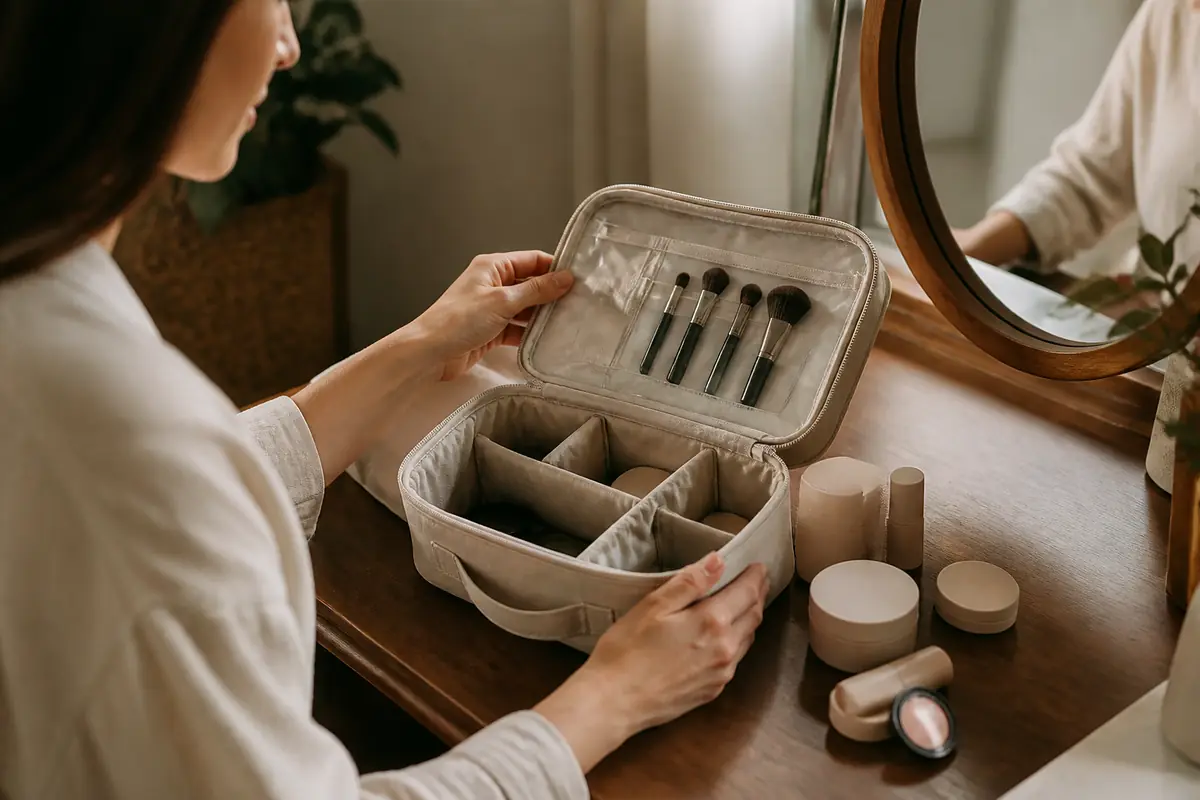
The image is an editorial illustration, not a photograph from a product test. Links are editorial and non-affiliate.