Hair straighteners: plate material, temperature control and hair type
Plate coating names and maximum temperature do not prove smooth results or low damage. Plate alignment, usable heat control, pass speed, section size, tool balance, hair condition and technique work together. Buy the lowest-risk tool for the real routine, not the hottest headline.
In this guide
Prioritise even contact and controllable heat
Choose plates sized for the section and style, a temperature range that can be adjusted deliberately, clear indicators, comfortable handling and verified UK electrical safety. Start at the lowest effective setting on dry, detangled hair and avoid repeated slow passes over the same section.
This guide covers domestic electrical straighteners. It does not diagnose hair or scalp conditions, prescribe a safe temperature for every person or replace manufacturer instructions. Chemically treated, fragile or significantly damaged hair may need professional advice and a reduced heat routine.
Define the styling task
Record hair length, density, strand diameter, texture, condition and the finish required. Straightening short sections near the root needs different access from smoothing long dense hair. If the tool will also make waves or curls, body shape, edge curve, cable swivel and exterior temperature become more important.
Note frequency and available time. A tool used once a month has a different value case from one used daily. The shortlisting method helps rank heat range, plate width, handling, storage and support before marketing language enters the decision.
| Feature | Potential value | What it does not prove | Buying check |
|---|---|---|---|
| Narrow plates | Root access and short sections | Faster work on long dense hair | Match section width and control |
| Wide plates | More surface on broad sections | Even heat or easy root access | Check weight and edge reach |
| Ceramic claim | Named plate or coating material | Thickness, durability or uniform heat | Ask whether solid or coated |
| Temperature display | Selected setting visibility | Plate accuracy under use | Look for credible measured evidence |
| Maximum heat | Upper control limit | Better or safer styling | Prioritise lower usable settings |
Compare the complete tool
- Plate length, width, edge shape and alignment.
- Minimum, maximum and step size of temperature control.
- Button position and accidental-change lock.
- Weight, handle pressure and cable swivel.
- Automatic shut-off behaviour and heat indicator.
- UK plug, seller identity, recall and registration route.
- Cleaning, storage, warranty and authorised repair guidance.
Plate size changes section control
Narrow plates can approach roots and short hair with more precision. Wider plates can cover broad sections of long or dense hair, but extra width and weight may reduce control around the face. Plate length also affects coverage. Do not simply choose the widest tool; oversized sections can prevent even contact and encourage repeated passes.
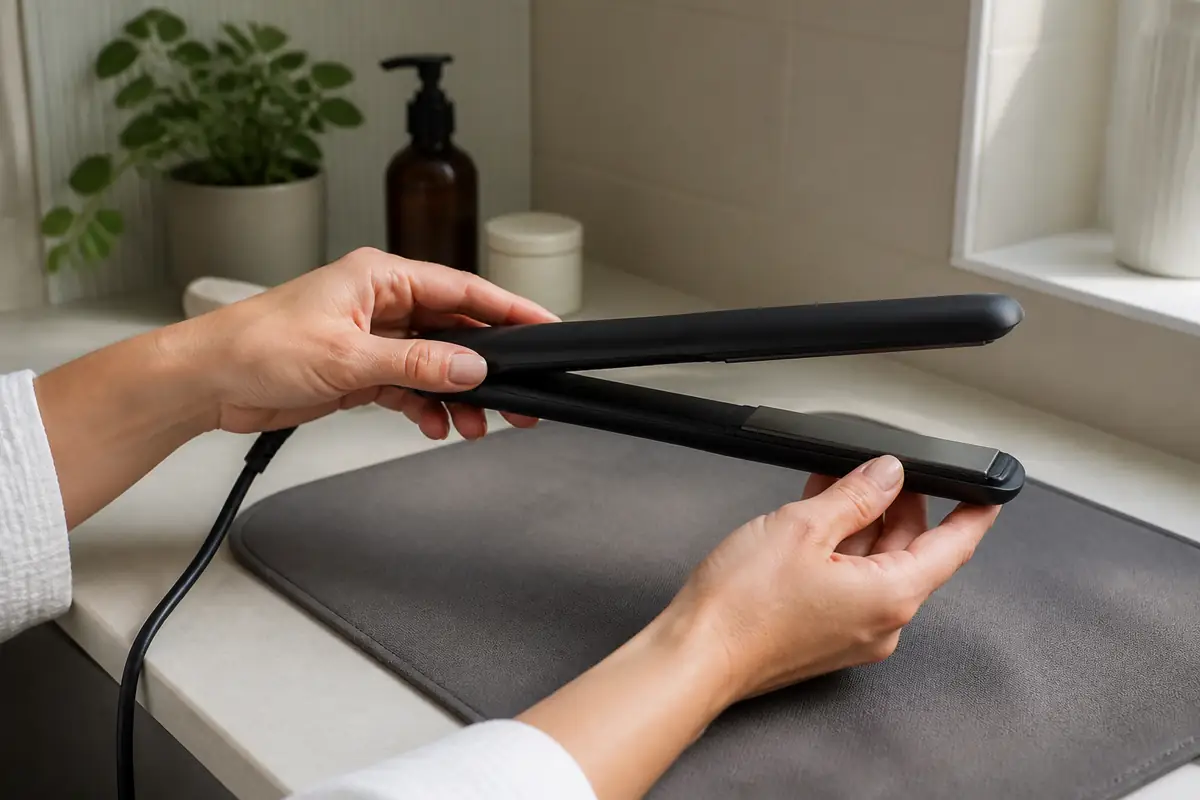
Floating plates may move to maintain contact, but the term does not specify range, pressure or durability. Inspect whether the plates meet evenly when closed without a visible wedge or sharp edge. Misalignment can snag and create inconsistent pressure.
Material labels need construction detail
Ceramic, titanium and tourmaline can refer to a solid component, a surface coating or marketing description. A coating can wear, and the base material affects heat behaviour. Ask exactly what the plate is made from and whether the manufacturer publishes durability or heat-uniformity evidence.
No material is universally best for a hair type. Technique, temperature, section size and conditioning often matter more. Claims about ions, shine, moisture or damage need a disclosed test method on the finished tool. The evidence-quality guide explains how to distinguish mechanism language from comparative proof.
Temperature control should support restraint
A single fixed high setting gives little room to adapt to fine, processed or fragile sections. Look for a usable low end, understandable increments and controls that do not change accidentally. A digital number is the selected value, not proof that every part of the plate stays at that exact temperature.
Start lower and increase only if necessary within professional and manufacturer guidance. Work on fully dry hair unless the exact product is explicitly designed and instructed otherwise. Do not compensate for large sections or poor detangling by holding the plates closed longer.
Hair condition changes the risk calculation
Bleaching, colour, chemical straightening, weathering and existing breakage can reduce tolerance to heat and tension. Fine strands are not the same as low density; coarse strands are not automatically healthy. Assess the weakest sections, especially ends and hairline, rather than setting the tool for the strongest area.
Heat protectant can be part of a routine but is not a licence for unlimited temperature or repeated passes. Follow the product directions and avoid applying materials that are incompatible with heated tools. Stop if hair smokes, smells unusual or shows worsening breakage.
Handling controls both safety and results
Check handle thickness, hinge pressure, cool gripping zones and whether the wrist remains neutral. A long plate may create leverage; a heavy cable can pull the tool. Buttons should be reachable when intended but protected from the palm. A swivel needs enough freedom without exposing or twisting the cable.
If the exterior is used for curling, verify which surfaces become hot and where fingers can safely hold. A locking hinge helps storage only after the tool has cooled. The tool should rest on a stable heat-resistant surface without rolling.
Automatic shut-off is a backup, not a habit
Electrical Safety First advises unplugging straighteners when not in use, keeping them away from water, letting them cool on a heat-resistant surface and not wrapping the cable around the tool. Automatic shut-off can reduce risk after a lapse, but timing and behaviour vary and do not replace deliberate unplugging.
Keep hot plates away from skin, children, bedding and soft furnishings. Do not use with wet hands or near a filled basin, bath or shower. A heat-resistant pouch is for the manufacturer-approved cooling or storage process; do not seal away a hot tool unless the instructions explicitly permit it.
Verify the product and seller
Mains straighteners for UK use should have the correct UK plug and fuse. Buy from a traceable retailer, match the model and electrical ratings, register the product where offered and search the official safety-alert database. A 2025 UK recall involved counterfeit plug, fuse and cable components, illustrating why appearance alone is insufficient.
The genuine-shop guide provides seller checks, while the electrical-safety checklist covers plugs, recalls and documentation. Avoid unverified adapters or imported voltage assumptions.
Clean without damaging plates or electrics
Styling residue can create drag and uneven contact. Unplug, allow the tool to cool completely and follow the manufacturer’s cleaning method. Do not immerse it, scrape coatings or use an aggressive solvent. Inspect plate edges, hinge, cable and strain relief while cleaning.
Stop using a tool with cracked casing, damaged cable, loose plate, unusual smell, sparks or repeated cut-outs. Seek authorised repair or replacement advice. Do not open a mains appliance unless competent and permitted; a low purchase price does not make unsafe repair acceptable.
Price the routine, not the feature list
Include heat mat, storage, expected frequency, warranty, repair and replacement. A modest tool with controllable settings and good support can be better value than a premium model whose extra modes go unused. A cordless tool adds battery ageing and charging questions; a travel model adds voltage and plug compatibility.
Use the total-cost framework and check the warranty guide before paying more for long cover. Save the terms and proof of purchase.
Choose a simpler model when
- A clear low-to-medium heat range is enough.
- One plate width matches the normal section.
- Handling, shut-off and storage are dependable.
- Seller and support evidence are complete.
Consider specialist features when
- Wide or narrow plates solve a measured access need.
- Verified control improves a frequent routine.
- Cordless use has genuine value and battery support.
- Evidence supports the claimed benefit.
Balanced verdict
A good straightener gives the user control over contact, temperature and movement. Plate material can inform the shortlist, but it should not outrank alignment, a usable low setting, handling and electrical safety.
No heated tool is damage-free for every routine. Use it less often when possible, work on prepared dry sections and stop treating maximum heat as a performance target.
Check current official information:
Electrical Safety First straightener adviceUK product safety alerts and recallsGOV.UK product safety guidance
Frequently asked questions
Are ceramic plates best?
Not universally. Determine whether ceramic is solid or coated, then compare alignment, heat control, handling and evidence on the finished tool.
What temperature should I use?
There is no one setting for every person. Follow professional and manufacturer guidance and begin at the lowest effective heat.
Are wide plates faster?
They can cover broader sections, but weight, access and even contact matter. Oversized sections may still require repeated passes.
Can I straighten wet hair?
Not unless the exact tool is specifically designed and instructed for that use. Ordinary straighteners should be used on dry hair.
Is automatic shut-off enough?
No. It is a backup. Unplug after use and cool the tool safely away from water, children and soft materials.
How do I clean the plates?
Unplug, cool completely and use only the manufacturer’s approved method; never immerse or scrape the tool.
How we researched this guide
Recommended Today reviewed current UK product-safety, recall and electrical guidance and assessed straighteners by plates, heat control, handling, routine, cleaning and support.
Limitations
We did not measure plate temperature, heat uniformity, styling results or damage for individual models. Hair needs and specifications vary. Recheck recalls and instructions before purchase. The image is an editorial illustration, not a photograph from a product test.