Choosing facial cleansers: surfactants, texture, fragrance and skin comfort
A cleanser’s job is to remove the day’s soil, sunscreen or make-up without making the routine unnecessarily uncomfortable. Foam level, “natural” language and a long active-ingredient list do not prove suitability. Choose the cleansing task first, then assess the complete formula, texture, fragrance, rinse behaviour, packaging and frequency.
In this guide
Use the mildest process that reliably removes what you wear
For an uncomplicated morning or second cleanse, a comfortable low-foam gel, cream or lotion may be sufficient. Long-wear sunscreen and make-up may need an effective first cleanse followed by a gentle rinse-off product. Tightness, persistent burning and escalating scrubbing are not signs of superior cleaning.
Read the complete INCI list using our cosmetics ingredient-list guide. If balm is the main format under consideration, see the distinct cleansing-balms guide.
| Format | Often useful for | Check | Watch for |
|---|---|---|---|
| Low-foam gel | Everyday rinse-off cleansing | Slip, rinse speed and after-feel | Assuming more foam means cleaner |
| Cream or lotion | Lower-foam comfort | Whether it removes the actual sunscreen | Residue that encourages rubbing |
| Oil or balm | Long-wear make-up and sunscreen | Emulsification and eye-area directions | Fragrance, cloth friction and jar hygiene |
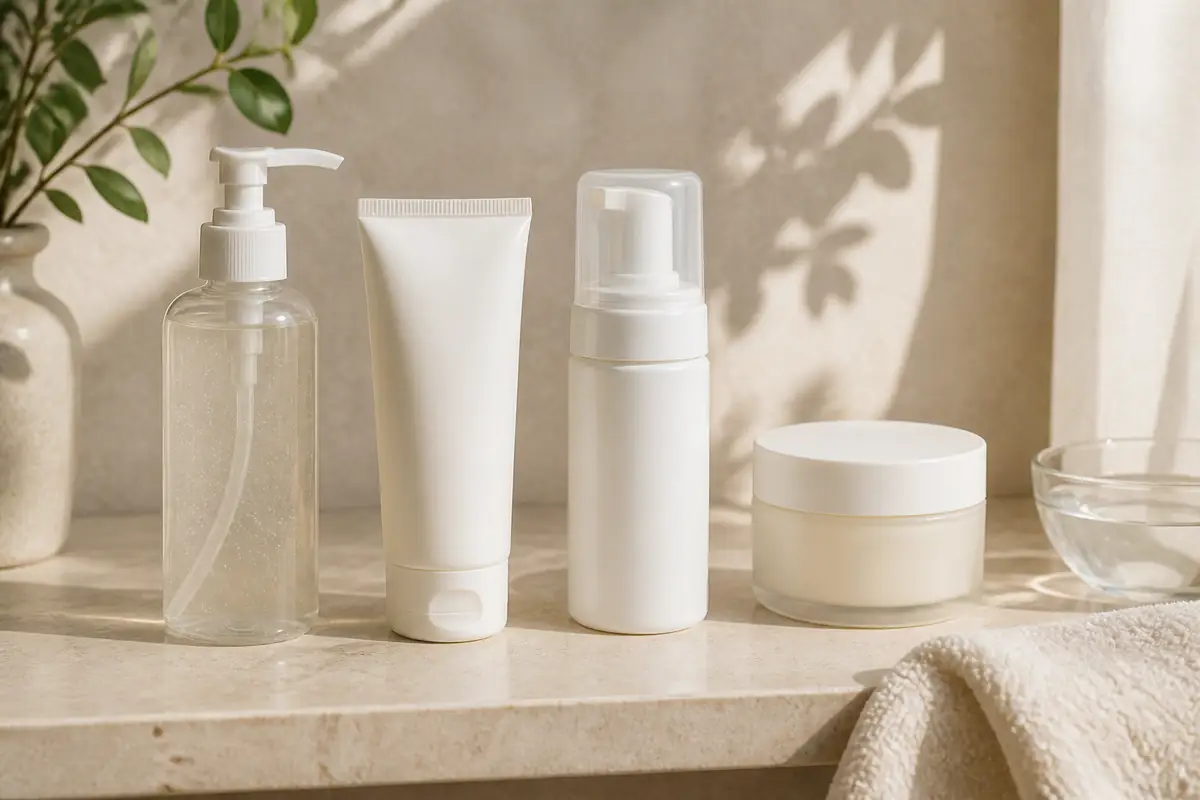
| Foaming pump | Measured airy application | Formula rather than dispenser effect | Overusing because foam feels light |
Define what must be removed
Morning oil and overnight skincare present a different task from water-resistant sunscreen, foundation and eye make-up. List the products normally worn and check their removal instructions. A cleanser that works on a light day may need help on a heavier one.
Avoid adding cleansing steps by default. Double cleansing is a method, not a badge of thoroughness. Use it when one well-tolerated process does not remove the actual products, then keep the second step simple.
Cleanser buying checklist
- State whether it is a morning, single evening or second cleanser.
- Read the entire formula and identify known personal triggers.
- Choose a texture that spreads without aggressive rubbing.
- Check eye-area and contact-lens directions if relevant.
- Confirm how much is recommended and how quickly the pack will be used.
- Prefer a closure that stays clean in the intended bathroom.
- Introduce one unfamiliar product at a time.
- Stop if significant discomfort, swelling or worsening persists.
Surfactants work as a system
Surfactants help water lift oils and particles, but their names alone do not predict the experience. Type, amount, combination, pH, solvents, oils, polymers and the way the product is used all affect cleansing and comfort.
Do not blacklist an ingredient solely because it belongs to a broad family. Nor should “sulphate-free” be treated as proof of gentleness. Compare the complete formula and how it performs at the recommended amount and contact time.
Foam is sensory, not a cleanliness score
Consumers often associate bubbles with action, but abundant foam can come from the formula and dispenser rather than superior soil removal. A cream can cleanse effectively with little visible lather; a foaming product can feel comfortable when well formulated.
Judge whether sunscreen or make-up is removed and whether skin remains comfortable after drying. Do not keep adding pumps until foam resembles an advertisement.
Texture changes technique
Gel spreads quickly with water, cream can reduce drag, oil dissolves oily films and balm offers a solid-to-oil format. The correct texture is the one that enables even coverage and easy removal without excessive massage, hot water or cloth friction.
Test around hairline, nose and jaw where residue can remain. If a product needs repeated wiping, the method may be too abrasive even when the ingredient list looks gentle.
Fragrance is optional
Fragrance can make a short rinse-off step pleasant, but it is not required for performance. “Fragrance-free” and “unscented” can be used differently, so inspect the ingredient list and product explanation rather than relying on the front label.
People with known fragrance sensitivity have a clearer reason to avoid it. Essential oils and fragrant plant extracts are not automatically gentler because their origin is botanical. Our beauty-claims guide separates evidence from reassuring language.
pH claims need context
A pH number may be useful formulation information, but it does not describe every aspect of mildness or predict individual tolerance. Verify whether the brand states a measured range for the finished product rather than implying that one number guarantees a result.
Do not use household pH strips as a substitute for a validated product test. Application amount, water, contact time and the rest of the routine remain relevant.
Dry, oily and combination labels are only a start
Skin type language can guide texture, but current condition and the rest of the routine matter. Oily-feeling skin can still become irritated by repeated strong cleansing. Dry-feeling skin may need a more comfortable process rather than a cleanser loaded with highlighted “actives”.
Choose by the cleansing job and response. Persistent acne, eczema, rosacea-like symptoms or sudden change deserves appropriate professional advice rather than repeated product switching.
Active ingredients in a rinse-off step
Acids, niacinamide, vitamin derivatives and botanical extracts are often highlighted. Contact time is short and the formula’s main job remains cleansing. Do not pay a large premium for an active story when a leave-on product already performs that role.
If using prescription or potent leave-on products, a simple cleanser may make tolerance easier to interpret. Our niacinamide guide explains how to avoid duplicated actives.
Eye make-up and contact lenses
Follow the exact eye-area directions. A product suitable for the face is not automatically intended for closed eyelids or waterline use. Remove contact lenses as directed by the lens-care professional and product instructions.
Stinging, blurred vision or persistent redness requires stopping and appropriate advice. Do not rub harder to compensate for a formula that does not remove long-wear mascara.
Water temperature and contact time
Lukewarm water is generally easier to use comfortably than very hot water. Follow stated contact time; extended massaging does not necessarily improve cleansing and can increase friction. Rinse carefully around the hairline.
Pat rather than scrub dry and observe the after-feel before applying the next step. Immediate severe tightness is useful evidence that the formula or technique is poorly matched.
Packaging and hygiene
Pumps and tubes can dispense predictably and limit repeated finger contact. Jars suit balms but require clean, dry handling. Check whether a spatula is practical rather than assuming it remains hygienic in a wet bathroom.
Record the period-after-opening symbol and store as directed. Changes in smell, colour, separation or texture deserve caution. Read our cosmetics expiry guide before buying an oversized pack.
Calculate cost per cleanse
Pack price without dose is misleading. Estimate applications from volume and the maker’s suggested amount, then consider whether a separate remover is also needed. A concentrated product is not economical if the dispenser releases too much.
Use the beauty cost-per-use guide and favour a pack you can finish within its useful period. Travel and refill formats should be compared on the same volume basis.
Change one variable at a time
If cleansing leaves skin uncomfortable, first change frequency, water temperature, quantity or contact time before adding several new products. Introduce one cleanser while keeping the rest of the routine stable enough to observe the result. A sudden reaction is harder to interpret when cleanser, active treatment and moisturiser all changed together.
Keep a short record of use, immediate feel and next-day condition. Stop and seek appropriate professional advice for persistent swelling, blistering, severe pain or another concerning reaction. Online ingredient information cannot diagnose a skin condition or guarantee individual tolerance.
Compare total routine burden
A cleanser that removes sunscreen in one comfortable step may be better value than a cheaper product that requires extra friction or a second product every evening. Conversely, a richer balm can be unnecessary for a light morning cleanse. Compare amount used, packaging control, rinse time and how reliably the product fits the actual routine.
For heavier makeup or water-resistant sunscreen, our cleansing balms guide explains emulsification and residue checks. Do not assume a double cleanse is compulsory for everyone; use the least complex process that removes what needs removing without avoidable irritation.
One cleanser or two-step removal?
It removes the real load comfortably
Sunscreen, make-up and daily soil rinse away without repeated rubbing, residue or significant discomfort.
Long-wear products need separate removal
A first step dissolves the resistant film and a mild second cleanse removes remaining residue without aggressive technique.
Balanced verdict
A facial cleanser succeeds when it reliably removes the intended load and leaves the routine comfortable enough to repeat. Foam, fragrance, actives and skin-type labels are supporting information, not substitutes for that result.
Introduce gradually, keep the rest of the routine steady and reassess technique before buying stronger. Browse the Beauty archive for separate treatment and sunscreen decisions.
Official checks:
NHS: contact dermatitis guidance ↗
GOV.UK: cosmetic products in Great Britain ↗
European Commission CosIng information ↗
Frequently asked questions
Does more foam mean a cleanser works better?
No — Foam is a sensory property and does not by itself measure removal or mildness.
Do I need to double cleanse every night?
Not automatically — Use a second step when needed to remove the actual sunscreen or make-up without harsh rubbing.
What does a fragrance-free claim help me assess in a facial cleanser?
It is useful for people avoiding fragrance, but complete formula and individual tolerance still matter.
Should skin feel tight after cleansing?
Persistent strong tightness or discomfort suggests the formula, frequency, water or technique may be poorly matched.
Can facial cleanser treat acne?
Some products contain relevant ingredients, but persistent acne is a medical concern and a short rinse-off step should not be overpromised.
Methodology and limitations
We assessed cleansing task, format, surfactant systems, foam, fragrance, pH claims, technique, packaging and cost using official cosmetic and health sources. We did not clinically test products, diagnose conditions or rank brands.
Limitations
Formulas, water, routines and tolerance vary. Follow current product directions and seek appropriate professional advice for persistent or severe symptoms.