Choosing face moisturisers: humectants, emollients, occlusives and finish
Humectant, emollient and occlusive describe functions within a complete formula, not three mutually exclusive product types. Choose texture, packaging and routine compatibility around skin needs and professional advice where symptoms persist.
In this guide
Buy the complete formula and usable finish, not one ingredient category
A useful moisturiser combines water-binding, smoothing and water-loss-reducing functions in proportions that suit the skin and routine. No ingredient list predicts individual tolerance or clinical outcome, so introduce one product carefully and avoid treating cosmetics as medical care.
Start with our cosmetics ingredient-list guide and use the ceramides formula guide to avoid judging a cream by one highlighted component.
| Function | What it contributes | Examples of evidence | Main mistake |
|---|---|---|---|
| Humectant action | Helps attract or retain water in the outer skin | Complete INCI, texture and directions | Assuming more humectants always feel better |
| Emollient action | Smooths and fills spaces between skin cells | Oils, esters, fatty alcohols and silicones in context | Calling every emollient heavy |
| Occlusive action | Reduces water loss with a surface film | Petrolatum-like, waxy or silicone materials in context | Equating shine with effectiveness |
| Complete formula | Balances feel, stability, preservation and use | INCI, packaging, testing claim and label | Buying one hero ingredient instead of the product |
Facial moisturiser shortlist
- Define dryness, finish and routine position without self-diagnosing disease.
- Save the full ingredient list and package size.
- Check fragrance, known personal triggers and warnings.
- Compare lotion, cream, gel or balm at the amount directed.
- Confirm pump, tube or jar suits hygienic regular use.
- Introduce one new product while the rest of the routine stays stable.
- Note when the moisturiser was first opened and the jar or pump’s stated period-after-opening limit.
- Stop and seek suitable advice for severe or persistent reactions.
Humectant is a function, not a quality score
Humectants help attract and retain water in the outer skin. Glycerin, urea and other materials may perform this role, but the formula, concentration and surrounding ingredients affect feel. A long humectant list does not guarantee comfort, especially in a sticky or poorly balanced product.
NHS emollient guidance describes humectants within some moisturising treatments. Do not copy a medical product choice from an ingredient headline; skin disease, cracked skin or prescribed care requires appropriate professional guidance.
Emollients change smoothness and flexibility
Emollient materials can improve slip and fill rough spaces, but they range from light esters to richer oils and fatty components. The same ingredient can feel different in another emulsion. Product texture and dose are more useful than labelling an ingredient universally greasy or pore-clogging.
Read the complete INCI with our ingredient-list method. Order offers clues, not exact concentration or performance, and ingredients below relevant thresholds may follow different ordering rules.
Occlusion reduces water loss but changes finish
Occlusive components form a film that can reduce evaporation. Rich ointment-like textures may suit very dry areas or night use but feel heavy under sunscreen. Lighter films can improve comfort without looking visibly greasy. Choose by location, climate and routine slot.
Do not apply a thick facial occlusive over irritated skin without understanding the trigger. If swelling, blistering, severe burning or a worsening rash appears, stop use and seek appropriate advice rather than sealing in another active product.
Texture determines whether the product is used consistently
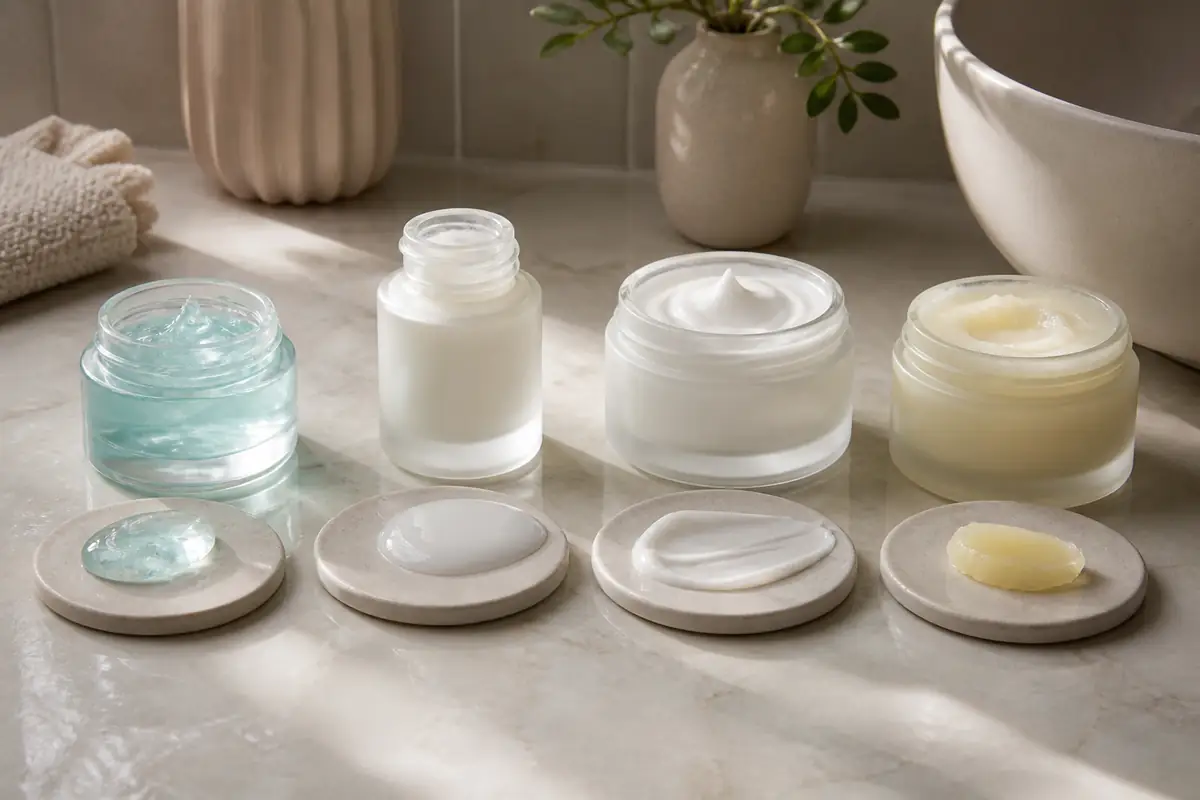
Gel-creams can feel light; lotions spread rapidly; creams add cushion; balms or ointments create a stronger film. These are broad formats, not performance guarantees. Test the directed amount, because a tiny cosmetic demonstration can make any rich product appear lighter.
Morning texture must work beneath the actual sunscreen amount. If products pill, simplify layers and allow settling rather than mixing moisturiser and sunscreen in the hand or reducing sun protection.
Fragrance-free and unscented are different buying signals
Fragrance adds sensory appeal but no moisturising function and may be unsuitable for some people. Unscented can mean a product lacks obvious smell while ingredients still mask odour. Read the full list and current claims rather than relying on front-label shorthand.
Our fragrance-free versus unscented guide helps compare the whole routine. A fragrance-free product can still contain other personal triggers and cannot promise universal tolerance.
Packaging affects dose, contact and waste
Pumps can reduce repeated contact and standardise dose but may leave product behind. Tubes are controllable and portable; jars suit thick textures but involve repeated opening. Clean hands, close promptly and follow storage directions for any format.
Record opening date and the period-after-opening symbol. A large discounted jar can be poor value if the product changes before it is finished. Do not decant without a clear hygiene and compatibility reason.
Build the routine around sunscreen and treatment
List cleanser, treatment, moisturiser and sunscreen. If the formula duplicates several serums or conflicts with prescribed directions, a simpler option may be more useful. Introduce one variable so discomfort is easier to attribute.
When using retinoids, acids or acne treatment, follow product and professional guidance. A richer moisturiser may improve comfort but does not make unsafe combinations safe or prove that severe irritation is normal.
Claims need a measured question
Hydrating, barrier-supporting and dermatologist-tested sound reassuring but require context: what was measured, for how long, on whom and against what control. Before-and-after photography can change with light, angle and application.
The beauty claims guide separates a specific substantiated result from vague reassurance. Cosmetic moisturising language should not be expanded into a claim to treat eczema or another disease.
Patch testing reduces uncertainty but cannot guarantee tolerance
Follow any manufacturer method and avoid broken or already inflamed skin. A small-area trial may identify some immediate incompatibility but cannot replicate repeated facial use. Keep the rest of the routine stable and record timing.
Do not continue painful burning or swelling to complete a trial. Retain the packaging and ingredient list for a pharmacist, GP or dermatologist if advice is needed. Our patch-testing guide explains the limits.
Compare price per usable routine, not per jar
Divide price by volume, then consider directed dose, frequency and whether the product can be finished within its opening period. Add sunscreen or cleanser changes needed to make the cream tolerable rather than ignoring those dependencies.
The cheapest price per millilitre is not value when finish prevents consistent use. Equally, premium jars and botanical stories do not prove stronger hydration. Prefer a transparent formula and package that fits an ordinary routine.
Skin type labels are broad shopping shortcuts
Dry, oily, combination and sensitive are not complete diagnoses. Oil level, dehydration, climate, cleansing and treatment can change through the week. Use the label to open a shortlist, then examine texture, fragrance, directions and the complete routine rather than treating it as a medical classification.
A product marketed to sensitive skin can still contain an individual trigger, and a rich cream can be comfortable on selected areas rather than the full face. Keep observations specific: tightness after cleansing, shine by midday, pilling under sunscreen or stinging around the eyes.
Season and environment change the useful finish
Cold wind, central heating and long indoor days can make a routine feel drier; humid weather or active travel can make the same cream too occlusive. A seasonal adjustment may be a different dose or use area rather than buying an entirely new multi-step range.
Store the product within label conditions and keep it away from hot cars or sunny windows. A formula that changes smell, colour or texture should be assessed against expiry and maker guidance rather than tested on already uncomfortable skin.
Separate cosmetic comfort from treatment claims
A facial moisturiser may hydrate, soften and support comfort, but it should not be assumed to diagnose or cure eczema, acne, rosacea or infection. Claims that cross into treatment require an appropriate product status and evidence. Do not stop prescribed care because a cosmetic page promises barrier repair.
For persistent cracking, bleeding, pain, swelling or a spreading rash, seek suitable healthcare advice. Take the full packaging and ingredient list. A careful buying guide can reduce avoidable irritation, but it cannot replace an examination or individual treatment plan.
Choose a lighter lotion or richer cream?
Layering and daytime comfort control consistency
The directed amount spreads evenly, supports comfort and sits beneath sunscreen without encouraging under-application.
Dryness and water-loss reduction are the priority
The formula is tolerated, the film suits the routine and professional advice is followed where a skin condition is involved.
Balanced verdict
Choose facial moisturiser as a complete, usable formula. Humectant, emollient and occlusive functions overlap. Texture, packaging, fragrance, routine compatibility and tolerance decide whether the paid-for product becomes consistent care.
Browse the Beauty archive and compare routine cost with our beauty cost-per-use guide.
Official checks:
Frequently asked questions
Are humectants, emollients and occlusives separate moisturisers?
They describe functions that often coexist in one formula. Judge the complete product, texture and use.
Is a gel moisturiser always best for oily skin?
No — Finish and comfort vary by formula, climate and routine; oily skin can still feel dehydrated or react to ingredients.
Does a richer cream repair every damaged skin barrier?
A richer moisturiser is not a diagnosis or a guarantee of recovery for every cause of soreness, flaking or a compromised barrier. Persistent, severe or unexplained symptoms need appropriate professional assessment.
Should moisturiser be mixed with sunscreen?
Do not mix them unless the sunscreen maker explicitly instructs it. Layering helps preserve more controlled sunscreen distribution.
Is a pump more hygienic than a jar?
It can reduce repeated contact, but formulation, preservation, clean use, closure and storage all matter.
Methodology and limitations
We reviewed current NHS emollient information and applied a cosmetic formula framework covering humectant, emollient and occlusive functions, texture, packaging, claims, routine fit and cost. We did not conduct clinical or hands-on tests.
Limitations
Ingredient lists, formulas, claims and packaging change, and individual skin response cannot be predicted from a listing. Recheck the label and seek qualified care for persistent or serious symptoms.