Cardigans buying guide: gauge, length, buttons and layering
A useful cardigan bridges indoor and outdoor temperatures without distorting the layers beneath it. Compare knit gauge, fibre, shoulder construction, length, closures and care against the exact outfits it must support.
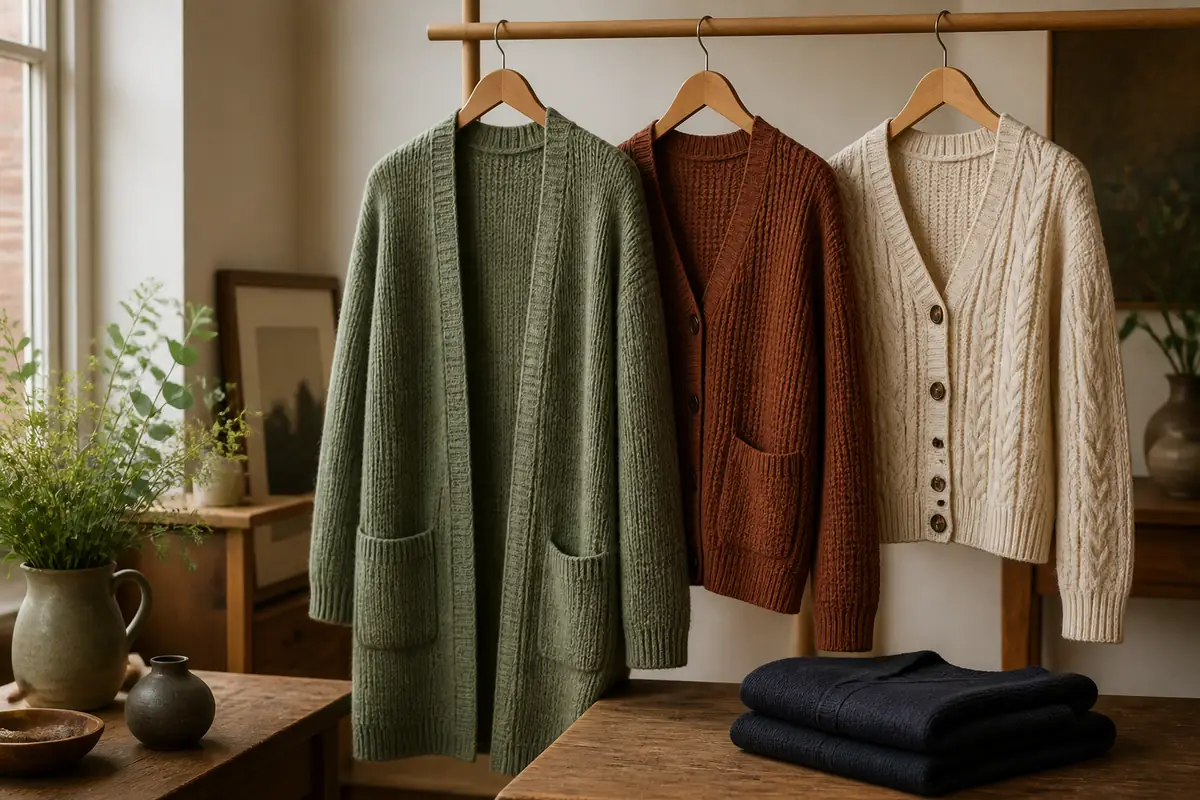
In this guide
Choose the layer by gauge and proportion before colour
Start with the temperature gap, underlayer and outer coat, then choose a knit gauge and length that work in motion. Fibre percentages, seam construction, button-band stability and care decide whether the cardigan remains a reliable layer after repeated wear.
Use the UK clothing sizing guide for measurements and our garment-quality guide for the arrival inspection.
| Use | Useful gauge | Fit evidence | Main risk |
|---|---|---|---|
| Office temperature layer | Fine to medium | Shoulder, sleeve, button closure and seated length | Pilling at desk and bulk under a jacket |
| Casual outer layer | Medium to chunky | Chest ease, pocket load and coat compatibility | Mistaking open-front drape for warmth |
| Dress companion | Fine or compact | Neckline, waist point and hem position | Cutting the dress at an awkward proportion |
| Home layer | Comfort-led medium knit | Cuff, hem recovery and wash care | Buying softness that loses shape |
Cardigan shortlist sheet
- Name the underlayer, outer layer and temperature gap.
- Measure shoulder, chest, sleeve and desired finished length.
- Save every fibre percentage and complete care instruction.
- Check gauge, seam type, button band and pocket construction.
- Map hem position against trousers, skirts and dresses.
- Test buttons, cuffs and reach while tags remain attached.
- Price cleaning, de-pilling and likely alteration.
- Require at least three complete outfits before keeping.
Gauge controls bulk, warmth and drape
Fine knits sit more easily under jackets and can work with dresses, but thin fabric may reveal pulling at buttons or wear quickly at friction points. Chunky knits create warmth and texture but occupy armhole space under coats. Medium gauges often balance structure and layerability, though yarn and stitch still matter.
Compare gauge only within the same job. A dense fine merino layer and an airy chunky synthetic knit behave differently from their visual thickness. Check close images for stitch openness and hold a received garment toward daylight without stretching it.
Read fibre composition as a complete blend
Wool can offer warmth and odour resistance; cotton can feel breathable but become heavy; synthetics can add resilience or reduce cost; regenerated fibres can improve drape. None guarantees quality alone. Record every percentage and relate it to the required warmth, recovery and care.
Environmental or premium claims should identify the relevant fibre and proportion. Current UK guidance expects clear textile fibre labelling. Do not treat a product title containing wool, cashmere or recycled as proof that the whole garment uses that fibre.
Shoulder construction changes the size decision
A set-in shoulder gives a visible placement point; drop shoulders build ease into the style; raglan construction changes sleeve and upper-body movement. Compare the same construction with a cardigan already owned rather than relying only on a bust chart.
Reach forward and lift the arms over the intended shirt or dress. If the body rides up, the armhole or shoulder may be wrong even when the chest closes. Our measurement framework explains why garment ease cannot be read from the size label alone.
Length should connect the outfit rather than split it
Cropped cardigans can align with a defined waist or high-rise bottom; hip length can bridge separates; long lines can suit slim layers but compete with full skirts or coat hems. Note where the lowest button, pocket and hem land, not just overall centimetres.
Photograph the intended outfit from front, side and back. A long open front that looks vertical when still may swing, catch a bag or bunch while seated. Choose proportion for the most frequent use, not one posed image.
Button bands reveal construction stress
Close every button over the intended layer. The band should lie without gaping, rippling or twisting. Check spacing at the bust and whether buttonholes are stable and clean. Heavy buttons on a fine knit can pull the front even before washing.
Open-front designs remove gaping but offer less closure control and can stretch at the neck or pocket. A tie belt adds styling options but needs loops and storage. Treat the closure as a functional system, not decoration.
Pockets add convenience and distortion
Test the pocket with the item it is meant to carry. A phone can drag a fine cardigan out of shape or swing against the hip; shallow patch pockets may be decorative. Check reinforcement where the pocket joins the body.
If pockets are unnecessary, a cleaner front may layer better. If they are essential, prioritise stability and placement over invisibility. Remove heavy objects before hanging or washing to reduce permanent stretch.
Layering requires a three-garment test
Try the cardigan over the thickest planned base and under the actual coat or jacket. Check upper-arm bulk, sleeve friction, collar stacking and whether all closures remain usable. Oversizing the cardigan can simply move the problem into the coat armhole.
The autumn capsule guide helps verify three repeatable outfits. Include bag straps and seated work because friction at underarms, elbows and sides often determines real wear.
Care affects shape more than the first touch
Follow temperature, cycle, detergent and drying instructions. Wet knitwear can be heavy and may need reshaping flat; hanging can lengthen shoulders and body. Specialist cleaning adds cost and travel, while hand washing requires time and drying space.
Record the original dimensions before the first wash if fit is critical. Do not use aggressive de-pilling tools on a delicate loose knit. The right maintenance method depends on fibre, yarn and construction, not a universal knitwear rule.
Inspect before deciding to keep
In daylight, check dropped stitches, pulled yarn, seam alignment, button security, pocket symmetry and shade consistency. Test cuffs and hem recovery gently, without stretching beyond normal wear. Keep labels attached and avoid fragrance transfer.
Use the garment inspection sequence consistently across prices. A luxury fibre headline does not excuse loose buttons, weak seams or impractical care. Photograph defects and use the correct return or fault route.
Calculate cost per useful layer
Divide total landed cost plus realistic cleaning by expected wears, but first verify that the cardigan fills a gap rather than duplicating a near-identical layer. A lower price is not value when the gauge, colour or coat compatibility limits use.
Repairs such as replacing buttons can extend life when the knit remains sound. Save spare yarn or buttons if supplied and store clean, folded and protected from pests. A stable, repairable cardigan can outperform a larger collection of fragile trend pieces.
Necklines must work with the base layer
A crew-neck cardigan can function like a jumper when closed, while a V-neck exposes more of a shirt, camisole or dress. Shawl collars add warmth and bulk; collarless open fronts keep a vertical line but may slide. Compare neckline depth with the actual base layer and bra or shirt position.
Button the cardigan and sit. Check whether the neckline pulls backward, the top button strains or a shirt collar collapses underneath. A flattering open photograph is incomplete evidence when the garment must also close for warmth.
Colour and pattern need a friction-aware outfit test
Place the cardigan beside the three tops and two bottoms used most often. A textured neutral can be versatile, while a bright colour may still work when it repeats shoes, scarf or print. Avoid buying a pattern that competes with every existing base layer.
Check dark and light garments for fibre transfer and inspect whether a bag strap roughens the surface. Dye transfer and lint can change outfit compatibility after the first wear, so test gently indoors while the return conditions still apply. Look at the knit in daylight and normal indoor light because deep navy, black, cream and grey undertones can change the combinations that actually work.
Choose fine gauge or chunky?
You need a compact layer under tailoring
The knit remains opaque enough, closes without pulling and supports dresses or workwear without crowding sleeves.
Texture and warmth are the main job
The cardigan has space to work as an outer layer, fits under the chosen coat when necessary and has stable seams and pockets.
Balanced verdict
A cardigan succeeds when gauge, proportion and care fit the complete layering system. Measure the actual outfits, read the full blend and inspect closure and recovery. Colour should decide only after the knit works under and over the right garments.
Browse the Fashion archive and compare fibre evidence with our cashmere-quality guide.
Frequently asked questions
What cardigan gauge is most versatile?
A medium gauge often bridges indoor and outdoor use, but the best choice depends on the base layer, coat armhole, temperature and preferred drape.
Should a cardigan be sized up for layering?
Only if the required base layer fits without moving the shoulder or creating excess bulk under the outer coat. Compare garment measurements and construction.
Which cardigan fibre is warmest?
Fibre, yarn, density, trapped air and garment design all affect warmth. Do not rank products from one fibre name without percentages and gauge.
How should knitwear be stored?
Clean and fold it according to care guidance; hanging can stretch some shoulders and bodies. Use appropriate pest protection without contaminating the garment.
Are cardigan pockets useful?
Only when their size and reinforcement support the intended object without distorting the knit. Test with a realistic load while indoors.
Methodology and limitations
We combined current UK textile-labelling guidance with a garment-level comparison of gauge, fibre, construction, proportions, layering, care and repairability. We did not wear-test or wash named products.
Limitations
Yarn, gauge, fit and care vary by product and colour. Verify the exact listing, measurements, label, delivery and return policy before ordering and again at publication.