Choosing tailored trousers: seat fit, alterations, fabric and care
The clean line begins at the waistband, rise and seat. Check balance and seam allowance before assuming a tailor can correct every problem.
In this guide
Buy the closest top-block fit, then alter the simple dimensions
Choose trousers that sit level at the waist, cover the seat without drag lines and let the crease fall vertically. Hemming and a modest waist adjustment can be predictable; correcting a short rise, twisted leg, misplaced pockets or extensive seat imbalance can be uneconomic or impossible.
“Tailored” describes an appearance, not bespoke construction. Ready-to-wear trousers are cut to a standard block and may include only limited seam allowance. The strongest purchase begins with the block closest to the wearer, then uses alteration for finishing rather than reconstruction.
Separate fit signs from alteration promises
| Area | Acceptable starting point | Risky assumption |
|---|---|---|
| Waistband | Level, secure and comfortable seated | A belt will correct several sizes of excess. |
| Rise | Crotch sits without pulling or sagging | A tailor can easily lengthen a short rise. |
| Seat | Smooth with movement ease | Shine or horizontal strain will relax permanently. |
| Crease | Falls through knee toward shoe | Pressing can correct a twisted leg. |
| Hem | Enough cloth for intended finish | Every cuff can be recreated after shortening. |
| Seam allowance | Visible cloth where letting out is proposed | The listed size guarantees alteration room. |
Set the intended waist and shirt combination
Measure at the actual waistband position over the underwear and shirt normally worn. A tucked shirt adds bulk; a higher waist expands differently while sitting. Fasten the trouser without pulling the fronts together and place two fingers comfortably only as a rough check, not a universal rule.
Waistband extension tabs and side adjusters refine fit within their designed range. They should lie flat without folding the band. Belt loops give styling flexibility, but a tight belt can create pleats and distort pockets. Compare garment measurements using our clothing chart guide.
Read drag lines around the seat and rise
Horizontal lines across the front or seat often show insufficient width or length; vertical folds can show excess. Diagonal lines from hip to crotch may reflect balance, posture or thigh pressure. One photograph cannot diagnose the exact pattern, so move, sit and compare adjacent sizes or cuts.
The back waistband should not pull down when seated, and the front should not balloon. Check that pockets stay closed and the fly lies flat. A longer jacket can hide a symptom in one outfit but does not improve comfort or garment stress.
Check thigh, knee and leg balance
- Walk: cloth should release from the thigh without catching each step.
- Sit: the knee must bend without the waistband dragging sharply.
- Stand: side seams should hang broadly vertical.
- Turn: the crease should not spiral around the shin.
- Use pockets: contents must not distort the front in normal use.
- Wear shoes: judge break and hem only with the intended sole and heel.
A sharp crease depends on grain, pressing and cut. If it shifts sideways while the side seam twists, shortening will not restore balance. Compare another pair from the same size because production variation can occur, then another block if the issue repeats.
Fabric controls structure, shine and care
Wool-rich cloth can regulate temperature and press cleanly, while its exact weave, weight and finish decide resilience. Polyester blends may improve crease retention and abrasion resistance but vary in breathability and static. Viscose can add softness and movement; linen brings visible texture and creasing.
Stretch can support seated comfort, yet excess tension remains visible and stressful. Read every fibre percentage and the care label. “Performance”, “travel” and “easy care” need defined evidence rather than assumption. Use our fabric guide and fashion-claims checklist.
Inspect construction before pricing alterations
Turn the trousers inside out gently. Check the centre-back seam allowance, waistband construction, lining attachment, crotch reinforcement, pocket bags and hem depth. Loose threads alone may be finishing; open seams, skipped stitches, fraying cloth or strain around fasteners are more material.
Pattern matching at major seams can support a premium claim, though perfect matching everywhere is not always possible. Check button attachment, hook-and-bar alignment and zip operation. The clothing-quality guide provides the full evidence sequence.
Know which alterations are usually simpler
Plain hemming, modest waist suppression and minor seat refinement may be routine when construction and allowance permit. Adding turn-ups, preserving taped hems, moving belt loops, opening a lined waistband or changing a front closure adds labour. Letting out depends on actual clean seam allowance, not hope.
Major rise correction, pocket relocation, thigh expansion without cloth, or straightening a twisted leg may not be viable. Ask the alteration professional to pin the proposed change on the wearer and quote it before the return window ends. Do not cut labels or cloth until the decision is final.
Repeat the fitting when the body is relaxed
A rushed fitting immediately after travel or a large meal can exaggerate one state, while an early-morning mirror can hide the seated expansion that matters later. Try the trousers at two ordinary points in the day with the same shirt, belt and shoes. The goal is not a perfectly fixed body measurement but a garment that tolerates normal variation.
Stand naturally rather than pulling the abdomen in or locking the knees. Ask the fitter to assess front, side and back before pinning. Posture can change drag lines, but the wearer should not be told to hold an artificial pose all day to make the trousers appear balanced.
After pinning, sit, walk and use pockets again. Pins that solve the standing waist may restrict the seat or move the crease. Record the agreed finished measurements on the alteration ticket so later repeat purchases have evidence rather than memory.
Choose the hem by purpose
A no-break hem creates a sharp short line; a slight break offers more traditional coverage; a full break adds folds and can look untidy in lightweight cloth. These are styling options, but the back hem must remain clear of the ground. Cuffs add weight and visual emphasis and require sufficient length.
Pin both legs because bodies and trouser legs may differ. Walk and use stairs, then view the hem from front and back. If several shoe heights are needed, choose the safest shared length or accept separate trousers for distinct roles.
Calculate the finished rather than ticket cost
Add delivery, return exposure, hemming, waist work and realistic cleaning. A cheaper trouser needing extensive reconstruction can cost more than a better block. Conversely, a sound garment with simple hemming may provide strong value. Use the cost-per-wear framework with conservative wear estimates.
For a suit, inspect jacket and trouser together under consistent light. Separates from different dye lots may not match. If replacement trousers are important, check whether the line is continuity stock without assuming availability years later.
Care preserves shape only when instructions are followed
Brush surface debris, empty pockets and allow the garment to air after wear. Hang from the waistband or fold over a broad bar without crushing the crease. Steam or press only at a suitable temperature and with protection for cloth prone to shine. Professional cleaning is not required after every wear unless hygiene or the label demands it.
Follow the sewn label rather than fibre folklore. Repeated unnecessary cleaning can add cost and wear, while leaving stains can set them. Use the care-label explainer and tell a cleaner about the stain and fabric.
Which tailored route is sensible?
The top block is already balanced
Waist, rise, seat and thigh work, seams hang straight and the remaining hem or waist change is quoted and proportionate.
The alteration would rebuild the block
Rise, pocket position, leg twist or major seat and thigh tension remain wrong across adjacent sizes.
Balanced verdict
Choose tailored trousers for the best unaltered waist-to-thigh balance, then use alteration to finish length and modest circumference. Fabric, lining and pressing support the line, but they cannot disguise a short rise or twisted cut.
Protect the decision with UK returns guidance, connect it to the capsule wardrobe, and browse more Fashion advice or the shop directory.
Check current official guidance:
GOV.UK textile labelling ↗GOV.UK returns and refunds ↗GOV.UK product labelling ↗
Frequently asked questions
Should tailored trousers be tight at the waist?
They should sit securely but remain comfortable when seated and should not require pulling the closure together.
Can a tailor let out any pair?
No. There must be suitable seam allowance and the construction must permit the change.
What causes diagonal lines under the seat?
Several fit and posture factors can contribute. Compare cuts and obtain an in-person alteration assessment.
Should trouser creases line up with the shoe?
They should fall cleanly through the leg; a crease spiralling sideways may indicate imbalance or twist.
Is dry-clean-only fabric automatically better?
No. Care method is not a quality score. Judge cloth, construction, use and lifetime cost together.
Methodology and limitations
We assessed tailored trousers through waist, rise, seat, thigh, balance, cloth, construction, alteration, hem and care. Official UK textile, labelling and returns guidance was checked on 29 August 2026. No named garment was tailored or wear-tested.
Limitations
Fit and alteration feasibility are individual and construction-specific. Obtain an in-person quote and recheck the exact care label and return terms.
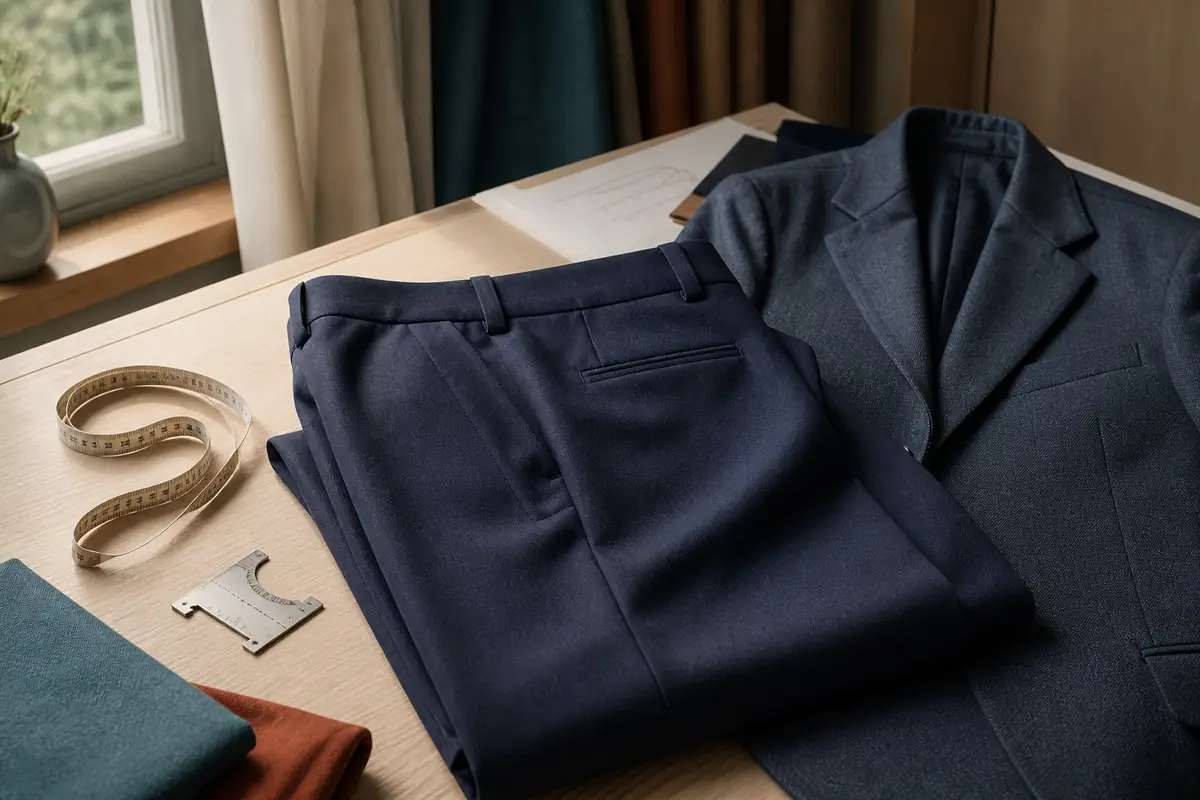
The image is an editorial illustration, not a photograph from a product test. Links are editorial and non-affiliate.