Reed diffuser placement guide: room size, airflow, reeds, spills and pets
Reed-diffuser strength depends as much on room, airflow, reeds and placement as on the liquid. Start with a stable protected position, then adjust gradually without creating spill or exposure risks.
In this guide
Use the lowest practical output in the safest position
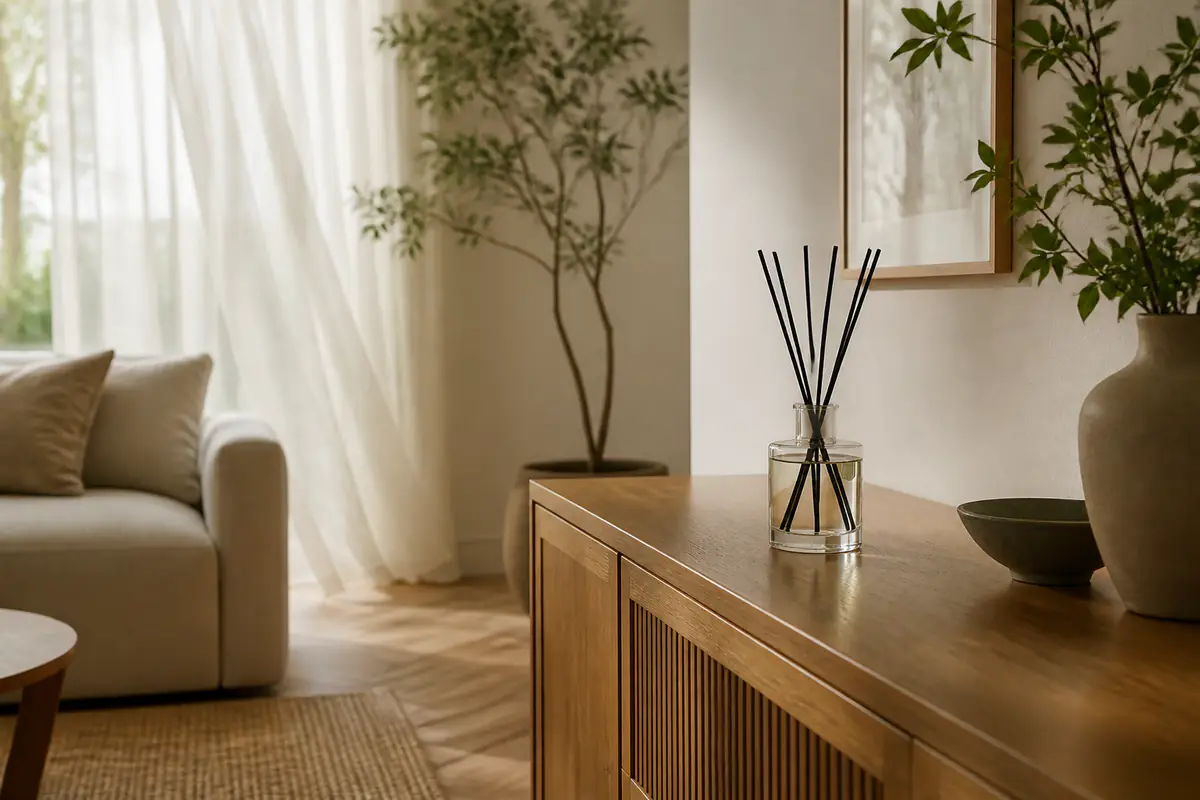
Place the vessel upright on a stable protected surface away from edges, heat, direct sun and vulnerable occupants. Change one variable at a time—position, reed count or turning frequency—and follow the exact label rather than improvising with more liquid.
Choose the delivery system with the diffuser buying guide, compare candle output in the fragrance-strength guide and use the ingredient-reading approach only where the product supplies relevant information.
| Position factor | Likely effect | Check | Risk to avoid |
|---|---|---|---|
| Gentle air movement | Distributes scent | Normal doors and ventilation | Strong draught and tipping |
| Warm or sunny place | May increase evaporation | Label and surface temperature | Heat, degradation and fire source |
| More reeds | Often raises output | Maker limit and tolerance | Spills during adjustment |
| Small enclosed room | Can feel stronger | Ventilation and occupants | Overexposure and pet access |
Placement record
- Room volume and normal door position.
- Ventilation and ordinary airflow.
- Stable surface material and protection.
- Distance from edge, heat and sunlight.
- Reed number and turning instruction.
- Children, pets and vulnerable occupants.
- Perceived strength at normal positions.
- Spill, first-aid and disposal information.
Read the exact label before choosing a room
Check intended use, hazard and precaution statements, supplier identity, ingredients or allergen information provided, first aid and disposal. A decorative bottle is still a chemical mixture and should not be placed before its instructions are understood. Use the product-quality checklist when the listing omits essential evidence.
Do not decant into an unlabelled vessel or mix refills. Keep the original container and packaging information available so a spill or reaction can be identified accurately.
Define room size and use
Record approximate room volume, ceiling height, doors and how long people occupy the space. A small bedroom, hallway and open-plan living room distribute the same diffuser differently.
Choose a lower-output starting point where occupants sleep, work closely, have sensitivities or cannot easily leave. A pleasant first impression near the bottle does not establish suitable all-day exposure.
Use ordinary airflow, not a strong draught
Gentle movement near a frequently used doorway may distribute scent, while a strong window, fan or vent draught can speed evaporation and create uneven intensity. Observe the room’s normal pattern.
Do not place the vessel where curtains, doors or cleaning tools can strike the reeds. Avoid vents that spread fragrance directly into sleeping, food or pet areas without control.
Keep away from heat and direct sunlight
Radiators, appliances, fireplaces and strong sun can warm the liquid, alter evaporation and affect the vessel or nearby surface. Follow the product’s storage and use restrictions.
A warmer spot is not a responsible way to make a weak diffuser stronger. Move it only when sealed or safely handled as instructed, and never place it near a flame or ignition source.
Choose a stable protected surface
Use a level surface larger than the bottle, away from edges and regular reach. Protect wood, paint, stone or plastic only with a non-reactive tray or mat that the instructions permit.
Fragrance oil can mark finishes. Test protection separately where appropriate and never assume a decorative coaster is chemical-resistant. A high shelf is not safe when unstable or reachable by climbing pets.
Set reed count conservatively
Use only the reed type and number permitted by the maker. More reeds can increase liquid transfer and evaporation, but vessel neck, formula and reed material change the result.
Start below the maximum when the label allows adjustment, then wait for the stated development period. Do not cut, split or substitute reeds without instructions; fragments and altered capillary behaviour add uncertainty.
Turn reeds only as instructed
Turning exposes saturated ends and can increase scent temporarily, but it also raises spill and skin-contact risk. Follow the exact frequency and method rather than making it a daily habit by default.
Wear any protection specified, work over the protected surface and wipe the vessel only as directed. Never turn reeds above furniture, electronics, bedding or a child-accessible area.
Assess strength from normal positions
Judge at seating, doorway and farther room points after a consistent period, not with the nose over the bottle. Record absent, balanced, intrusive or uneven rather than using a vague score.
Scent adaptation can make output seem weaker over time. Leave the room briefly and reassess before adding reeds. New entrants may perceive a much stronger concentration than continuous occupants.
Change one variable at a time
If output is weak, first confirm the diffuser has had its stated setup time and that reeds are correctly inserted. Then adjust only position or reed count within instructions.
Changing room, reeds and turning frequency together prevents useful learning and can overshoot. Keep a short dated note so the household can reverse the last change.
Plan around children and pets
Keep liquid and saturated reeds inaccessible and stable. Species and individual sensitivities differ, and “natural” does not mean safe to ingest, touch or inhale at every concentration.
Follow veterinary or medical advice for the household and stop use for concerning symptoms. Do not rely on a high shelf if a cat can jump to it or a child can pull the furniture.
Protect bedrooms and small rooms
Continuous fragrance in a small closed room can become intense, particularly overnight. Check the label, normal ventilation and whether occupants can avoid exposure.
Do not place beside a pillow, cot, heater or bedside route where it can be knocked. A temporary daytime placement elsewhere may be more controllable than permanent bedroom use.
Handle spills without spreading them
Keep people and animals away and follow the product’s first-aid and clean-up instructions. Blot or absorb only as directed; rubbing can spread oil into a finish.
Do not wash an unknown mixture into drains or combine cleaners. Preserve the label and contact the supplier, poison-information or emergency route appropriate to the exposure.
Monitor evaporation and contamination
Mark the setup date and observe normal level decline without drawing on the bottle. Rapid loss can reflect heat, airflow, reed count, a loose neck or a spill.
Cloudiness, debris, damaged vessel or unusual change is a reason to stop and consult the maker. Do not top up a residue with a different fragrance or old refill.
Preserve returns and fault evidence
Inspect vessel, seal, reeds, label and liquid level before setup. A leaking or damaged product should remain closed where safe, be photographed and reported rather than placed for testing.
For a gift, check the gift-returns guide before opening. Once opened, preference returns may be limited. Use the returns guide and distinguish a disliked fragrance from leakage, damage or incorrect description.
Run a cautious setup routine
Choose the room and stable protected surface after reading all instructions. Remove nearby food, textiles and electronics from the handling area. Confirm the bottle is undamaged and the liquid matches the order before opening.
Insert the minimum permitted reeds without splashing, then wash hands as directed. Keep the vessel away from edges, heat, sunlight, flames, children and pets. Record reed count, position and start date.
Wait the stated development time before judging at normal room positions. If intensity is too high, ventilate and reduce output only by an approved method. Stop for headache, coughing, irritation or pet concern and seek appropriate advice.
Recheck surface, stability, liquid level and household tolerance during the first week. A diffuser that needs unsafe placement or constant manipulation to work is not suitable for that room, regardless of its fragrance or price.
Review whether the room still needs fragrance
After several days, assess whether the diffuser solves a genuine atmosphere preference or has become background consumption. A lower reed count, shorter placement period or no diffuser may suit a room that is already well ventilated and clean.
Do not continue because liquid remains or because the vessel matches the décor. Household tolerance, safe placement, surface condition and controllable output are stronger reasons to keep or remove it than sunk cost. Record the decision before buying a refill.
Central airflow or sheltered position?
Distribution is needed in a larger room
The vessel stays stable and protected and ordinary airflow does not create excessive output.
Control and lower intensity lead
The position avoids stagnant direct exposure without sitting in heat, sun or a spill-prone corner.
Balanced verdict
Reed-diffuser placement is an exposure and spill decision, not interior styling alone. Start stable and conservative, observe normal airflow and tolerance, and adjust one permitted variable at a time.
The linked diffuser, candle, ingredient and returns guides support product choice and evidence.
Official checks:
HSE chemical labelling and packaging ↗
NHS poisoning guidance ↗
GOV.UK product safety advice ↗
GOV.UK product recalls and alerts ↗
Frequently asked questions
Where is the best place for a reed diffuser?
On a stable protected surface, away from edges, heat, direct sun, flames, children and pets, with only gentle normal airflow.
Do more reeds make a diffuser stronger?
Often, but follow the maker’s permitted number. Formula, room, temperature and airflow also affect output.
How often should reeds be turned?
Only as the exact instructions allow. Turning can increase scent and also spill and skin-contact risk.
Are reed diffusers safe around pets?
Do not assume so — Keep liquid inaccessible, check the exact ingredients and warnings and seek veterinary advice for the household.
What should I do if diffuser oil spills?
Keep people and animals away and follow the exact label’s first-aid and clean-up instructions without mixing cleaners or spreading it.
Methodology and limitations
We assessed reed-diffuser placement through labelling, room volume, airflow, heat, sunlight, surface stability, reeds, intensity, children, pets, bedrooms, spills, evaporation, returns and a cautious setup. Official UK chemical-labelling, NHS poisoning, product-safety and recall information was reviewed on 1 September 2026. We did not chemically analyse a fragrance.
Limitations
Formulas, rooms, ventilation and sensitivities differ, and pet risks require species-specific advice. Follow the exact label and seek appropriate medical, veterinary or emergency help for exposure; this is not toxicology advice.