Choosing lip balms: occlusives, fragrance, SPF and packaging
A useful lip balm reduces water loss, feels comfortable enough to reapply and avoids ingredients that irritate the individual user. Packaging, outdoor protection and hygiene matter as much as an attractive flavour.
In this guide
Start simple, then add protection only when the use case needs it
For ordinary dry lips, begin with a plain balm built around familiar occlusive ingredients and minimal fragrance. Choose an SPF product for outdoor exposure, follow its application directions and stop using a formula that repeatedly stings or worsens soreness.
Lip balm is a small purchase with unusually frequent use. Texture determines whether it is reapplied; a pot, stick or tube changes hygiene and dose; and a long ingredient list can introduce fragrance or flavour that a sensitive user does not need. The best choice is therefore the simplest formula that suits the cause, setting and application habit.
Match the formula to the job
| Need | Useful evidence | What not to assume |
|---|---|---|
| Everyday dryness | An occlusive base, comfortable texture and repeatable application | A tingle or strong flavour proves that it works. |
| Cold or windy weather | A persistent protective layer and easy pocket application | A glossy finish alone means lasting protection. |
| Outdoor sun exposure | Clearly stated SPF, directions and suitable reapplication | One morning application covers the whole day. |
| Sensitive lips | Shorter ingredient list and low-fragrance or fragrance-free option | “Natural” automatically means non-irritating. |
| Shared household use | Separate products or a hygienic dispensing format | Sharing a stick or pot is harmless. |
Understand what an occlusive balm can do
Occlusive ingredients form a barrier that slows water loss from the lip surface. The NHS specifically mentions balms containing petroleum jelly or beeswax as options for sore or dry lips. This is symptom care, not proof that every case has the same cause. Cold weather, wind, sun, dehydration, licking, irritation and allergy can all contribute.
Read ingredients from the product itself and keep the objective modest: comfort, protection and reduced cracking. A balm cannot replace assessment when lips are hot, painful, swollen, persistently worsening or otherwise concerning. Our cosmetic ingredient-list guide explains how to use the list without treating it as a diagnosis.
Do not mistake sensation for effectiveness
Mint, menthol, camphor, strong flavour or fragrance can create an immediate cooling or warming sensation. Some users enjoy that; others find it uncomfortable on already cracked skin. Sensation is not evidence of better barrier performance. If a balm stings every time, stop and compare a plainer alternative rather than repeatedly applying more.
Fragrance-free and unscented are not always interchangeable marketing terms, so inspect the ingredients and description. Plant extracts and essential oils are still ingredients with the potential to disagree with an individual. The useful question is not whether a formula sounds natural, clinical or luxurious, but whether its composition and use directions fit the wearer.
Choose SPF for actual outdoor use
The NHS advises using a lip balm with SPF 15 or more every two hours when outdoors. Check the current label for the protection claim, application amount, frequency, water-resistance wording and any age or use restrictions. Reapplication after eating, drinking or wiping may be necessary even when the headline claim sounds long-lasting.
An SPF lip balm should be treated as a sunscreen product for a small exposed area, not as a permanent coating. A texture that the user refuses to reapply is a poor practical choice. When extended outdoor activity is planned, combine the balm with shade and other appropriate sun-protection measures rather than relying on one small stick.
Compare stick, tube and pot packaging
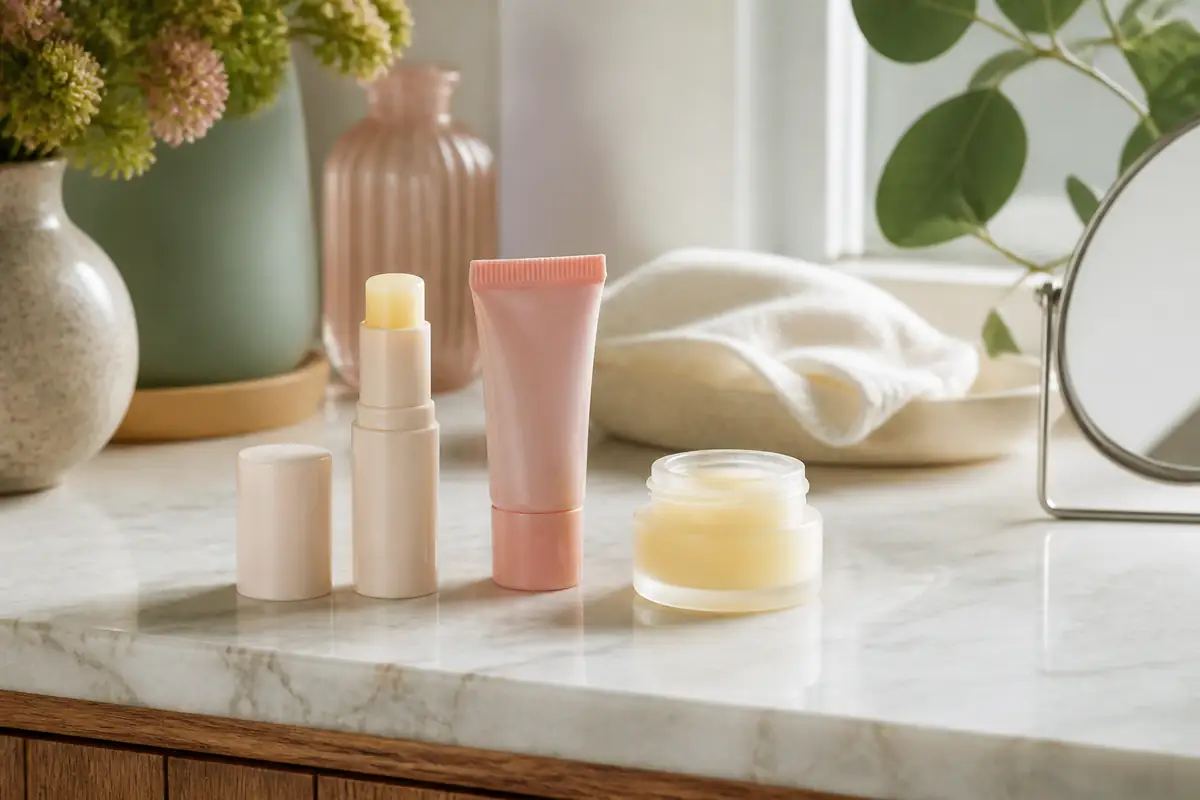
- Stick: quick and direct, but can soften in heat and should not be shared.
- Squeeze tube: dispenses without repeatedly touching the bulk product; the tip still needs to stay clean.
- Pot: makes dose and texture easy to control, but clean hands or an applicator are important.
- Tinted balm: combines colour and care, though pigment may make even application and SPF reapplication harder to judge.
- Large jar: can reduce unit cost but is less useful if it expires, becomes contaminated or never leaves the bathroom.
Check whether the cap closes securely and whether the format can survive a coat pocket or handbag without leaking. A retractable stick should wind down cleanly; a tube should not require so much pressure that it releases a large blob. Good packaging supports the required application rather than merely looking giftable.
Use hygiene as part of the buying decision
The NHS advises washing hands before applying balm and not sharing products, because sharing can spread germs. That favours a personal stick or tube for use outside the home. A pot may still work well at a bedside or desk when clean application is realistic.
Do not apply from a visibly dirty nozzle or over an active lesion and then continue as if nothing happened. Follow the product’s storage and period-after-opening information. Our cosmetics expiry and PAO guide covers the distinction between a printed date, the open-jar period and observable changes in smell, texture or colour.
Read the complete label before first use
Check the ingredient list, net content, responsible-person details, warnings and directions on the current product. An SPF formula may have more precise instructions than a plain cosmetic balm. Keep the pack long enough to identify the product if irritation develops, rather than relying on colour or flavour to remember which version was used.
For a child, pregnancy, allergy history or treatment that makes skin especially dry or sensitive, do not infer suitability from a general family image. Follow the label and ask a pharmacist or relevant clinician when individual circumstances change the risk. A beauty product can be well formulated and still be the wrong choice for one person.
Check comfort over several ordinary applications
A balm can feel smooth initially yet become waxy, sticky or migrate beyond the lip line. Test it during the conditions that matter: outside in wind, under a face covering, before sleep or beneath lipstick. Note whether the product prompts frequent lip licking, because licking can make soreness worse.
Reapplication frequency is not a simple quality score. A lighter daytime balm may need more frequent use than an overnight ointment but feel much better in speech and eating. Compare comfort, persistence and mess rather than chasing a claim that one application lasts indefinitely.
Calculate value by finished use, not pack size
A small stick used completely can be better value than a large pot abandoned because the scent is irritating or the texture is inconvenient. Estimate how many daily applications are realistic and whether the product will remain in one location or travel. Include loss and melting risk in the decision.
Price per gram is useful only among formulas that perform the same job. SPF products, tinted balms and simple occlusive ointments are not direct substitutes in every situation. Our beauty cost-per-use guide helps compare usable quantity, packaging waste and the likelihood of finishing a product.
Separate cosmetic care from a medical problem
Self-care is reasonable for ordinary dryness, but persistent or severe symptoms need a different response. NHS guidance says to seek GP advice if lips are hot, painful and swollen because this can indicate infection, and a pharmacist can advise on treatment and whether medical review is needed. A fluid-filled blister with tingling or burning may be a cold sore rather than simple dryness.
Avoid making a cosmetic shortlist carry a diagnostic burden. If several products cause the same reaction, keep a record of ingredients and ask a pharmacist or clinician. Marketing claims such as “dermatologist tested” do not guarantee personal tolerance; see our beauty-claims guide for a more disciplined reading.
Which lip-balm route fits?
Dryness and sensitivity are the main concerns
You want a short, understandable formula, minimal fragrance and a texture that can be reapplied without discomfort.
Outdoor exposure is part of the day
The protection claim and directions are clear, and you will apply enough and reapply at the stated intervals.
Balanced verdict
A good lip balm is uneventful: it protects, remains comfortable and is easy to use hygienically. Begin with a simple occlusive formula, avoid unnecessary sensory ingredients when lips are sensitive and add SPF for outdoor use. Change course when a product stings or symptoms suggest more than ordinary dryness.
Continue with our clean-beauty claims guide, shortlisting framework, skincare-actives explainer and the Beauty archive.
Check current official sources:
NHS guidance for sore or dry lips ↗NHS sun-safety guidance ↗
Frequently asked questions
Is petroleum jelly suitable for dry lips?
The NHS lists lip balms containing petroleum jelly or beeswax among self-care options. Personal sensitivity and the cause of soreness still matter.
Should lip balm tingle?
It does not need to. Cooling or warming ingredients can create sensation without proving greater effectiveness, and some users find them irritating.
How often should SPF lip balm be reapplied?
Follow the product label. NHS guidance advises an SPF 15 or higher balm every two hours outdoors, with practical reapplication after eating, drinking or wiping.
Is a pot less hygienic than a stick?
It depends on use. A pot requires clean hands or an applicator, while a personal stick avoids finger contact but still should not be shared.
When should dry lips be checked by a professional?
Seek advice when symptoms persist, worsen or lips are hot, painful and swollen. A pharmacist can help decide whether GP review is needed.
Methodology and limitations
We assessed lip balms through barrier function, sensory ingredients, SPF instructions, packaging, hygiene, persistence, cost per finished use and NHS self-care boundaries. This is a buying guide, not medical diagnosis or a hands-on review of a named product.
Limitations
Formulas, labels and individual tolerance vary. Read the current pack and seek professional advice for persistent, painful or concerning symptoms.
The image is an editorial illustration, not a photograph from a product test. Links are editorial and non-affiliate.