John Lewis Click & Collect UK: ready messages and parcel deadlines
Plan around the actual collection point and ready message, rather than treating every parcel as a next-day store pickup.
In this guide
A ready message matters more than an order confirmation
John Lewis Click & Collect can avoid waiting at home, but the location, ready notification and holding period must work with your journey. The current UK information distinguishes store collection, local network points and Post Offices. Do not assume that every parcel is ready the next morning or held for the same number of days.
This is a practical guide to the collection process checked on John Lewis’s official UK information on 22 November 2026. It is separate from choosing an electrical retailer or judging a product guarantee. Stock, parcel eligibility and the earliest collection date remain specific to the actual checkout.
Compare the three main holding periods
| Route in the official guidance | Stated holding period | What the shopper should do |
|---|---|---|
| Store collection | 7 days | Read the ready message and the chosen store’s collection instructions |
| Other local collection points | 10 days | Keep the barcode or order details and confirm opening hours |
| Post Office collection | 18 days | Check the named branch and the parcel’s actual collection deadline |
| Store self-check-in counter preparation | 30 minutes at the collection point after check-in | Do not confuse this short counter window with the overall store holding period |
A longer published period provides flexibility, but should not become a reason to leave the parcel until its last available opening hour. The collection-point planning guide covers access and evidence questions that also matter when collecting at a staffed location.
Make the journey work before ordering
Check the location against a real day rather than choosing the closest pin on a map. Opening hours, transport changes, parking and the collection counter’s position can alter the practical journey. A shop you pass on foot may be less convenient when carrying a bulky parcel.
Think about the whole return trip. A small kitchen appliance, several clothing items and a fragile gift create different carrying needs. The package can be larger than the product dimensions because of protective material, so avoid assuming that an item fitting a shelf will also fit the bag you intend to bring.
Where the trip is already planned, collection can be a useful addition. Where it requires a dedicated journey, compare the time and travel cost with the home-delivery option. A nominally free service can still be the less convenient choice for that particular order.
The delivery planning checklist helps compare the final choices on the same basis. Use the address and option actually selected in checkout rather than a general service banner.
Read the threshold without buying an unwanted extra
The checked John Lewis page describes collection as free over £40 and £2.95 below that amount. Its short wording does not clearly resolve a basket of exactly £40, so use the actual checkout charge at that boundary instead of assuming an answer from the headline.
If a fee applies, adding an unwanted item merely to remove it can cost more overall. Compare the additional item’s price and purpose with the collection charge. A necessary purchase brought forward may be sensible; a filler item that later needs returning adds another task.
Keep the total with the selected location. Changing the basket, address or product source can change the choices available. A saved screenshot of a general information page does not establish the service offered for a later combination of items.
Confirm that the parcel is eligible
Collection is not available for every product. John Lewis’s guidance excludes items requiring two-person delivery and products delivered directly by approved suppliers from this collection route. The appearance of a retailer’s name on the website does not mean every listed item travels through the same network.
If one item makes collection unavailable, examine the basket rather than repeatedly changing the collection location. Separating an eligible item into another order may reveal a collection option, but check any resulting fees and the complete delivery arrangement before deciding.
For an electrical purchase, the John Lewis electricals buying review addresses the wider seller and service questions. A convenient collection method should not substitute for checking the right product, installation requirements or support route.
Distinguish confirmed, ordered and ready
An order confirmation records the purchase. A ready-to-collect message records a later stage in the collection process. Keep those messages separate when deciding whether to leave home; do not make the journey because a payment confirmation arrived quickly.
The official page describes different collection arrangements and timing by location. Use the earliest date shown for your basket and wait for the ready message before travelling. A next-day service description is not permission to arrive before the parcel has been processed at the chosen point.
Check spam folders if an expected message is missing and review the actual order status through the retailer’s own account or contact route. Avoid opening an unexpected parcel message’s link simply because you happen to be waiting for an order.
Keep a small collection record
- The order number and the precise collection address.
- The ready notification, rather than only the purchase confirmation.
- The stated collection deadline and the location’s opening hours.
- The identification instructions relevant to that collection route.
- A way to access the barcode or message if mobile data is unreliable.
Our purchase evidence checklist helps keep those records together without turning a simple collection into a folder of unnecessary screenshots.
Prepare identification for the selected route
Read the ready message for the documents needed at that location, particularly where someone else will collect. The retailer’s information contains route-specific identity instructions, so do not assume that a screenshot of an order number alone authorises every collection.
If a nominated collector is needed, confirm the arrangement before handing over the task. They should know the location, opening hours, parcel size and the documents requested. Do not email identity-document copies to a collection point or share account passwords simply to make the handover easier.
For a gift, consider whether a collection message or parcel description could reveal the surprise. A recipient’s convenience still matters more than preserving a particular presentation. Agree who will collect and how the parcel gets home before choosing the service.
Self-check-in is a short arrival step
Where offered, self-check-in lets the store know you are approaching so it can prepare the parcel. The short counter holding period is part of that arrival arrangement; it does not replace the longer period for keeping the order in store.
Use the check-in link when the journey is sufficiently certain, rather than activating it while deciding whether to leave. If plans change, follow the instructions in the message or ask the collection team. An arrival feature should reduce waiting, not create pressure to rush a journey.
Accessible collection needs also deserve a check in advance. Ask the chosen location about the practical route if stairs, carrying distance or counter access could be difficult. Do not assume that a service available at one branch exists at every other point.
Plan for a missed collection or a return
If collection is no longer practical, contact the retailer through the order’s official route and check the available options. Simply allowing the holding period to expire is not the same action as confirming a cancellation or arranging a different delivery.
Keep a record until any returned parcel has reached the relevant stage and the refund is confirmed. Do not assume that a parcel leaving a collection point produces an immediate bank credit. For delays, use our refund tracking and escalation guide to distinguish transport time from a payment issue.
If you collect successfully and later change your mind, check the current return options for the actual product and location. Original packaging, item condition and evidence may matter, while a fault or arrival damage needs its own description. The returns policy assessment helps identify the right process before making another journey.
When collection is the better plan
Choose collection
The eligible parcel fits your carrying plan, the location is genuinely convenient and you can collect comfortably within the stated period after the ready message arrives.
Prefer another delivery option
The journey is uncertain, the parcel is awkward to transport or the available point does not meet your access needs. Compare the complete home-delivery cost and timing before ordering.
Our verdict is that Click & Collect is most useful when the entire journey is planned. Choosing a location, knowing its deadline and waiting for confirmation are more valuable than treating a free collection label as an automatic saving.
John Lewis UK collection information
Current Click & Collect locations, charges, retention periods and collection FAQsOfficial customer services for order-specific collection and return help
John Lewis collection planning questions
Can I collect as soon as payment is confirmed?
Wait for the separate ready-to-collect notification and use the named location’s instructions.
Is every parcel kept for seven days?
The current guidance distinguishes store, local-network and Post Office retention periods.
Does the thirty-minute check-in window cancel the longer holding period?
It describes counter preparation after check-in, rather than the complete period for keeping the order.
Will a mixed basket always allow collection?
Ineligible items can remove that option, so check the products and the choices offered for the actual order.
Should I add something just to reach free collection?
Compare the unwanted item’s cost with the charge and any extra return work before increasing the basket.
How the collection process was reviewed
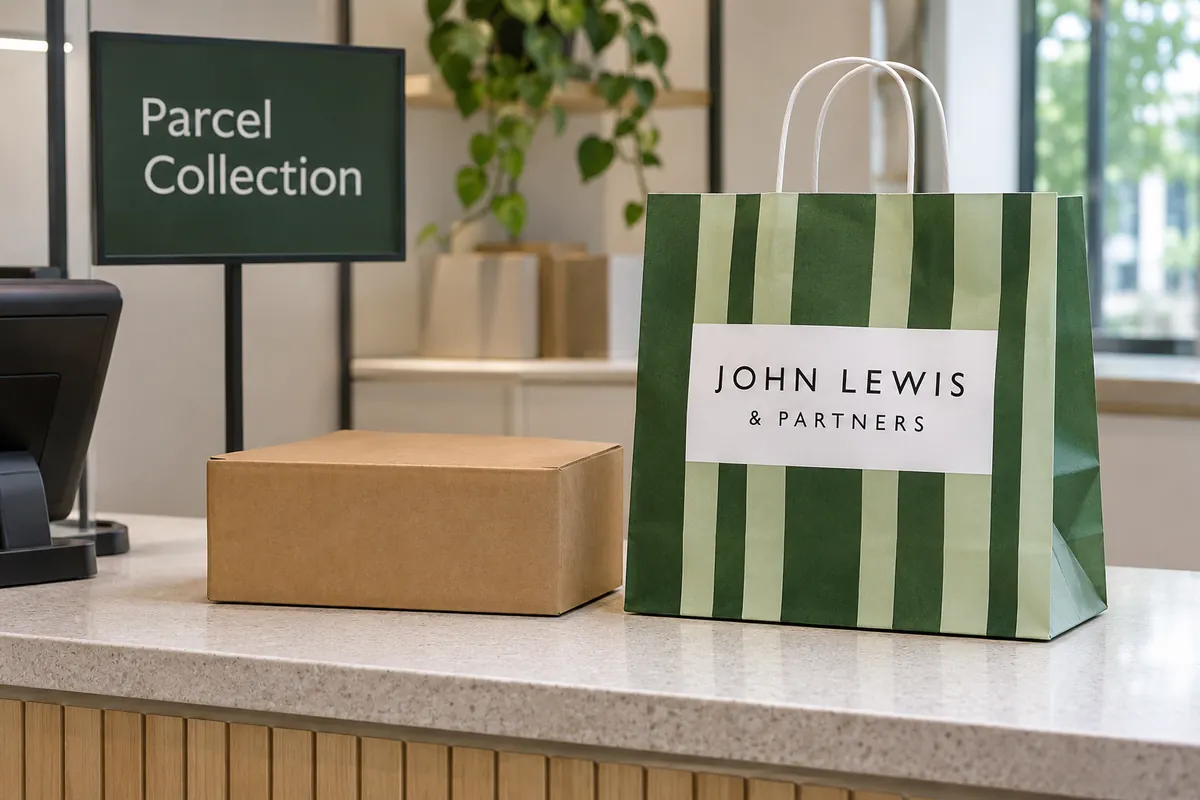
This guide uses John Lewis’s official UK collection information checked on 22 November 2026 and applies an original journey-planning assessment. The editorial illustration identifies the retailer without depicting a verified individual branch.
Order-specific limitations
We placed no test order and did not inspect collection counters. Eligibility, access, stock, identification requirements and ready dates must be confirmed for the actual parcel and location.