How to choose a fountain pen as a gift: nib, filling, grip and returns
A good fountain-pen gift suits the recipient’s handwriting, grip and tolerance for maintenance. Compare the writing system before the finish: nib width, cap seal, filling method, compatible ink and a sensible return route matter more than an ornate box.
In this guide
Choose a reliable writer before a collectible object
For a first fountain pen, a comfortable medium-sized body, secure cap, replaceable cartridge or converter and clearly stated nib width are the safest starting points. Add one compatible ink supply, keep the pen unused if the recipient may exchange it, and avoid permanent personalisation until fit and writing preference are certain.
Fountain pens are unusually personal tools. Two pens with similar prices can feel different because one has a narrow grip, a heavy metal body or a nib that writes a wider line. A gift succeeds when it makes everyday writing pleasant, not merely when it looks impressive in the box.
Match the pen to the recipient’s likely use
| User and task | Practical starting point | Check carefully |
|---|---|---|
| First fountain-pen user | Moderate weight, round grip and common cartridge format. | Simple cleaning, included ink and clear instructions. |
| Small handwriting or forms | Fine or extra-fine labelled nib. | Paper quality and whether the brand writes broader than expected. |
| Letters and journalling | Fine or medium nib with comfortable section. | Cap seal, ink capacity and long-session balance. |
| Frequent note-taking | Quick cap operation and dependable converter or cartridge. | Dry-out resistance, grip comfort and replacement availability. |
| Experienced collector | A specific requested nib, material or filling system. | Duplication, edition claims, authenticity and seller expertise. |
Nibs: width labels are only a starting point
Fine, medium and broad are not universal measurements. Line width changes with the maker, ink, paper, pressure and the angle at which the pen is held. A Japanese-labelled fine may differ from a European-labelled fine, but brand generalisations are weaker evidence than a current writing sample for the exact model.
For unknown preferences, fine or medium is usually easier to use than an italic, stub, flexible or specialist nib. Left-handed writers do not all need the same nib: over-writing, side-writing and under-writing positions create different demands. Avoid promising that a particular nib is “for left-handers” without understanding the recipient’s technique.
Grip, weight and balance determine comfort
Check the grip diameter, body length, weight and whether the cap is intended to post on the back. A short pen may need posting, which moves weight rearwards. A faceted grip can guide fingers for one person and force an awkward position for another. Metal sections may feel slippery; a pronounced step between barrel and section can press into the hand.
- Measure a pen they already use. Compare total length, grip diameter and weight rather than guessing from photographs.
- Notice grip position. Someone who holds far from the nib may touch a thread or barrel step.
- Check posted and unposted balance. Marketing weight may exclude or include the cap.
- Prefer secure clips and caps. A gift carried daily needs practical retention and a cap that resists drying.
- Look for replaceable parts. Nibs, converters and seals extend useful life when genuinely available.
- Keep presentation secondary. A large box consumes cost and storage without improving the writing experience.
Choose the filling system with maintenance in mind
Cartridges are convenient but may be proprietary. A converter draws bottled ink through the nib and can reduce single-use cartridge demand, though capacity varies. Piston, vacuum and eyedropper systems hold more ink but require the user to understand filling, cleaning and seals. “Converter compatible” does not always mean one is included.
Confirm the exact cartridge format and what arrives in the box. Do not gift a random bottled ink: some inks are highly saturated, waterproof, pigmented, shimmering or otherwise more demanding. The pen maker’s compatibility guidance is the safest source for a beginner. Never put drawing ink, calligraphy dip-pen ink or unidentified liquid into a fountain pen.
Cap seal and everyday reliability deserve attention
A nib that dries between uses makes a poor gift. Look for repeated owner reports about hard starts after a realistic storage period, cap cracking, loose clips and ink evaporation. Separate comments about one colour or nib size from evidence across the exact model. Our review-checking guide helps weight repeated details rather than star averages.
Inspect retailer images for the cap mechanism and inner seal, but remember that cutaway claims may be promotional. A threaded cap is secure but slower for quick notes. A snap cap can be convenient if it remains firm over time. A retractable fountain pen is specialised and should be chosen only with clear evidence about sealing and maintenance.
Paper and ink change the result
Broad, wet nibs can feather or bleed through inexpensive office paper. Fine nibs often suit forms and compact notebooks, although very dry combinations can feel less smooth. If the recipient writes on paper supplied by work or school, choose for that constraint rather than an ideal premium notebook.
A modest compatible ink or cartridge pack is enough to start. Avoid creating a colour bundle the recipient did not request. If adding paper, prioritise a useful format and paper known to handle fountain-pen ink, while keeping the total gift easy to return as separate items.
Materials and premium claims need evidence
Gold-coloured trim is not evidence of gold content, and a gold nib is not automatically smoother than steel. Nib geometry, tipping, alignment and quality control determine the writing surface. Resin, acrylic, lacquer and metal can all work; ask what the material means for weight, scratches, grip and repair rather than treating it as a rank.
Limited-edition language needs a defined edition size or other verifiable basis. For higher-value pens, buy from a seller that identifies the exact model, warranty route and included components. Use our online-shop checks and marketplace responsibility guide before relying on an unfamiliar listing.
Personalisation can remove the safest exit
Engraving can make a pen memorable, but it may reduce or remove ordinary change-of-mind return options and complicate resale or repair. Confirm spelling, placement, font, turnaround and the policy for a faulty personalised item. Statutory remedies for faulty goods are distinct from a voluntary change-of-mind policy, but resolving a dispute is easier when the order is clear.
If size, nib or grip is uncertain, gift the unmodified pen first and add personalisation later through an appropriate service. Keep the receipt available to the recipient without displaying the price. Our gift receipt and returns guide explains the handover.
Set a complete-use budget
The ticket price is not the full gift. Add the converter if it is not included, a small supply of confirmed-compatible ink, any specialist delivery charge and realistic servicing or replacement-part costs. A presentation case, multiple ink bottles and decorative notebook can inflate the total while making exchange complicated. One working setup is more considerate than a large bundle of uncertain accessories.
At higher prices, ask what changes for the writer: better quality control, repairable components, a tested nib or reliable after-sales support can be meaningful. Plating, numbered packaging and vague heritage language may add cost without improving use. Compare the exact included items and warranty route rather than two recommended retail prices.
Keep each optional accessory separable. If the pen is returned, unopened ink and paper may still be useful, but retailer terms differ. Record the model and nib on the gift note without including private order data. This gives the recipient enough information to buy compatible supplies later.
Which gift route should you choose?
The recipient is curious but has no fixed preference
Use a common filling format, familiar fine or medium nib, moderate weight and a retailer with a clear unused-return process.
The recipient has named the exact writing experience
Match the requested nib, dimensions and filling system, and verify authenticity, warranty and replacement-part support.
Balanced verdict
The best fountain-pen gift is specific enough to be useful and flexible enough to exchange. A comfortable body, conventional nib and well-supported filling system beat prestige that ignores the writer. Delay engraving, protect the return route and make ink compatibility explicit.
For a wider decision process, use our gift-without-guessing guide, compare return policies consistently, and browse more Style & Gifts guidance or the shop directory.
Check current official guidance:
GOV.UK returns and refunds ↗Citizens Advice cancellation guidance ↗CMA consumer-protection guidance ↗
Frequently asked questions
Is a fine or medium nib better as a gift?
Fine suits small writing and ordinary paper; medium can feel smoother and show ink colour. Choose from the recipient’s writing rather than a universal rule.
Should a converter be included?
It is useful if the recipient wants bottled ink, but confirm it fits the exact pen and include cartridges for a simple start.
Is a gold nib always better?
No. Material alone does not guarantee smoothness, line width or comfort; design and quality control matter.
Can an engraved pen be returned?
Change-of-mind policies commonly exclude personalised goods. Fault rights are separate, so check the current terms before engraving.
Can I test the pen before gifting it?
Inking may make it used and affect returns. Use a shop tester or an uninked handling sample where available.
Methodology and limitations
We assessed fountain-pen gifting through nib choice, ergonomics, filling, sealing, ink and paper compatibility, support, personalisation and returns. Official UK consumer guidance was checked on 29 August 2026. No named pen was written with or ranked.
Limitations
Writing feel is personal, nib labels vary and retailer policies change. Confirm the exact model, included parts, compatibility, warranty and return position before ordering.
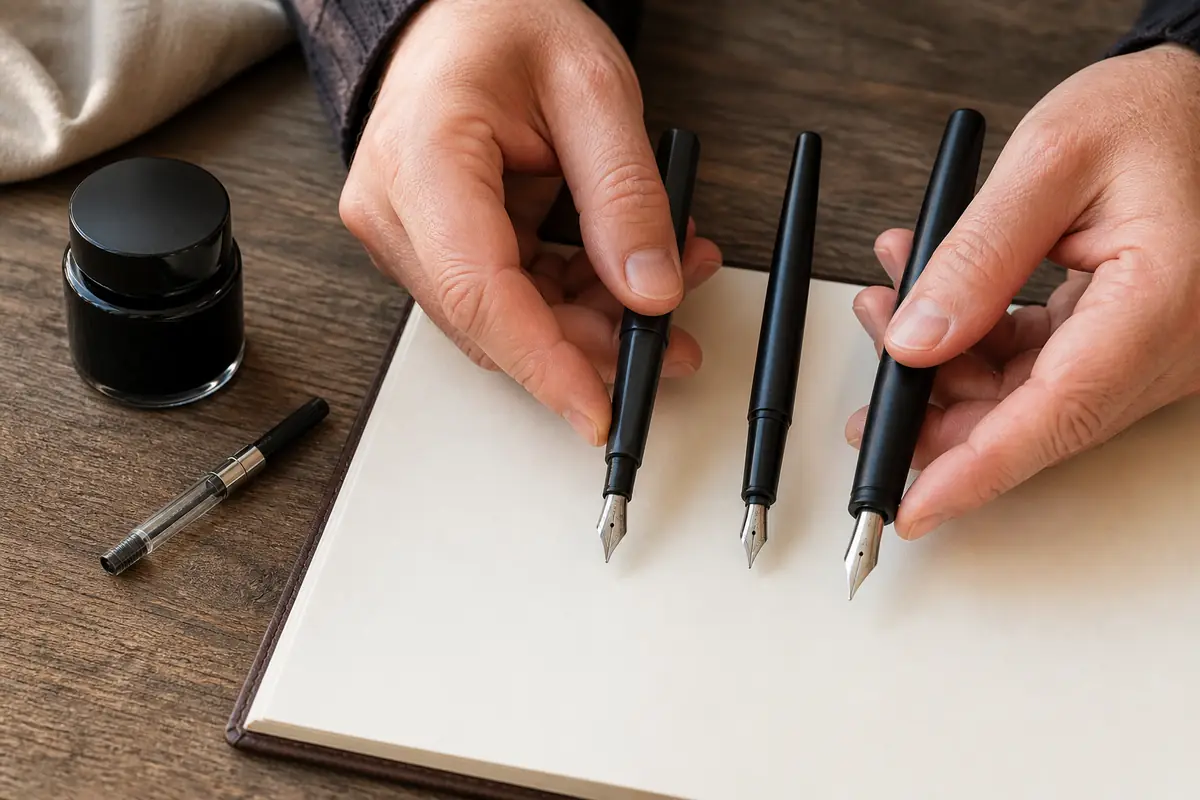
The image is an editorial illustration, not a photograph from a product test. Links are editorial and non-affiliate.