How to inspect denim seams, hardware and construction quality
Inspect the delivered garment rather than relying on weight, heritage or price. Follow each seam, load point and fastening, then test movement while the item is clean and returnable.
In this guide
Follow the load path, not the marketing story
Good denim construction keeps stitches, grain, pockets and hardware aligned through realistic movement. Decorative thickness, contrast thread and extra rivets can look rugged without proving that the pattern fits or the delivered unit is sound.
Start with our clothing-quality method, interpret fibre blends through fabric composition explained, and compare fit evidence with the clothing sizing guide.
| Area | Look for | Movement check | Do not assume |
|---|---|---|---|
| Waistband and loops | Level layers, secure ends, no skipped stitches | Sit and use a belt if intended | More loops always mean better support |
| Rise and crotch | Smooth seam junction, balanced grain and reinforcement | Walk, step and squat gently | Thick thread prevents strain |
| Pockets and yoke | Symmetry, secure corners and flat attachment | Load only normal small items | Rivets rescue a poorly placed pocket |
| Leg and hem | Side and inseam alignment, even feed and clean finish | Check hang, knee and shoe break | Leg twist is always acceptable wash character |
Ten-minute return-safe denim check
- Confirm product code, size, wash and fibre composition.
- Lay the garment flat without stretching it into symmetry.
- Follow waistband, yoke, rise, side seam and inseam.
- Check every belt-loop end and pocket corner.
- Operate the zip or buttons without force.
- Inspect rivets for sharpness, looseness and fabric damage.
- Compare left and right legs, knees and hems.
- Sit, walk, climb a step and use pockets indoors.
Confirm that the delivered garment matches the listing
Before judging quality, compare style, size, inseam, wash, fibre composition, fastening and care label with the order. A wrong wash or stretch blend can change drape and recovery enough to create a false construction verdict. Photograph identifiers without publishing personal order details.
Use the care-label guide to distinguish mandatory fibre and care information from decorative patches. Keep tags attached and do not wash, steam, stretch or alter while deciding whether the supplied product is correct.
Lay denim flat without forcing it square
Fasten the waistband, smooth the garment lightly and align the upper block. Compare side length, rise, pocket position and leg direction. Denim is three-dimensional and washed garments need not form perfect mirror images, but obvious pulling or rotation deserves closer inspection.
Turn the jeans over and repeat. A camera placed directly above can record asymmetry, yet lens angle can exaggerate it. Use measurements and how the garment hangs on the body before calling a visual difference a defect.
Inspect the waistband as a layered structure
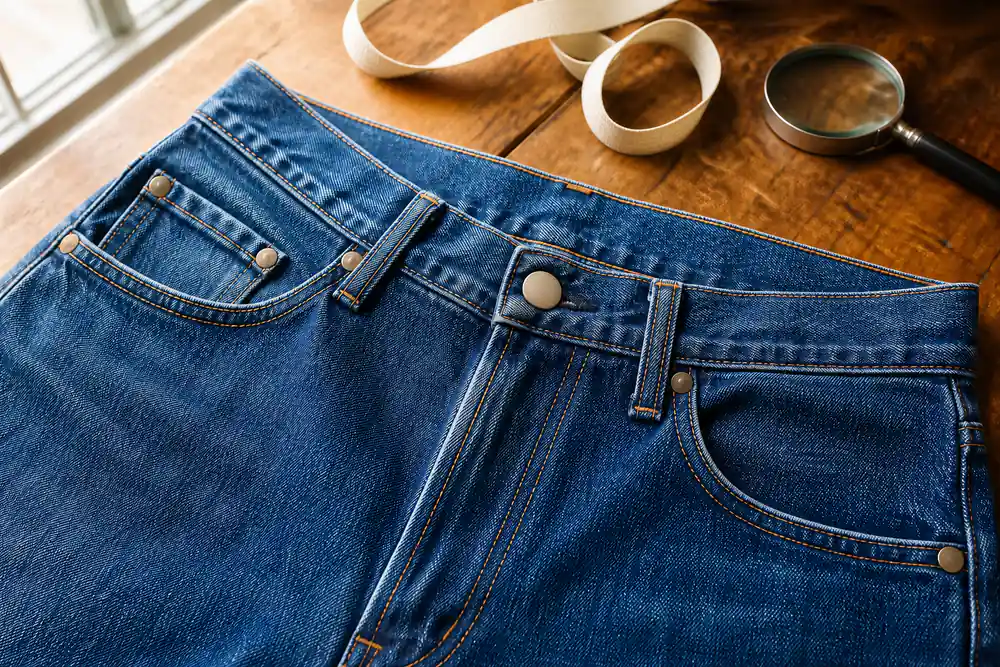
Follow the top edge, lower seam, button area, fly junction and centre back. Look for skipped stitches, puckering, exposed raw edges where none are intended and layers that shift. A curved waistband may fit better than a straight one, but only the body test establishes that.
Pulling diagonals at the closure can come from fit rather than weak sewing. Sit and bend gently. If the button strains, waistband rolls or back gaps severely, compare rise and seat before expecting thicker thread to solve the pattern.
Check every belt loop at both load points
Belt loops concentrate force where their ends meet the waistband. Inspect top and bottom securing stitches, frayed edges and whether the loop can accept the intended belt without bunching. More loops distribute a belt but do not guarantee stronger attachment.
Never yank a loop to test it; that creates the damage. Put on the usual belt, sit and stand, then observe whether the waistband stays positioned without individual loops distorting. A belt should refine fit, not hold an unsuitable waist together.
Follow the rise, crotch and yoke junctions
The front rise, back rise, inseam and yoke meet around high-movement areas. Check that seam allowances remain enclosed or intentionally finished, stitches run consistently and bulky intersections lie without sharp ridges. Reinforcement should support, not create a hard pressure point.
Walk, climb a step and squat gently. Diagonal whiskers can be normal tension evidence, but severe pulling, pocket flare or seam cutting suggests the block is wrong. Use cost per wear only after comfort and mobility pass.
Pockets need secure corners and usable placement
Inspect front pocket openings, coin pocket, rear pocket corners and any internal bags. Look for loose threads, missed edge stitching, sharp rivet backs and fabric caught unevenly. Decorative pocket stitching is not proof of reinforcement and can create trademark concerns in resale listings.
Use pockets with normal light contents while indoors. A phone should not lever against a rivet or prevent sitting. If placement distorts the seat or creates pressure, the product may be unsuitable even when the stitching itself is sound.
Operate buttons, rivets and zips carefully
A button should be secure and pass through its hole without tearing the edge. Rivets should sit flat without sharp burrs, rotation or surrounding cracks. A zip should run smoothly when the garment is off the body; tension during wear may indicate fit rather than slider failure.
Do not lubricate, crimp or hammer new hardware while returnable. Photograph looseness and stop if an edge could cut skin. Hardware replacement can be possible, but it should not turn a new purchase into an immediate repair project.
Compare side seams, inseams and grain
Follow both legs from crotch to hem. The side seam and inseam should take plausible, consistent paths for the pattern. Wash processes can produce character, yet pronounced spiralling can rotate the leg and move seams noticeably during wear.
Hang the jeans and wear them briefly with the intended shoes. Compare knees and hems. The garment-quality guide explains why one visual cue should not substitute for construction, fit and care evidence together.
Inspect hems before paying for alterations
Check stitch continuity, folded depth, thread tension and whether the two hems match the intended inseam. Washed finishes can make exact colour continuity difficult after shortening, and an original-hem alteration uses a different method from a clean new hem.
Pin the proposed length and walk in the intended footwear. Do not cut until rise, seat and thigh are accepted. Alteration is sensible finishing for a sound block; it is poor value when it hides twist, severe imbalance or an incorrectly supplied size.
Separate cosmetic variation from functional faults
Fading, whiskering, abrasion effects and uneven dye can be intentional. Compare the product description and photographs. Functional concerns include broken fastening, unsafe sharpness, open seams, missed stitching at load points and distortion outside the stated finish.
Describe a problem neutrally and attach close and context photographs. Do not pull threads or recreate failure for the camera. Our online-shop evidence guide helps preserve the seller, listing and order trail.
Care and repairability decide long-term value
Once kept, follow the permanent label. Excess heat, unsuitable bleaching and aggressive drying can change colour, shrinkage and stretch recovery. Turn and fasten only where instructed, and separate unstable dark colour until its behaviour is understood.
Review whether buttons, zips and hems can be repaired locally and whether the brand supplies parts or service. Use how long products should last to frame durability without inventing a universal lifespan for all denim weights and blends.
After the first season, repeat the same seam path and photograph only meaningful change: loop attachment, pocket corners, crotch junction, hardware, knee shape and leg direction. Count wears and washes. This makes an eventual repair or replacement decision proportional and stops normal fading from being confused with structural failure.
Keep the garment or return it?
Construction and fit pass the same movement test
Seams, loops, pockets, hardware, grain and hem are sound, while rise, thigh and waistband remain comfortable without relying on alteration to rescue the block.
A delivered defect or structural mismatch is documented
There are open or skipped load-point seams, unsafe hardware, severe twist, broken fastening, wrong specification or fit that fails realistic movement.
Balanced verdict
Denim quality is a chain of pattern, fabric, seams, hardware, finishing and care. Inspect the actual unit symmetrically, then test it asymmetrically on the moving body. No single rivet, fabric weight or heritage claim proves the whole garment.
Use the genuine-discount guide before letting a reduced price excuse a construction problem, and browse Fashion for distinct fit and care questions.
Official checks:
GOV.UK consumer protection rights ↗
GOV.UK product safety alerts and recalls ↗
WRAP textiles information ↗
Frequently asked questions
Do more rivets mean better jeans?
No — Rivets can reinforce selected points, but placement, fabric condition, seam construction and fit still decide whether the garment is sound.
Is leg twist always a fault?
Not always — Fabric construction and washing can create some rotation, but pronounced twist that affects hang or wear should be documented and judged against the description.
Should loose threads be pulled?
No — Photograph them first. Pulling can open stitching or remove evidence; seek the seller or a competent repairer’s advice.
Can a tailor fix a poor rise or thigh?
Major upper-block changes are complex. Alteration is best used to finish a fundamentally sound fit, such as a considered hem.
How should new dark denim be washed?
Follow the permanent label and take precautions for colour transfer. Do not wash until the keep-or-return decision is final.
Methodology and limitations
We assessed denim construction through delivered specification, flat comparison, waistband, belt loops, rise, yoke, pockets, hardware, seams, grain, hem, movement, finish, care, evidence and repairability. We did not destructively test or wear named products.
Limitations
Patterns, washes, fibre blends and intentional finishes vary. Photographs cannot prove every seam allowance or durability outcome. This guide is not a laboratory standard; compare the exact description, label and delivered garment.