Clothing shrinkage and stretching: washing, reshaping and repair
Shrinkage and stretching depend on fibre, yarn, fabric structure, garment construction, moisture, heat and mechanical action. Read the permanent label, measure before treatment and change one care variable at a time.
In this guide
Stop before trying to force the old shape back
Measure the garment, identify the fibre and review the exact care history before adding heat, water, steam or tension. Some relaxation can be managed gently; felting, heat damage, elastane failure and distorted construction are not reliably reversible at home.
Interpret the label with care labels explained, connect behaviour to fibre composition, and judge the delivered construction with our clothing-quality method.
| Change | Likely evidence | Safe first step | Avoid |
|---|---|---|---|
| Overall smaller | Width and length reduced after heat or agitation | Stop treatment; compare label and measurements | Hot soaking and hard pulling |
| Knit wider or longer | Shoulder or hem dropped during wet drying | Support and reshape flat if label permits | Hanging heavy wet knitwear |
| Knees or elbows bagged | Local strain and poor recovery | Rest, gentle care and rotation | High heat to force recovery |
| Twist or skew | Seams rotate after wash | Document flat and worn alignment | Cutting before fault decision |
Shape-change evidence record
- Save fibre percentages, care symbols and product code.
- Measure chest, waist, body, sleeve and relevant openings.
- Record wash cycle, temperature, spin and load.
- Record detergent, additives and drying method.
- Photograph flat alignment without stretching.
- Allow the garment to dry and rest before remeasuring.
- Separate fit change from seam or fabric distortion.
- Repair or reshape only after the return decision is clear.
Measure before treating a suspected problem
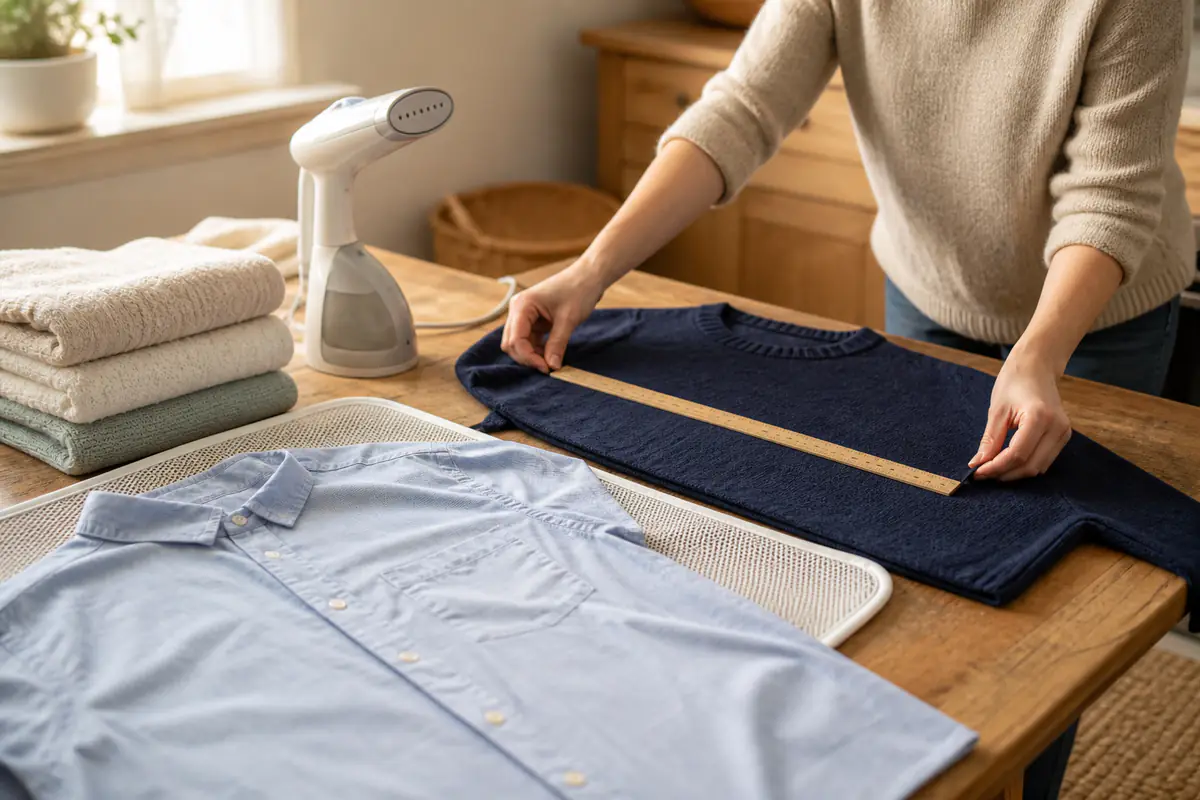
Lay the clean dry garment on a flat surface and measure the same landmarks used before purchase: width under the arms, body length, sleeve, waistband, rise or inseam as relevant. Do not pull the cloth into the expected result. Photograph the tape position without personal data.
One measurement after wear can mislead because moisture, body heat and gravity temporarily relax fibres. Let the garment rest. Compare with a genuinely similar item only when construction and fibre blend match. Nominal size is not a physical measurement.
Read fibre and structure together
Cotton, wool, viscose, linen, polyester and elastane behave differently, but percentage alone is incomplete. Yarn twist, knit or weave, finishing, lining and seam construction affect dimensional stability. A mixed fabric should not be treated as if one named fibre controls everything.
The sustainable fashion claims guide helps separate marketing fibre stories from usable care evidence. Recycled or natural language does not predict shrinkage, and a premium price does not make a care limit optional.
Heat, moisture and movement work as a system
A warmer wash, strong agitation, high spin and tumble heat can combine into more change than any one setting. Hard water, load crowding and long damp storage can affect creasing and drying. Record the actual cycle rather than relying on a habitual machine button name.
Do not repeat the same treatment to confirm damage. If the label was followed and change is outside reasonable expectation, preserve the garment and evidence. If the label was exceeded, be honest; a repairer needs the real care history.
Reshape wet knits with full support
Where the label permits washing, support wet knitwear when lifting because water adds weight. Press moisture without wringing, place flat on a suitable surface and guide seams, cuffs and hem toward recorded dimensions without aggressive stretching.
Hanging can lengthen shoulders and body; direct heat can set unwanted change. Thick areas dry slowly, so turn or reposition only as the care instructions allow. Stop if fibres resist, felt, shed or lose surface integrity.
Treat steam as heat and moisture, not magic
Steam can relax some wrinkles and help controlled reshaping, but it can also distort, shine, shrink or damage finishes. Check the label and tool instructions, test cautiously and keep the source moving at the required distance.
Never steam a garment while worn. Our garment-steamer guide covers output, tank and fabric restrictions. Use a pressing cloth or professional service where the material and construction require it.
Elastic recovery can fail independently of shrinkage
Waistbands, cuffs, stretch denim and activewear can grow because elastane, elastic or knit recovery has deteriorated. Heat may accelerate the failure instead of restoring it. Compare the whole garment with local high-strain areas.
Rest and correct laundering may improve temporary bagging, but cracked elastic, rippling or persistent growth may need replacement of the component. Cost the repair against real wear using cost per wear.
Distinguish a fit problem from a care problem
A restrictive rise, narrow shoulder or short sleeve may have been present before washing. Review first-fit notes and photographs. Conversely, a garment that clearly changed after a compliant cycle needs measurements and the exact care record, not a vague statement that it feels different.
Body change, layering and posture also affect fit. Use the clothing sizing guide to keep body and garment measurements separate and avoid blaming one on the other.
Repair only when the fabric remains sound
A tailor may reset a hem, replace elastic, stabilise a seam or alter a mildly changed garment. Felting, scorched fibres, delamination and widespread elastane failure are harder to reverse. Obtain a view on the actual item before cutting.
A repair should preserve comfort and proportion rather than convert a damaged garment into an expensive experiment. Record the work and revised measurements for future care, then review after several wears.
Prevent repeats with a small care log
For vulnerable garments, record first wash, machine programme, temperature, spin, drying position and final measurement. Keep compatible items together and avoid leaving wet clothes compressed. A short note is more reliable than remembering that a normal cycle was used.
The Fashion care guides can help distinguish a garment that fitted poorly from the start from one whose shape changed after washing or unsupported drying. Retire or repurpose only after repair, comfort and realistic rotation have been considered; do not use aggressive treatment merely to create an excuse for replacement.
Test one hidden area before treating the whole garment
Colour, surface finish and dimensional stability can react differently from the main fibre description. Where the label permits a method, test an inconspicuous area with the same water, tool and drying conditions planned for the garment. Let it dry fully before judging colour transfer, shine, texture or puckering. A quick damp check is not a complete result.
Keep the test small and stop if dye moves, fibres roughen, coating lifts or seams draw up. A successful hidden test reduces uncertainty but does not guarantee that a large front panel, lining or bonded detail will behave identically. Valuable, structured or sentimental pieces deserve specialist advice before broad treatment.
Build future purchases around proven care capacity
Before buying, compare the label with the routines and equipment genuinely available at home. A hand-wash-only knit, dry-clean-only jacket or flat-dry garment needs space, time and handling that should be included in ownership cost. Save the label photograph before removing packaging and measure a high-risk item before its first wash.
When two garments serve the same role, the easier reliable care route may provide better long-term value than a delicate finish or a lower initial price. This is not an argument for universal easy-care synthetics; it is a prompt to match fibre, construction, use and maintenance honestly so avoidable shape change does not become routine waste.
Reshape at home or seek repair?
The label permits it and fibres remain sound
The change is mild, measurements are recorded, the garment can be fully supported and no heat damage, felting, delamination or elastic failure is present.
Structure or fibre integrity has changed
There is severe felting, shine, scorching, twist, cracked elastic, peeling, lining distortion or resistance that requires force.
Balanced verdict
Clothing shape is evidence from fibre, structure and care history, not a universal shrinkage percentage. Measure dry, review the complete treatment and use the least aggressive supported method. Repairs can restore components, but they cannot promise to reverse damaged fibres.
Keep the final measurements and care record with the garment so the next wash and future purchase begin from facts.
Official checks:
GOV.UK consumer protection rights ↗
WRAP textiles information ↗
Laundry and Cleaning News industry information ↗
Frequently asked questions
Can shrunken clothing always be stretched back?
No — Mild relaxation may respond to supported reshaping, but felting, heat damage and structural distortion may be permanent.
Should wet knitwear be hung to dry?
Usually not unless the label specifically permits it. Water weight can stretch shoulders and body; flat support is often safer.
Can steam fix a stretched garment?
Not reliably — Steam can relax fibres but may also distort or damage them. Follow the exact label and tool guidance.
Why do knees and elbows bag?
Local strain, knit or weave structure and fibre recovery all contribute. Rest and correct care may help, but failed elastane may not recover.
What evidence helps with a complaint?
Keep the label, receipt, before-and-after measurements, care cycle record and clear photographs of shape and seams.
Methodology and limitations
We assessed garment shape change through measurements, fibre, yarn and fabric structure, heat, moisture, movement, knit support, steam, elastic recovery, fit history, repair and prevention. We did not destructively test or treat named garments.
Limitations
Care labels, machines, water, fibres and finishes vary. This is general care guidance, not a guarantee of reversal. Follow the exact label and seek a competent cleaner or repairer for valuable or uncertain items.