Chest freezers ownership guide: energy, defrosting and food rotation
A chest freezer works best when temperature, airflow, access and stock rotation are controlled together. Keep an inventory, minimise open time and defrost only with a safe plan for the food inside.
In this guide
Know what is inside before opening the lid
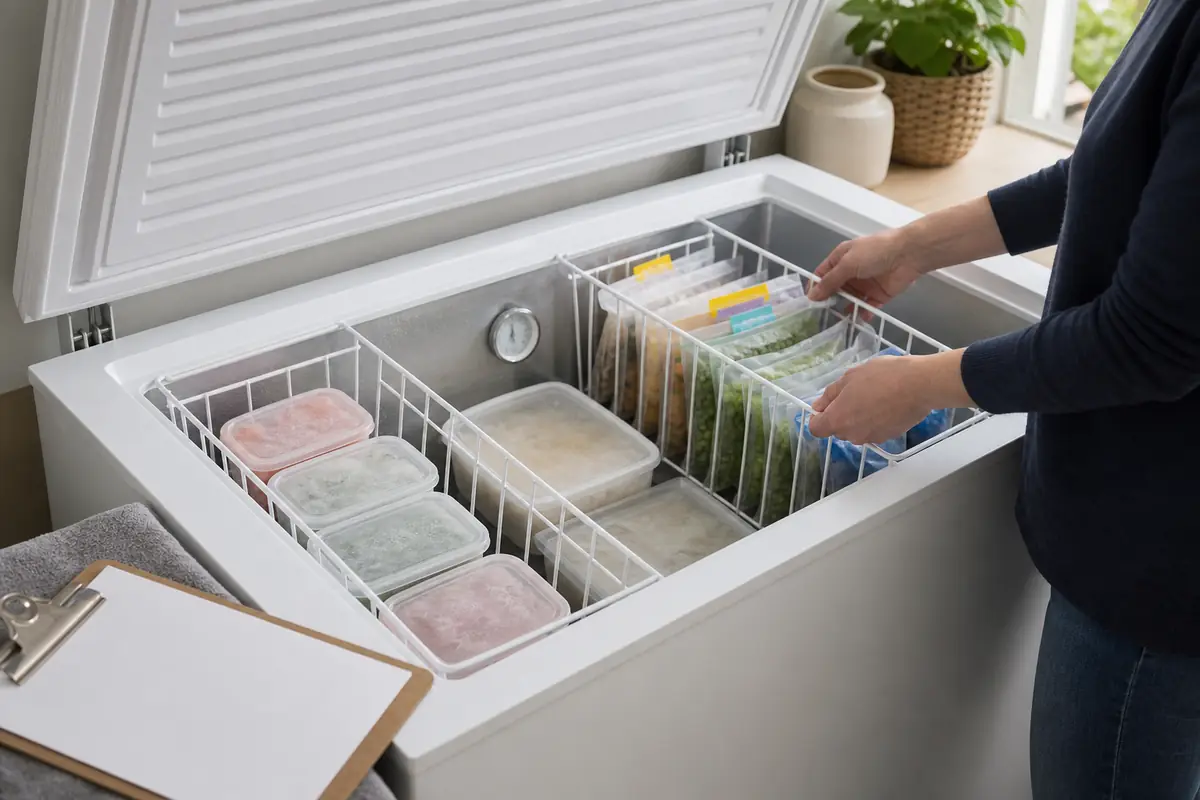
Use a dated inventory and zone baskets so food can be found without unloading the cabinet. Long searches add warm air and make forgotten food more likely; an overfilled unlabelled freezer is not efficient storage.
Estimate consumption with appliance running costs, check long-term service through repairability and spare parts, and compare cabinet planning with small-kitchen buying.
| Area | Routine | Warning | Response |
|---|---|---|---|
| Temperature | Read a suitable thermometer after stability | Persistent rise or erratic readings | Protect food and investigate |
| Inventory | Date, zone and use oldest suitable items | Unknown parcels beneath new stock | Reorganise in short controlled stages |
| Frost | Track thickness and lid closure | Rapid return or blocked baskets | Check seal and defrost guidance |
| Placement | Maintain stated clearance and dry access | Heat, condensation or unstable floor | Stop and correct installation |
Monthly chest-freezer record
- Read stable temperature.
- Update inventory and oldest-use list.
- Inspect lid gasket and hinges.
- Check frost distribution and basket movement.
- Keep external vents and clearance free.
- Listen for new persistent noise.
- Review alarms after any power interruption.
- Keep model, serial and service details offline.
Set up zones that match retrieval frequency
Use baskets or dividers approved for the cabinet, placing frequently used items where they can be reached without shifting heavy frozen blocks. Separate raw foods and damaged packages appropriately, and keep vents or internal features clear as the manual requires.
A zone map on the inventory is more useful than stacking by package colour. Do not overload a basket beyond its support or create a tower that can fall when the lid is open.
Measure temperature after stable conditions
Use a suitable freezer thermometer according to its instructions and the appliance manual. Read after the cabinet has stabilised, not immediately after loading or a long search. Record room conditions, control setting and any fast-freeze mode.
If a safe temperature is not maintained, protect food following current guidance before diagnosing the appliance. Turning the control colder cannot fix every seal, airflow, sensor or installation problem.
Build an inventory around dates and usable portions
Label the food and freezing date clearly, then record quantity and location. Rotate older suitable items upward when adding new stock. Divide large purchases into realistic portions before freezing so the whole pack does not need to be thawed for one meal.
Review the list before shopping. Claimed capacity saves nothing when duplicates are forgotten. Remove items from the inventory only when they leave the freezer, not when a meal is merely planned.
Load warm additions in controlled batches
Follow food-safety and appliance guidance for cooling and freezing. Large amounts of unfrozen food can raise cabinet temperature and extend compressor running. Use any fast-freeze feature only as directed and return controls to normal if required.
Keep existing frozen items protected and avoid pressing new packages against sensors, drains or surfaces unless the design allows it. Record unusually large loads when interpreting energy or temperature changes.
Inspect lid closure and gasket contact
Wipe gasket folds using the approved method and remove crumbs or packaging that prevents full contact. Observe the complete perimeter without stretching the seal. Heavy baskets and protruding packages can hold the lid slightly open.
Hinge resistance and vacuum-like pressure can be normal, but a lid that drops, shifts or will not close needs attention. Do not add adhesive strips or drill into the cabinet; contact the maker or a competent technician.
Defrost with a food and water plan
Follow the manual for trigger, shutdown and defrost method. Prepare insulated storage or another suitable freezer, towels, shallow trays and safe access to the plug. Never use knives, sharp tools, heaters or unsupported sprays to force ice away.
Move food quickly, keep lids closed and monitor conditions. After cleaning, dry the cabinet, restart as directed and wait for the required temperature before reloading. Record the date and frost pattern.
Treat rapid frost return as evidence
Frost near one lid area can suggest closure or seal issues, while widespread frost can follow repeated openings, warm humid air or poorly wrapped food. Photograph the dry empty cabinet after correct defrosting and note when frost reappears.
Repeated defrosting is not a repair. If ice prevents baskets moving, affects closure or quickly returns under normal use, seek service rather than scraping around hidden cooling parts.
Plan for power cuts before they happen
Keep the inventory, thermometer and maker guidance accessible without opening the lid. During an interruption, keep the cabinet closed and note start time. Follow current food-safety advice and any alarm instructions; do not rely on smell alone.
After power returns, record temperature and duration before resetting alarms. Our product-lifespan guide helps frame repair decisions, but food safety remains separate from appliance value.
Use placement to control heat, damp and access
Maintain the stated side, rear and ventilation clearances. Check ambient-temperature limits before using a garage, shed or utility room; cold and heat can both affect operation. The floor must support the loaded weight and allow safe lid opening.
Keep water sources, direct sun and combustible clutter away as directed. Do not use the lid as a shelf, and ensure children cannot climb or become trapped. Browse Home & Kitchen for distinct appliance guidance.
Prepare a repair record before moving the appliance
Save model, serial, purchase date, temperature log, frost photographs, error indications and a description of noise. Check whether the technician needs the freezer empty and how food should be protected.
Do not tip or move a loaded cabinet alone. A repair-versus-replace decision should include age, fault, safe transport, parts and expected energy use through total cost of ownership, not purchase price alone.
Keep baskets and dividers compatible with cold use
Use components supplied or approved for the model. Brittle improvised plastic can crack at low temperature, while solid boxes may block intended airflow or hide a drain. Inspect handles before lifting a loaded basket.
Replace damaged organisers before sharp edges puncture packaging or hands. Label zones on the inventory rather than sticking unsupported materials to cold cabinet surfaces.
Clean spills before they become hidden ice
Package leaks can freeze beneath baskets and resemble ordinary frost. Isolate affected food, follow the approved shutdown or cleaning method and avoid pouring hot water into the cabinet.
After cleaning, dry surfaces and inspect packaging that shared the area. Record the source so a repeated leak is corrected through better containers or placement rather than repeated scraping.
Maintain or seek service?
Organisation or approved care resolves the symptom
Temperature stabilises, the lid seals, frost returns slowly and normal inventory, clearance and defrost routines restore practical use.
Cooling, structure or electrics remain abnormal
Temperature stays unsafe, frost rapidly returns, the lid or hinge is damaged, or there is heat, smell, leakage, exposed wiring or persistent mechanical noise.
Balanced verdict
Chest-freezer value comes from reliable temperature and visible stock rotation, not litres alone. Zone the cabinet, log food and defrost safely without sharp tools or improvised heat.
Protect food first whenever temperature is uncertain, then use the evidence record for diagnosis and repair.
Official checks:
Food Standards Agency chilling and freezing guidance ↗
GOV.UK product safety alerts and recalls ↗
Recycle Your Electricals ↗
Frequently asked questions
How full should a chest freezer be?
Follow the manual, keep required airflow clear and avoid loading that prevents safe lid closure or access.
What is the safe route for removing ice from a chest freezer’s walls?
No — Sharp tools can puncture hidden components and cause injury. Use only the approved defrost method.
Is a garage suitable for a chest freezer?
Only if the model supports the ambient temperature range and required dry, ventilated installation conditions.
What should happen during a power cut?
Keep the lid closed, note the time and follow current appliance and food-safety guidance before using affected food.
Why keep a freezer inventory?
It shortens lid-open time, supports oldest-first rotation and reduces forgotten duplicate food.
Methodology and limitations
We assessed chest-freezer ownership through zoning, temperature, inventory, loading, seals, defrosting, frost, power cuts, placement and repair evidence. We did not temperature-cycle or dismantle named appliances.
Limitations
Models, climate classes, food loads and faults vary. Follow the exact manual and current food-safety advice. Use a competent technician for electrical, refrigeration, hinge or structural problems.