Choosing reusable eye masks: material, fit, cooling and cleaning
A reusable mask should match one defined comfort use, sit without eye pressure and have exact cooling, washing, drying and replacement instructions.
In this guide
Choose controlled contact, not the strongest sensation
Use a traceable mask with a soft washable contact surface, adjustable strap and model-specific temperature instructions. It should rest around rather than press on the eyes, remain comfortable for the stated duration and dry fully before clean storage.
Reusable eye masks range from plain sleep masks to gel inserts marketed for cooling or warming. Those functions are not interchangeable. A mask that blocks light can be assessed as a textile accessory; a temperature mask also requires safe preparation, temperature limits, leak inspection and an individual suitability check.
Separate the product types
| Type | Main use | Evidence required |
|---|---|---|
| Plain sleep mask | Reduce visible light | Opacity, pressure, strap and washability. |
| Removable gel insert | Short controlled cooling or warming | Temperature method, duration, cover and leak checks. |
| Bead-filled mask | Flexible temperature contact | Seam strength, fill movement and preparation limits. |
| Weighted mask | Pressure sensation | Total weight, distribution and suitability warning. |
| Steam/self-heating mask | Single-use warmth | Not reusable; separate activation and disposal rules. |
| Contoured mask | Reduce eyelid contact | Cup depth, edge seal and side-sleep stability. |
Define the use before choosing features
Write one brief: blocking light during sleep, a cool comfort routine, travel or short rest. Do not buy a heating-and-cooling product merely because it offers more modes. Each mode adds instructions, storage and misuse risk. Persistent pain, swelling, vision change, injury or eye symptoms require appropriate medical advice rather than an accessory experiment.
Check warnings for eye surgery, glaucoma, impaired sensation, skin conditions, circulation concerns, pregnancy, medicines and children. This general guide cannot establish suitability. A pharmacist, optometrist, GP or treating clinician can advise on individual circumstances.
Fit should avoid direct eye pressure
- Bridge: should not create a hard point on the nose.
- Eye cups: need enough depth for blinking without edges digging in.
- Temples: seams and sliders should not sit under the head.
- Strap: must hold position without headache or skin marking.
- Lower edge: should not obstruct breathing or lift with facial movement.
- Side sleeping: check whether fill shifts and concentrates pressure.
Try the mask while sitting before lying down. Blink, move the eyes normally and turn the head. If vision blurs, pain develops, the eyes feel compressed or skin remains marked, remove it. Tightening is not the correct response to a shape mismatch.
Read contact materials and all layers
Check fibre content for the cover and composition information for gel, beads, foam and elastic. “Silk feel”, “cooling fabric” and “natural” do not identify the material. The surface should be smooth, colourfast and free from loose fibres, rough embroidery or exposed hook-and-loop fastener.
Removable covers improve washing only when the insert can be removed without bending or puncture. Fixed layered masks can hide moisture. Use our fabric guide and online quality checklist.
Cooling needs exact time and storage rules
Follow only the maker’s refrigerator or freezer instruction. “Freezeable” is not permission to leave the product indefinitely at the coldest setting. Household freezers vary, and a mask straight from one may be too cold for direct skin contact. Use the supplied cover or required cloth barrier.
Set a timer for the stated maximum and check skin comfort early. Never fall asleep wearing a temperature mask unless the manufacturer and a relevant professional explicitly confirm that use. Do not add salt, alcohol or another substance to make a gel mask colder.
Warming adds burn and hot-spot risk
Microwave heating can create uneven temperature, and wattage differs between appliances. Follow the exact power, time, turning and standing instructions. Do not guess a time from another mask or reheat immediately because one area feels cool. Knead only if directed and test through the required cover.
Do not heat a leaking, dry, discoloured or damaged insert. Ovens, boiling water and direct radiators are not substitutes unless explicitly listed. A pleasant mild warmth is the goal; stronger heat is not more effective evidence.
Inspect seals before every temperature use
Hold the clean dry insert over a sink and inspect seams, valves and corners without squeezing hard. Look for pinholes, tackiness, clouding, separated layers and unexplained loss of fill. A leaking insert should be isolated according to its instructions and replaced, not patched with household adhesive.
If contents contact skin or eyes, follow the product’s first-aid directions and seek appropriate professional advice. Preserve packaging and batch details. Check official consumer-rights guidance without recreating the leak.
Build a complete cleaning sequence
Separate cover and insert only as instructed. Wash the cover at the stated temperature and method; wipe the insert with permitted products. Avoid fragranced or harsh cleaners where the directions prohibit them. Rinse residue and dry every seam before reassembly.
Eye-area cosmetics, hair products and skin oils can accumulate invisibly on dark fabric. Light contact surfaces help inspection. Assign personal masks rather than sharing, and store clean and used items separately. Our care-label guide helps with textile symbols.
Travel changes storage and hygiene
A sealed pouch protects a clean dry mask from a bag, but it also traps moisture. Let the product dry before packing. Temperature inserts may be affected by security, refrigeration access and destination conditions; a plain washable sleep mask can be the more predictable travel tool.
Do not place a gel mask against sharp toiletries or loose jewellery. Keep instructions available offline, avoid decanting an insert into anonymous packaging and keep the wider travel kit controlled.
Replace by condition, not a promised lifetime
Retire the mask after leaking, swelling, hardened fill, persistent odour, damaged straps, rough contact fabric, seam separation or a change in heating/cooling behaviour. A washable cover does not make the insert permanent. If a replacement cover is sold, confirm exact model fit.
Calculate realistic uses before purchasing a multi-pack. A simple mask used regularly can offer better cost per use than a complex mask that is difficult to prepare and clean.
Run a dry fit before adding temperature
Try the mask at room temperature first while seated and awake. Adjust the strap so the mask remains in place without pressing on eyelids, temples or ears, then remove it and check for persistent marks or irritation. This separates a basic fit problem from the sensation created by cooling or warming.
If the product has a removable insert, test the empty cover and insert arrangement exactly as instructed. Confirm that seams, closures and hard edges do not migrate towards the eye when reclining. A product that needs frequent tightening or hand support is not a secure hands-free choice, however comfortable the fabric initially feels.
Create a repeatable preparation routine
Keep the maker’s instructions with the mask and use a timer rather than estimating contact time. Prepare only by the stated method; do not microwave, freeze or add hot water unless the exact product instructions permit it. Check temperature on an appropriate area as directed, use any required barrier and stop immediately if comfort changes.
After use, inspect the insert for clouding, hardening, leaks, swelling or separated seams. Clean the cover and reusable surface by the specified route, dry completely and store away from contamination and sharp objects. Record the opening or first-use date when replacement depends on age. For symptoms, injury, infection, recent treatment or uncertainty, buying guidance is not a substitute for advice from a qualified professional.
Which eye-mask route is appropriate?
Light blocking is the actual goal
It fits without pressure, remains dark enough and can be washed and dried in the household routine.
Controlled short contact is suitable
Exact preparation, barrier, duration, inspection and individual suitability are all clear.
Balanced verdict
The safest useful default is a simple washable mask that blocks light without pressing on the eyes. Add cooling or warming only for a defined appropriate use, with exact temperature and time control. Complexity is a burden unless it solves the brief.
Check beauty marketing claims, understand beauty returns, and browse Beauty guidance or the shop directory.
Check current official sources:
GOV.UK product labelling ↗UK product recalls and alerts ↗NHS eye injury guidance ↗
Frequently asked questions
Can I sleep in a cooling eye mask?
Not unless the exact maker instructions and appropriate professional advice support that use.
Should an eye mask press on the eyelids?
No. Choose a shape and strap that remain secure without uncomfortable direct eye pressure.
Can any gel mask go in a freezer?
No. Follow the exact storage temperature and time; refrigerator-only products must not be frozen.
Can reusable masks be shared?
A personal allocation is the practical default because the mask contacts skin and product residue.
When should a gel mask be replaced?
After leaking, seam damage, hardened or changed fill, persistent odour, swelling or altered temperature behaviour.
Methodology and limitations
We assessed reusable eye masks through use, fit, material, temperature, seams, cleaning, travel and replacement. Current UK product and NHS sources were checked on 29 August 2026. No mask was heated, cooled or clinically tested.
Limitations
This is buying guidance, not medical advice. Eye and skin needs vary. Seek professional advice for symptoms, injury, surgery or uncertainty.
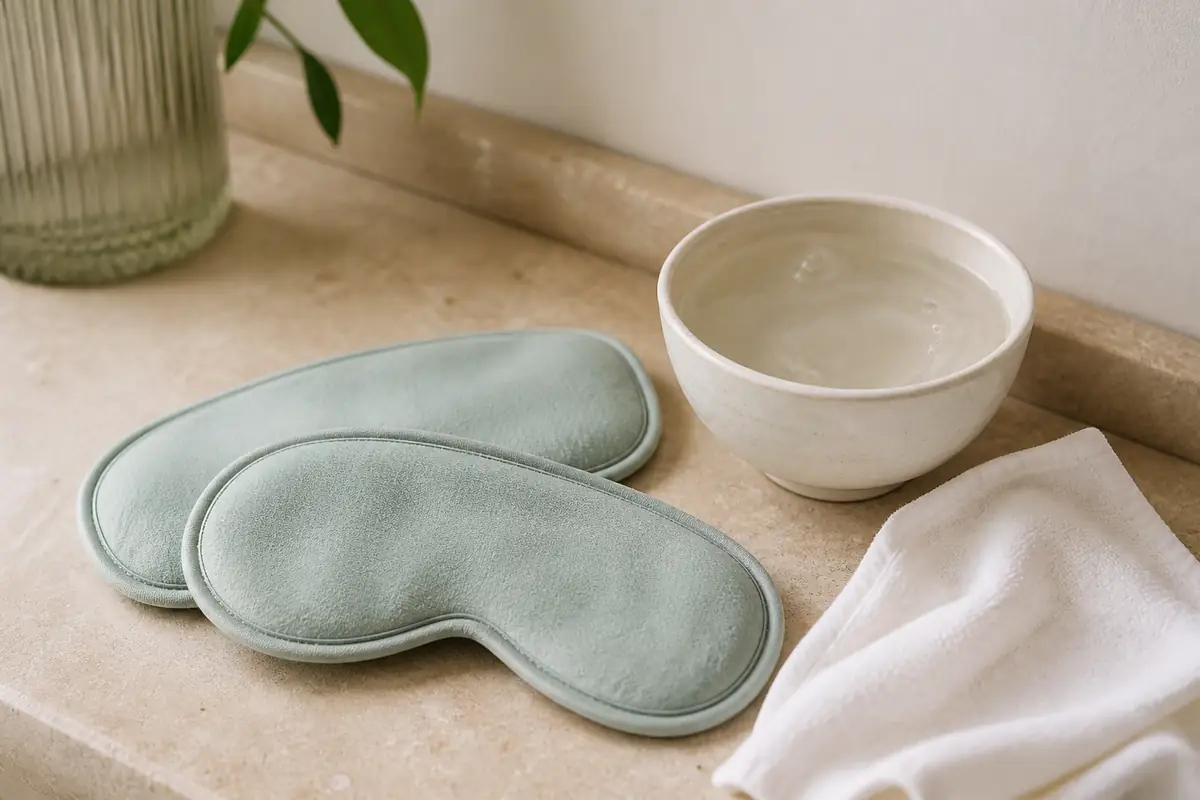
The image is an editorial illustration, not a photograph from a product test. Links are editorial and non-affiliate.