Choosing facial cleansing cloths: fibre, weave, size, washing and replacement
A reusable cloth is useful only when its texture suits the routine and the household can wash, dry and rotate it completely between uses.
In this guide
Choose a simple cloth that dries predictably
Start with a small pack of light-coloured cloths whose fibre content, wash temperature and drying instructions are clear. The weave should remove the chosen cleanser without aggressive rubbing, edges should stay flat, and the rotation must allow every cloth to be washed and dried fully before reuse.
Facial cloths are often marketed through vague claims such as deep-cleaning, antibacterial, exfoliating or eco. The product is still a textile that contacts skin and cosmetic residue. A sound decision compares construction and care, then tests one cloth gently within the existing cleansing routine rather than adding friction or buying a large lifetime supply.
Translate material language into practical evidence
| Cloth type | Potential strength | Evidence to check |
|---|---|---|
| Cotton terry | Absorbent loops and familiar washing | Loop height, softness after laundering and edge bulk. |
| Cotton muslin | Light, quick drying and visible residue | Weave density, shrinkage and tendency to distort. |
| Microfibre | Fine fibres and low lint | Exact composition, washing limits and surface drag. |
| Bamboo-derived viscose | Soft handle in some constructions | Actual fibre name, blend and care—not plant imagery. |
| Mixed-fibre cloth | Can balance softness and drying | Every percentage and whether layers dry together. |
| Textured pad | Controlled grip or targeted use | Seams, filling, hand access and complete drying. |
Fibre content is the starting point, not a softness score
UK textile guidance requires fibre content to be stated for textile products in scope. Read the actual percentages rather than relying on words such as natural, bamboo, cloud or silk-like. Viscose may be derived from plant cellulose but behaves according to the final fibre and construction, not the photograph of a plant.
Cotton can absorb well but a dense double layer may dry slowly. Polyester and polyamide microfibres can feel soft while collecting oils and lint differently. Blends may be useful. The fabric-composition guide helps interpret fibre labels without declaring one universally superior.
Weave and pile decide the contact surface
Terry loops increase surface area and can hold cleanser, yet coarse or snagged loops may drag. Muslin has a more open woven texture that can rinse quickly, but very open cloth can lose shape. Smooth microfibre depends on fibre fineness and knit density. “Exfoliating” is not automatically a benefit for daily use.
Move a dry cloth lightly across the inside of the wrist, then wet it and repeat without pressure. The wet feel matters because fibres swell and friction changes. If the product needs scrubbing to work, reconsider the cleanser, temperature or cloth rather than treating redness as evidence of effectiveness.
Size should match one task and one hand
- Full-face square: should fold into several clean surfaces without becoming a heavy wet bundle.
- Small pad: works for a defined area but can encourage repeated rubbing when too small.
- Hand pocket: improves grip only if seams stay flat and the inside dries.
- Large flannel: may serve several tasks, increasing cross-use risk and laundry bulk.
- Travel cloth: must fit a ventilated drying plan, not remain damp in a sealed pouch.
- Eye-area cloth: should be assigned and laundered separately when individual advice requires it.
Fold the cloth and mimic the cleansing sequence with water. It should be easy to turn to a fresh area without dropping or dragging. A very large cloth can be cut only if the edge can be finished safely; loose fibres and fraying are not an acceptable economy.
Edges and seams should not become the roughest part
Inspect binding, overlocking, corners, labels and hanging loops. A thick polyester edge can feel firmer than the face fabric and may scratch when wet. Corners should lie flat rather than curl into a hard point. Remove a sewn label only if it can be detached without opening the seam.
For padded rounds, check whether layers shift and whether stitching creates ridges. Fillings can retain water where the surface feels dry. A simple single-layer square is often easier to inspect and dry than a decorative multi-layer shape.
Build washing instructions into the purchase
Read the care label before buying and compare it with the household laundry routine. A cloth used with oil cleanser, balm, makeup or waterproof product must release that residue at the permitted wash conditions. Fabric softener or fragranced products may change absorbency or leave residue; use only what the care instructions and household needs allow.
Rinse loose product promptly if instructed, then store used cloths where air can circulate until laundering. Do not leave a damp pile in a closed bathroom container. Wash cloths separately from heavily soiled items where practical, and use a mesh bag only when it does not prevent cleaning or drying.
Complete drying is a design requirement
Time how long one washed cloth takes to dry in the real home during a cool, humid week—not only in summer sun. Thick hems, double layers and elastic hanging loops can remain damp after the centre feels dry. Turn or unfold the cloth and check the seam before returning it to storage.
A tumble-dryer symbol permits only the stated setting; high heat can shrink, distort or fuse some fibres. Radiators and heated rails may exceed care instructions or create uneven drying. Follow the care-label explainer rather than improvising from fibre name.
Choose rotation from laundry frequency
Count the cleansing sessions between washes, add drying time and one spare, then buy that number only after testing. A seven-cloth pack is not automatically a weekly system if makeup removal uses two cloths or laundry happens every ten days. Colour coding can assign users or tasks, but subtle shades must remain distinguishable after washing.
Keep clean cloths in a dry cupboard, not next to used ones. Each household member should have a clear allocation where sharing is inappropriate. A small, controlled rotation makes stains and wear visible and avoids forgetting old cloths at the bottom of a basket.
Test with the existing cleanser, not water alone
Follow the cleanser directions and use lukewarm water unless professional advice says otherwise. Observe whether the cloth rinses clean, whether product remains in the weave and whether the skin feels comfortable without repeated passes. A cloth should assist removal; it is not a reason to increase pressure.
Introduce the cloth without adding another new cleanser or active product, so a reaction is easier to interpret. For sensitive or medically treated skin, ask a pharmacist, GP or dermatologist whether a cloth is appropriate. Our patch-testing guide covers product introduction but cannot guarantee tolerance to friction.
Marketing claims need a defined test
“Removes makeup with water” depends on the makeup, amount, water and technique. “Antibacterial” needs a named treatment, test method, durability through washing and clear consumer instructions; it does not replace laundering. “Eco-friendly” should account for fibre, production, washing, drying, lifespan and end-of-life rather than only reuse.
Reject claims that imply pores are opened by hot water, toxins are pulled from skin or stronger rubbing proves detoxification. Use our beauty-claims guide and greenwashing checklist.
Replace according to condition and cleanability
Retire a cloth when edges fray, loops become abrasive, layers separate, odour remains after correct washing, stains prevent inspection or the cloth no longer cleans and dries as intended. Cosmetic staining alone is not always failure, but it can hide residue and make allocation uncertain.
Do not continue using a damaged cloth simply because it was sold as reusable. Reuse means repeated appropriate service, not permanence. Calculate laundry and replacement with the beauty cost-per-use method.
Which cloth format is appropriate?
Fast washing and drying are priorities
The weave feels comfortable wet, edges stay flat and the household can rotate enough clean cloths.
Grip or absorbency solves a defined need
Every layer can be washed and dried fully, seams remain comfortable and bulk is justified by the routine.
Balanced verdict
The strongest default is a simple, light-coloured cloth with clear fibre and care labels, a comfortable wet texture and enough duplicates for complete washing and drying. Texture should reduce effort, not justify scrubbing, and reusable should never mean indefinitely damp.
Check cosmetics expiry, understand beauty return limits, and browse more Beauty guidance or the shop directory.
Check current official guidance:
GOV.UK textile labelling ↗GOV.UK product labelling ↗GOV.UK returns and refunds ↗
Frequently asked questions
Is microfibre better than cotton for facial cleansing?
Neither is universally better. Compare wet texture, weave, residue release, care and drying in the actual routine.
Should a facial cloth feel exfoliating?
Not necessarily. Daily removal should not require aggressive friction; persistent irritation needs professional advice.
How many cleansing cloths do I need?
Count uses between laundry cycles, drying time and one spare after testing the chosen format.
Can facial cloths be shared?
A clear personal allocation is the safer practical default where cross-use is a concern.
When should a reusable cloth be replaced?
When it becomes rough, damaged, persistently odorous, difficult to inspect or unable to wash and dry correctly.
Methodology and limitations
We assessed facial cleansing cloths through fibre, weave, size, edge construction, washing, drying, rotation, claims and replacement. Official UK textile, product-labelling and returns guidance was checked on 29 August 2026. No cloth was microbiologically or dermatologically tested.
Limitations
This is buying guidance, not medical or infection-control advice. Skin, products, water, laundry and clinical needs vary. Follow exact care and professional advice where relevant.
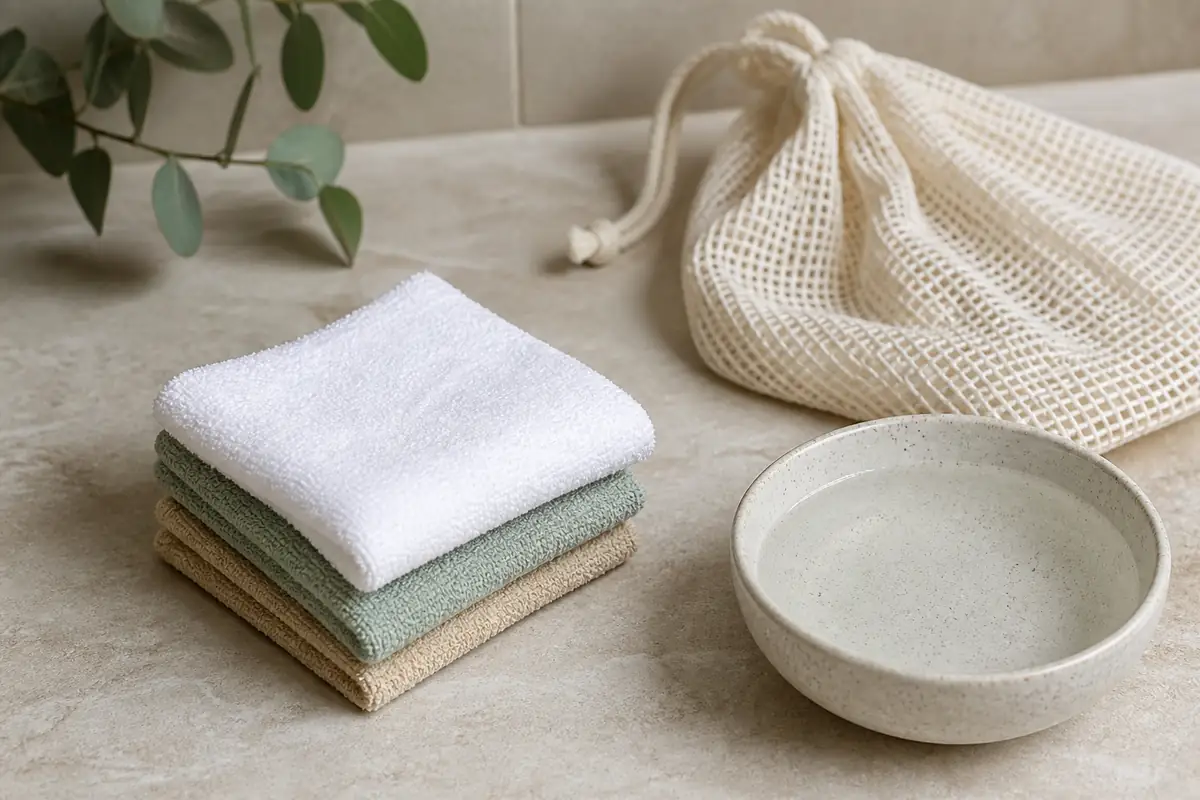
The image is an editorial illustration, not a photograph from a product test. Links are editorial and non-affiliate.